Stock Analysis · TriMas Corporation (TRS)
Overview
TriMas Corporation (TRS) is a diversified industrial manufacturer. Through its operating businesses, it designs and makes specialized products used in everyday end-markets such as packaging, aerospace, and industrial applications. In practice, this means TriMas sells both “consumable” components (for example, closures and dispensing systems used on packaged goods) and engineered parts (for example, aerospace fasteners).
The company’s activities are commonly described across three operating groups:
- Packaging: closure and dispensing components used by consumer product companies (for example, food, beverage, personal care, home care, and similar packaging uses).
- Aerospace: specialty fasteners and other components used in commercial and defense aircraft supply chains.
- Specialty Products: engineered products for industrial end-markets (a smaller, mixed set of product lines compared with the other two groups).
Specific revenue percentages by segment can vary year to year and are typically detailed in the company’s annual report segment footnote. The general pattern for TriMas is that Packaging is the largest contributor, Aerospace is an important second leg, and Specialty Products is smaller.
From 2021 through 2024, total revenue rose modestly (about $857M in 2021 to about $925M in 2024). Over the same period, operating income and net income declined (operating income moved from about $83.6M in 2021 to about $49.6M in 2024; net income from about $57.3M to about $24.3M). That combination can be a sign that costs and operating expenses rose faster than sales, or that the mix of what was sold became less profitable.
Key Figures
| Metric | Value | Industry ⓘ |
|---|---|---|
| Date | Mar 02, 2026 | |
| Context | ||
| Sector | Consumer Cyclical | |
| Industry | Packaging & Containers | |
| Market Cap ⓘ | $1.59B | |
| Beta ⓘ | 0.57 | |
| Fundamental | ||
| P/E Ratio ⓘ | 36.19 | 19.15 |
| Profit Margin ⓘ | 18.61% | 5.97% |
| Revenue Growth ⓘ | -31.80% | 3.90% |
| Debt to Equity ⓘ | 5.09% | 131.49% |
| PEG ⓘ | 1.63 | |
| Free Cash Flow ⓘ | $69.10B | |
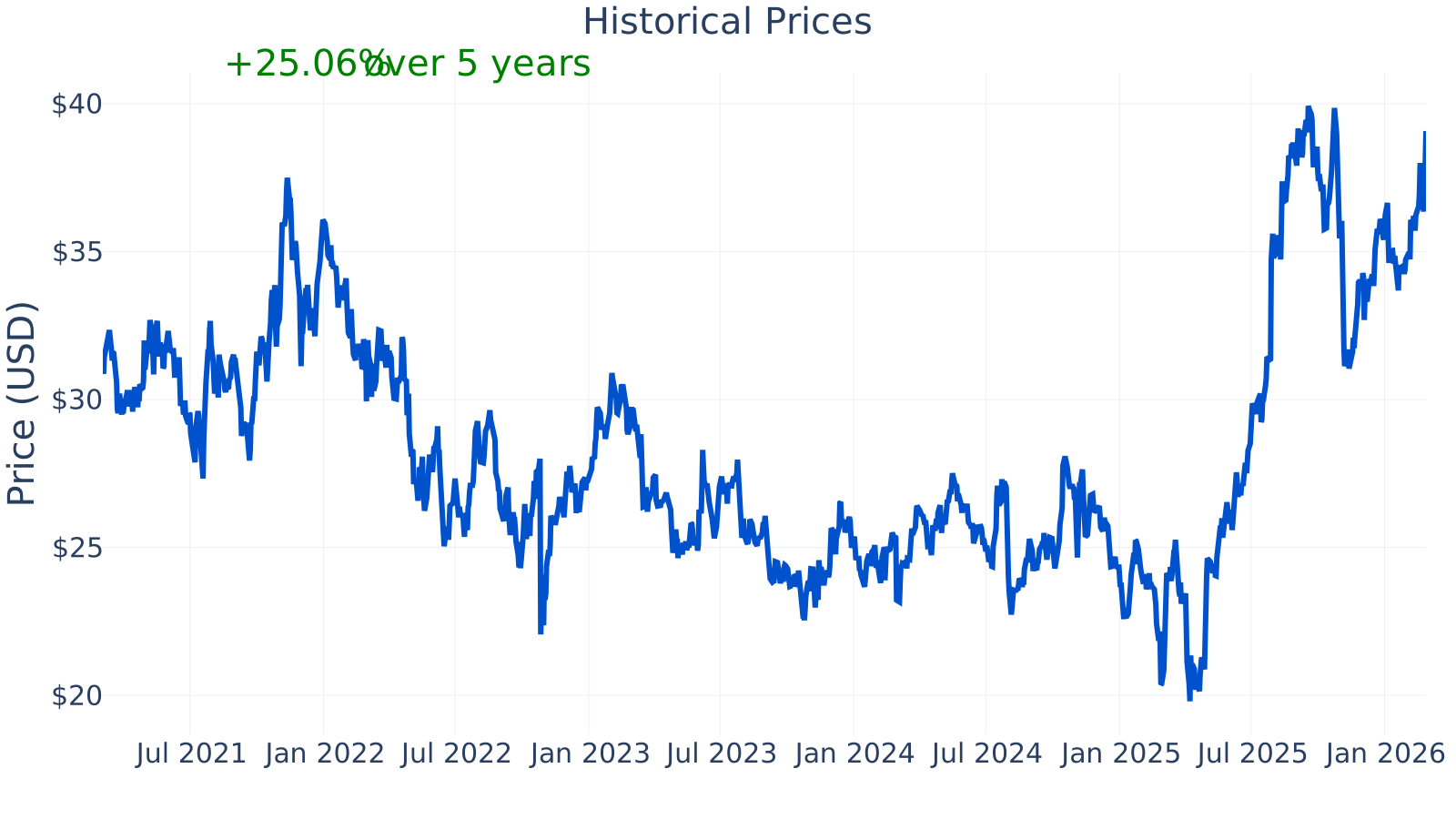
TriMas’s market capitalization is about $1.59B, and the stock’s beta (about 0.57) suggests it has historically moved less than the broader market on average. The listed P/E ratio is about 36.2 versus an industry median around 19.2, which indicates the stock is priced at a higher multiple than many peers in Packaging & Containers. The profit margin shown (about 18.6%) is well above the industry median (about 6.0%), while the revenue growth year over year is shown as negative (about -31.8%) versus a positive industry median (about +3.9%). Debt-to-equity is shown as very low (about 5.1%) compared with an industry median above 100%, which points to a comparatively conservative balance-sheet profile on this measure.
Growth (Medium)
TriMas participates in end-markets that can expand over long periods but tend to be sensitive to economic cycles. Packaging demand is often steadier than many industrial categories because many packaged goods are everyday items, but volumes and customer ordering patterns can still fluctuate. Aerospace demand can be supported by long production cycles and installed-base maintenance, but it can also be affected by aircraft build rates, supplier qualification timelines, and customer inventory adjustments.
A strategy that typically supports durable growth for companies like TriMas involves (1) focusing on higher-value, more specialized components, (2) maintaining long-standing customer relationships and qualification status (especially in aerospace), and (3) using a disciplined balance sheet to fund capital investment or acquisitions when opportunities arise. Whether those drivers translate into sustained growth depends heavily on execution and end-market conditions.
The year-over-year revenue growth pattern looks uneven: there were stretches of positive growth, periods of contraction, and then a sharp jump at the most recent endpoint. When a growth line shows an extreme spike, it often reflects a one-time effect (for example, a major business change, a comparability issue, or an accounting-related item) rather than “normal” underlying demand. For a long-term view, it can help to focus on the multi-year direction alongside management’s segment reporting in filings.
Free cash flow over the displayed period appears positive but lower than earlier years (roughly ~$93.8M in 2021 trending to the ~$22M–$26M range in 2024–2025). For an industrial manufacturer, sustained free cash flow matters because it is the pool of cash available for reinvestment, debt reduction, and shareholder returns after running the business.
Risks (Medium)
A key risk for TriMas is that profitability can be pressured even when sales are stable. Over 2021–2024, revenue increased modestly while operating income and net income fell, which can happen when input costs rise, pricing lags costs, manufacturing utilization changes, or the company sells a less profitable mix of products. Packaging components can also face competitive pricing, and some raw materials (often resin-based inputs) can be volatile, requiring strong purchasing and pricing discipline.
Another risk is end-market cyclicality and customer concentration dynamics. Aerospace supply chains can be demanding: customers typically require strict quality systems and long qualification processes, but once qualified, suppliers still face ongoing performance requirements and program-rate volatility. In Packaging, large consumer-product customers can have significant negotiating leverage and may shift volumes among suppliers.
On competitive advantages, TriMas’s defensibility tends to come from specialized manufacturing know-how, customer approvals/qualifications (especially in aerospace), and the operational difficulty of switching certain components once designed into a product or platform. However, it is not generally described as “the” dominant leader across all its categories, since its portfolio spans multiple niches where there are established global and regional competitors.
Competitors vary by segment. In Packaging, the competitive set often includes other closure and dispensing manufacturers (ranging from large diversified packaging suppliers to focused component specialists). In Aerospace, the competitive set includes specialty fastener and engineered-component suppliers that compete on qualification status, quality record, delivery reliability, and cost. TriMas’s relative position is best assessed segment by segment using the company’s disclosures on market conditions and competitive environment in its annual report.
The debt-to-equity line trends much lower at the most recent point (about 5.1%) compared with both its own prior quarters (often ~60–70%) and the industry median (roughly ~131%). If sustained, a lower leverage profile can reduce financial risk, although it can also reflect equity changes or other balance-sheet movements that are worth verifying in the latest filing details.
Profit margin has varied over time and is shown at about 18.6% at the most recent endpoint, well above the industry median (about 6.5%). Because margins in manufacturing can be affected by one-time items, restructuring, asset sales, tax effects, or acquisition accounting, it is useful to cross-check whether the latest margin includes unusual gains or accounting impacts versus recurring operating performance.
Valuation
One simple way to frame valuation is to compare the company’s P/E ratio to its peer group and to its own history. TriMas’s current P/E (about 36.2) is above the industry median (about 19.2), which typically implies the market is assigning a higher earnings multiple than it does for the median peer in Packaging & Containers. A higher multiple can be consistent with expectations of better future growth, higher margins, lower balance-sheet risk, or a more resilient business mix—but it can also leave less room for disappointment if earnings weaken.
The historical P/E pattern shows TriMas often trading above the industry median during much of the displayed period, with notable periods where its multiple rose into the 30s and 40s. Interpreting that trend alongside the company’s earnings path is important: if earnings are temporarily depressed, the P/E can look high even without a dramatic move in share price; if earnings rise sharply, the P/E can fall even when the stock price is stable.
Conclusion
TriMas is a niche-focused industrial manufacturer with meaningful exposure to Packaging and Aerospace. The business profile can benefit from specialized products, customer qualification barriers (especially in aerospace), and long-lived end-market demand drivers. At the same time, recent years show that revenue growth has not necessarily translated into stronger profitability, and free cash flow appears lower than earlier levels, which highlights execution and cost/mix as ongoing points to monitor.
From a fundamentals perspective, the company’s valuation multiple is higher than the industry median while its balance-sheet leverage (as shown by debt-to-equity) appears comparatively low. Putting those together, the long-term picture depends heavily on whether TriMas can sustain improved margins and convert sales into steady free cash flow through different economic and industry cycles.
Sources:
- SEC EDGAR — TriMas Corporation Form 10-K (Annual Report) (Business description, segment information, risk factors, financial statements)
- SEC EDGAR — TriMas Corporation Form 10-Q (Quarterly Reports) (Updates to performance, liquidity, and segment trends)
- TriMas Corporation — Investor Relations materials and press releases (company-provided operational updates)
- Wikipedia — “TriMas” (basic company background overview)
This article is for informational purposes only and does not constitute financial advice. Some content is AI-generated. See Disclaimer