Stock Analysis · TriMas Corporation (TRS)
Overview
TriMas Corporation is a diversified industrial manufacturer. Through a group of specialized businesses, it designs and produces products that are typically small parts of much larger systems: packaging components, aerospace fasteners, and specialty industrial products. The company sells mainly to business customers (not directly to consumers), and its results tend to reflect industrial activity levels, end-market demand, and input-cost conditions.
TriMas reports revenue by business segment (as described in its annual report/10‑K). In general terms, its activities include:
- Packaging: dispensing systems and closures used in beauty, personal care, food, and other packaging applications.
- Aerospace: fasteners and components used in commercial and military aircraft and related applications.
- Specialty Products: industrial components and engineered products used across a range of markets.
Percentages by segment can vary year to year and should be taken from the most recent 10‑K segment note; they are not included here because the required segment split is not provided in the figures above.
From 2021 to 2024, total revenue increased (about $857M to $925M), but profitability weakened: operating income declined (about $84M to $50M) and net income declined (about $57M to $24M). Over the same period, selling, general, and administrative expenses rose, and interest expense increased, both of which can weigh on earnings when revenue growth is modest.
Key Figures
| Metric | Value | Industry ⓘ |
|---|---|---|
| Date | Feb 08, 2026 | |
| Context | ||
| Sector | Consumer Cyclical | |
| Industry | Packaging & Containers | |
| Market Cap ⓘ | $1.47B | |
| Beta ⓘ | 0.57 | |
| Fundamental | ||
| P/E Ratio ⓘ | 33.44 | 21.79 |
| Profit Margin ⓘ | 4.35% | 5.56% |
| Revenue Growth ⓘ | 17.40% | 6.00% |
| Debt to Equity ⓘ | 62.75% | 137.29% |
| PEG ⓘ | 1.63 | |
| Free Cash Flow ⓘ | $44.38M | |
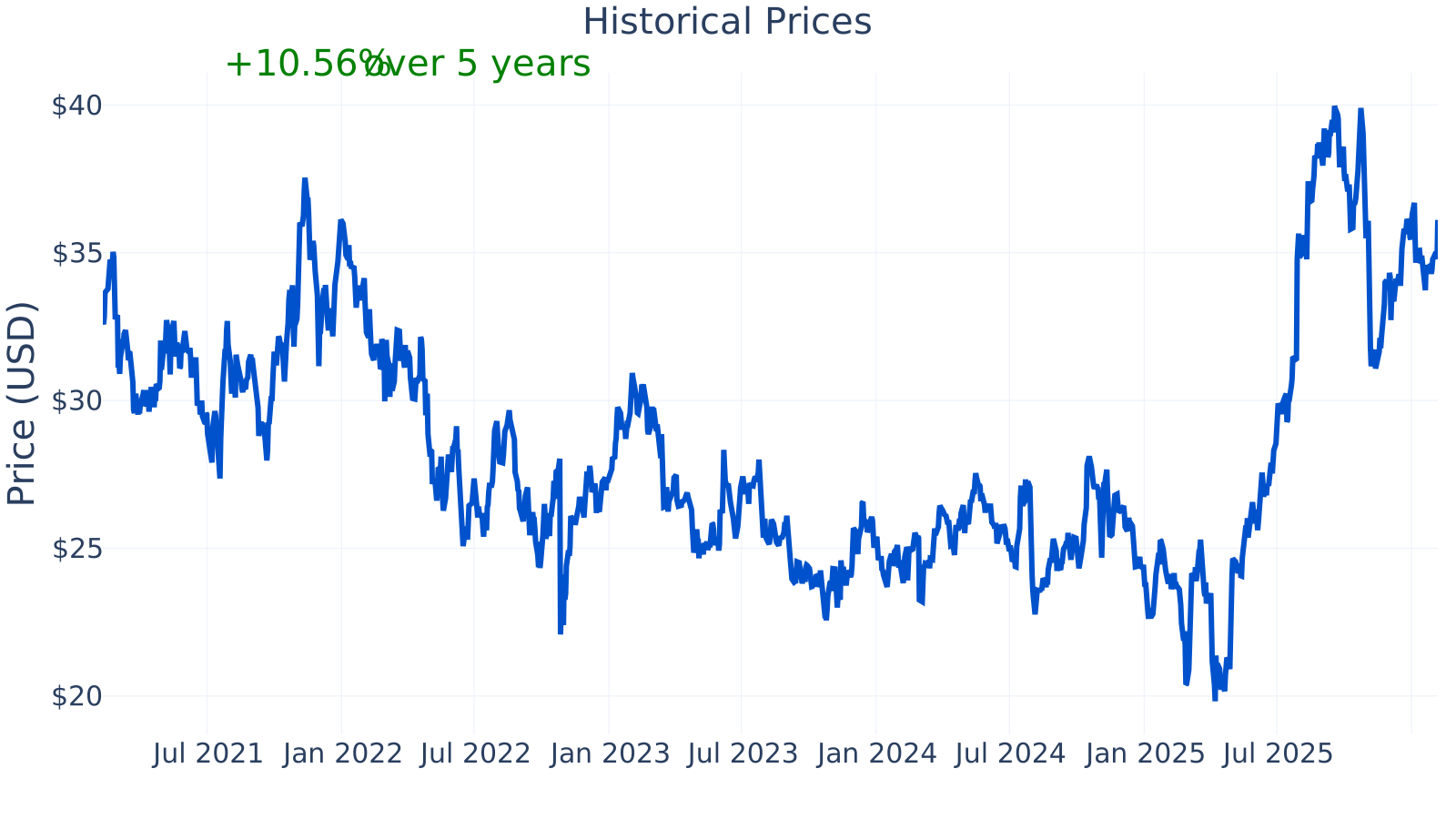
TriMas has an approximate market capitalization of $1.47B and a beta of ~0.57, which indicates the stock has historically moved less than the broader market on average (though that can change). The company’s P/E ratio is ~33.4, above the industry median ~21.8, implying the market is assigning a higher earnings multiple than many peers. Current profit margin is ~4.35%, below the industry median ~5.56%. On the other hand, the most recent year-over-year revenue growth is ~17.4%, above the industry median ~6%. Leverage appears lower than many peers: debt-to-equity ~62.7% versus an industry median ~137.3%. Trailing twelve-month free cash flow is about $44.4M.
Growth (Medium)
TriMas participates in the broad packaging and industrial components ecosystem, which is typically steadier than high-growth technology markets but can be resilient because many products are tied to recurring consumer and industrial usage. Demand drivers can include brand packaging refresh cycles, product innovation in dispensing/closures, aerospace build rates, and general industrial activity. This is usually more of a cycle-aware, execution-driven growth profile than a “winner-takes-all” market.
Recent year-over-year revenue growth has been uneven over the last several years, including periods of contraction, followed by a re-acceleration. The latest reported growth rate shown (about 17%) is notably stronger than the industry median displayed, which can indicate improved volume, pricing, mix, acquisitions, or easier comparisons versus the prior year (the exact drivers are typically explained in the latest 10‑K/10‑Q management discussion).
Free cash flow has also been variable. It was higher earlier in the period and then lower in more recent years (for example, around $93.8M in 2021 versus about $26.0M in 2025 based on the points shown), with the latest metric table showing ~$44.4M trailing twelve-month free cash flow. For long-term business building, the key question is whether cash generation can become more consistent through the cycle while funding reinvestment and maintaining a prudent balance sheet.
Potential catalysts for future growth typically come from (1) improved end-market demand (especially aerospace and selected packaging categories), (2) pricing and product-mix improvement, and (3) cost and productivity initiatives. Because TriMas operates multiple business lines, results can also be influenced by portfolio actions (acquisitions/divestitures), which are generally described in SEC filings when they occur.
Risks (Medium)
This article is for informational purposes only and does not constitute financial advice. Some content is AI-generated. See Disclaimer