Stock Analysis · Travel + Leisure Co (TNL)
Overview
Travel + Leisure Co. (TNL) is a travel services company best known for its vacation ownership (timeshare) business and related membership/travel services. In simple terms, it sells vacation ownership interests, finances some of those purchases, and then continues to earn recurring revenue from annual fees and travel-related memberships. The company’s brands and offerings include vacation ownership resorts and travel clubs that aim to create repeat customers and long-term member relationships.
In its SEC filings, the company generally describes two main reporting segments: Vacation Ownership (selling vacation ownership interests and related financing) and Travel and Membership (travel clubs, subscription-style memberships, and exchange/related services). The mix can shift over time depending on travel demand, interest rates, and how many new intervals are sold versus how much recurring fee revenue comes in.
Main revenue sources typically include (from largest to smaller, based on how the business model is structured in filings):
- Vacation ownership sales (selling vacation ownership interests)
- Financing income (interest income earned when customers finance purchases)
- Resort management and consumer fees (property management, servicing, and transaction-related fees)
- Travel and membership subscriptions/fees (membership-based travel products and related services)
Across recent years, total revenue in the company’s consolidated results rose from about $3.13B (2021) to about $4.02B (2025), indicating a larger business today than in the earlier post-pandemic period, although profitability and cost structure have not moved in a straight line.
From 2021 through 2024, revenue and operating income increased steadily (operating income moving from about $627M in 2021 to about $762M in 2024). In 2025, revenue increased again (to about $4.02B), but interest expense also rose (to about $367M), and net income fell (to about $230M). This combination suggests that financing costs and/or other below-operating-line items became a larger drag on bottom-line results in that year.
Key Figures
| Metric | Value | Industry ⓘ |
|---|---|---|
| Date | May 04, 2026 | |
| Context | ||
| Sector | Consumer Cyclical | |
| Industry | Travel Services | |
| Market Cap ⓘ | $4.02B | |
| Beta ⓘ | 1.34 | |
| Fundamental | ||
| P/E Ratio ⓘ | 17.94 | 24.01 |
| Profit Margin ⓘ | 5.83% | 8.78% |
| Revenue Growth ⓘ | 2.90% | 12.00% |
| Debt to Equity ⓘ | -562.46% | 93.66% |
| PEG ⓘ | 0.53 | |
| Free Cash Flow ⓘ | $737.00M | |
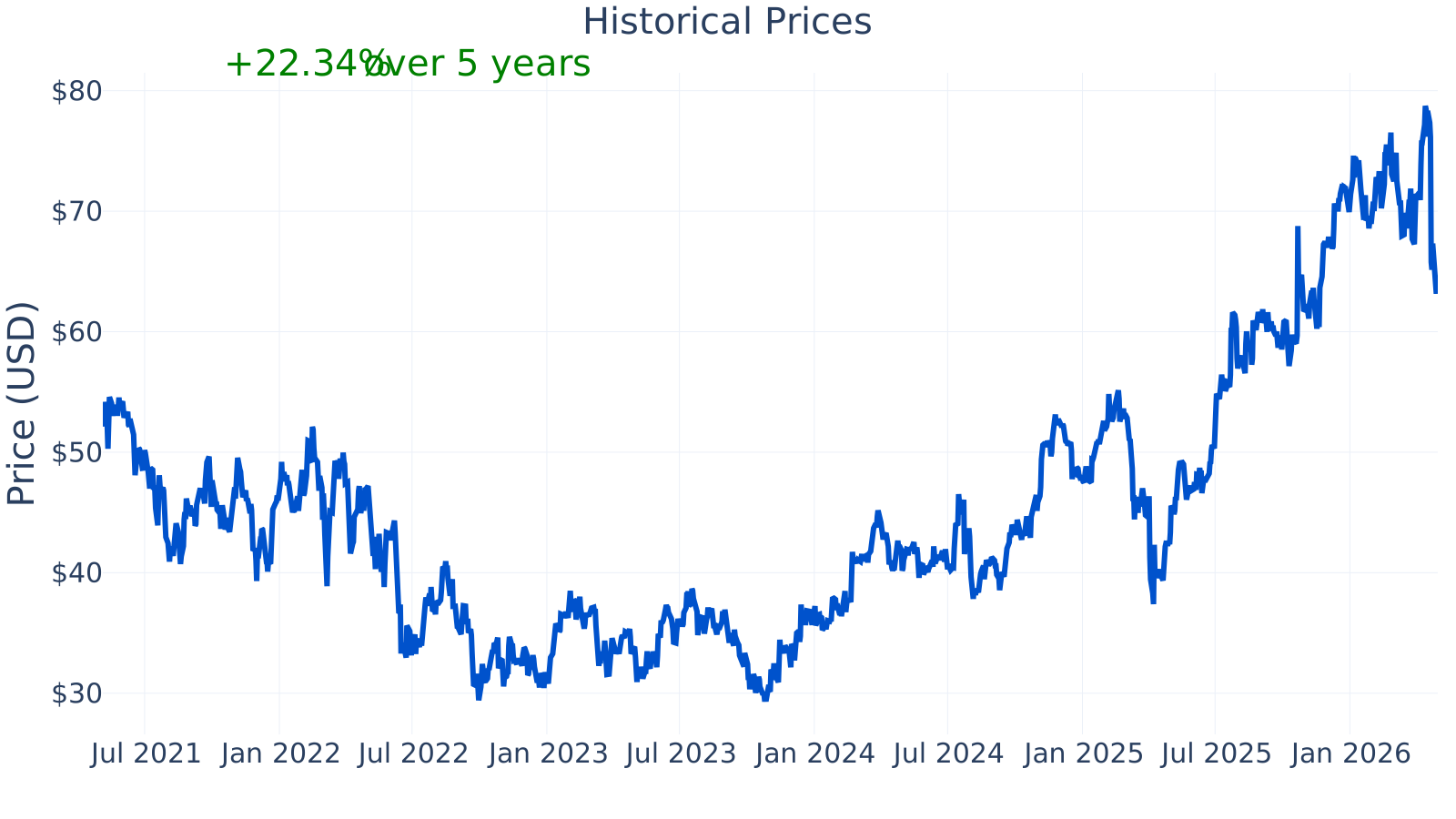
TNL’s market capitalization is about $4.0B, and the stock’s beta (~1.34) indicates it has historically moved more than the overall market (higher ups and downs). The current P/E ratio (~17.9) is below the industry median shown here (~24.0), while the profit margin (~5.8%) is below the industry median (~8.8%). Year-over-year revenue growth is currently around 2.9%, also below the industry median (~12%). Free cash flow (TTM) is about $737M, which is a meaningful cash generation figure relative to the company’s size.
Growth (Medium)
Travel demand tends to be supported over the long run by household formation, higher participation in leisure travel, and consumers prioritizing experiences. That said, the travel industry is cyclical: when the economy slows, discretionary spending (including vacations) is often delayed. TNL’s positioning is somewhat different from online travel agencies because a large part of its model is built on member relationships and recurring fees tied to ownership and subscriptions, which can soften (but not remove) the impact of downturns.
A key strategic driver for TNL is that the vacation ownership model can produce cash flow in multiple ways: upfront sales, ongoing servicing/management fees, and interest income on financed receivables. When the company is able to keep marketing costs efficient, maintain credit performance of financed customers, and refinance debt on reasonable terms, the model can support continued cash generation.
The year-over-year revenue growth trend has cooled substantially from the very high growth rates seen in 2021 (a rebound period) to low single digits more recently (around 2.9% in the latest period shown). This points to a more mature, steadier pace of expansion rather than rapid growth, making execution, cost control, and financing conditions especially important for future progress.
Free cash flow improved materially in the most recent trailing twelve months shown, rising to about $737M (up from roughly $453M a year earlier in the series). For a business like TNL, sustained free cash flow matters because it can be used for debt reduction, reinvestment, and shareholder returns (subject to board decisions and debt agreements).
Risks (High)
TNL’s biggest risks are closely tied to its business model. Vacation ownership is sensitive to consumer confidence and employment, while the financing component is sensitive to interest rates and credit performance. Higher rates can raise the company’s borrowing costs and also affect affordability for customers financing purchases. Credit deterioration (for example, higher delinquencies) can pressure earnings and cash flow.
The debt-to-equity ratio shown is negative (around -562% in the latest point). A negative debt-to-equity commonly happens when accounting equity is negative (often influenced by large buybacks, accumulated deficits, or balance-sheet structure). In that situation, debt-to-equity becomes less intuitive as a leverage measure, but it still highlights that the capital structure requires careful attention. Separately, interest expense increased notably in 2025 in the income statement flow shown earlier, reinforcing that financing costs can be a meaningful factor for results.
Profit margins were around ~10% for several years in the series, but the latest margin shown is about 5.9%, which is below the industry median (~7.3%). A margin step-down can occur for multiple reasons (mix, marketing costs, credit provisions, or financing costs that indirectly affect net results). If lower margins persist, it can limit how much earnings growth is achieved even if revenue continues to rise.
On competitive advantages, TNL’s scale, resort footprint, and established consumer brands can help with customer acquisition and repeat usage. The membership/owner base can also create recurring revenue and cross-selling opportunities. However, the company is not competing in a simple “winner-takes-all” category. It faces:
- Other vacation ownership operators (large hospitality-linked and independent timeshare companies)
- Travel clubs, exchange networks, and subscription travel services
- Traditional lodging alternatives (hotels, vacation rentals) that compete for the same leisure travel spending
Compared with broad travel platforms, TNL’s model is more specialized, with both benefits (recurring relationships) and drawbacks (cyclicality and financing exposure). The competitive landscape also means marketing efficiency and customer satisfaction are ongoing necessities, not one-time achievements.
Valuation
Based on the figures shown, TNL’s current P/E ratio is about 17.9, which is below the industry median displayed (~24.0). Historically in the chart, the company traded at lower single-digit to low-double-digit P/E ratios for an extended period, with a more recent move higher (around 21.5 at the latest point on the series). In plain language, the market is currently assigning a higher earnings multiple than it did through much of 2022–2025, even though the latest revenue growth and profit margin shown are comparatively modest versus the industry median.
How “expensive” the price is cannot be determined from one metric alone, but the main context from the fundamentals above is: (1) revenue growth is currently low single digits, (2) profitability has recently been below the industry median, (3) free cash flow is strong in the most recent period shown, and (4) the company’s capital structure and interest expense sensitivity are important considerations. Those factors help frame why the market might apply a moderate multiple rather than a very high one, and why changes in rates, margins, and cash flow can materially affect valuation over time.
Conclusion
Travel + Leisure Co. is a travel services business centered on vacation ownership and membership-style travel offerings. The company has grown total revenue from the early post-pandemic period and has recently generated substantial free cash flow. At the same time, the most recent profitability indicators shown (profit margin and year-over-year revenue growth) are lower than the industry median displayed, and the company’s financing sensitivity—highlighted by a negative debt-to-equity reading and meaningful interest expense—adds an additional layer of risk.
When evaluating TNL as a long-term equity, the key facts to weigh are the durability of recurring owner/membership revenue, the sustainability of free cash flow, and the company’s ability to manage financing costs and credit performance across economic cycles. The valuation signals shown (P/E below the industry median, but higher than much of its own recent history) suggest the market is balancing those positives and risks rather than pricing the stock as either a high-growth story or a deeply distressed business.
Sources:
- SEC EDGAR — Travel + Leisure Co. Form 10-K (Annual Report)
- SEC EDGAR — Travel + Leisure Co. Form 10-Q (Quarterly Report)
- Travel + Leisure Co. Investor Relations — SEC filings and investor materials (company-hosted)
- Wikipedia — “Travel + Leisure Co.” (basic company background)
This article is for informational purposes only and does not constitute financial advice. Some content is AI-generated. See Disclaimer


