Stock Analysis · Travel + Leisure Co (TNL)
Overview
Travel + Leisure Co. (TNL) is a travel company best known for its vacation ownership business (often called “timeshare”) and related services. In simple terms, the company develops or acquires vacation resorts and sells consumers the right to use those properties over time (for example, through points-based memberships). It also earns ongoing revenue by financing customer purchases and by servicing owners after the initial sale (membership support, resort management, and other owner-related services).
In its SEC filings, TNL primarily reports results through two business segments:
- Vacation Ownership: Sale of vacation ownership interests (VOIs) and related financing and ancillary products.
- Travel and Membership: Travel clubs, membership products, and exchange/related travel services.
When thinking about how money comes in, the biggest drivers typically include:
- Sales of vacation ownership interests (VOI sales) (upfront sales to new and existing members)
- Financing income (interest earned when customers finance their purchases through TNL)
- Recurring owner revenue (management fees, membership/maintenance-related charges, and other ongoing services)
- Travel/membership revenue (subscription-like fees and transaction-based travel services)
The company’s financial profile shows a business that generates substantial gross profit and operating income, while also carrying meaningful interest expense—an important point for understanding both resilience and risk in a travel downturn.
From 2021 to 2024, total revenue rose from about $3.1B to $3.9B, and operating income increased from about $627M to $762M. Interest expense remained significant (roughly $198M–$251M over those years), which highlights the role debt and financing costs play in overall profitability.
Key Figures
| Metric | Value | Industry ⓘ |
|---|---|---|
| Date | Feb 08, 2026 | |
| Context | ||
| Sector | Consumer Cyclical | |
| Industry | Travel Services | |
| Market Cap ⓘ | $4.77B | |
| Beta ⓘ | 1.35 | |
| Fundamental | ||
| P/E Ratio ⓘ | 12.16 | 21.78 |
| Profit Margin ⓘ | 10.34% | 10.37% |
| Revenue Growth ⓘ | 5.10% | 10.60% |
| Debt to Equity ⓘ | -679.42% | 96.47% |
| PEG ⓘ | N/A | |
| Free Cash Flow ⓘ | $801.00M | |
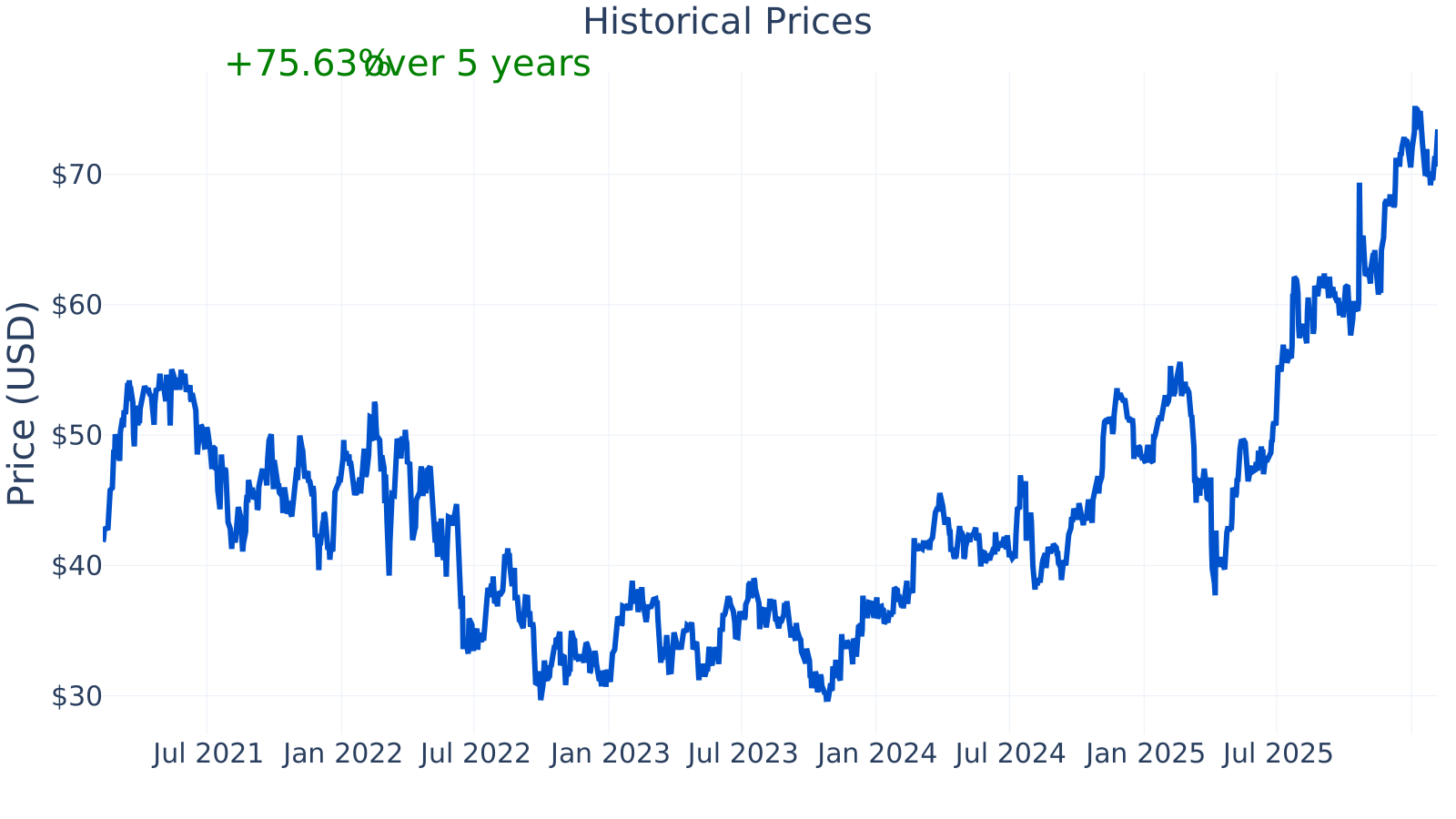
TNL’s market capitalization is about $4.8B, placing it in the mid-cap range. The stock’s beta (~1.35) suggests it has historically moved more than the overall market (higher ups and downs). On valuation, the latest P/E ratio is ~12.2, which is below the industry median shown (~21.8). Profitability is close to the industry median: TNL’s latest profit margin is ~10.34% versus an industry median of ~10.37%. Recent year-over-year revenue growth is ~5.1%, below the industry median shown (~10.6%). Trailing twelve-month free cash flow is about $801M, indicating meaningful cash generation.
Growth (Medium)
TNL operates in leisure travel, an area that tends to benefit over long periods from rising disposable income, consumer preference for experiences, and an expanding base of repeat travelers. That said, leisure travel is cyclical: demand can drop quickly during recessions or periods of high inflation when households cut discretionary spending.
A key growth element in TNL’s model is that it combines upfront sales with recurring revenue. Vacation ownership can create ongoing cash flows from an installed base of owners (fees and services), while the financing of customer purchases can add interest income over time. This mix can support longer-term durability compared to businesses that rely only on one-time bookings, but it also ties results to consumer credit conditions.
The year-over-year revenue growth trend shows a sharp rebound in 2021 (typical of post-pandemic recovery comparisons), followed by a return to more moderate growth rates. In the most recent period shown, revenue growth is around the mid-single-digits, which is positive but not especially fast for a consumer-focused travel business.
Free cash flow has been positive across the time periods shown, with a notable increase in the latest trailing twelve months (about $801M). For long-term business building, consistent free cash flow can matter because it can be used for debt reduction, share repurchases, dividends, or reinvestment—though the best use depends on management priorities and the company’s leverage profile.
Potential catalysts for future growth (in general terms, based on how this type of business works) include improving travel demand, stronger sales productivity, expansion of the member base, and a favorable credit environment that supports customer financing. Conversely, higher interest rates and tighter credit can pressure affordability and demand.
Risks (High)
This article is for informational purposes only and does not constitute financial advice. Some content is AI-generated. See Disclaimer