Stock Analysis · Toast Inc (TOST)
Overview
Toast Inc. builds an all-in-one technology platform designed mainly for restaurants and other food & beverage businesses. The product set typically combines point-of-sale (the system used to take orders and accept payments) with software tools that help run day-to-day operations such as menu management, online ordering, delivery integrations, payroll and team management, marketing, and customer loyalty. The goal is to replace a patchwork of separate tools with a more integrated system that can be easier to operate across one location or many locations.
In its SEC filings, Toast describes revenue in two broad categories: (1) subscription-type fees for software products and (2) fees tied to payment processing and other transaction-driven services that tend to move with customer sales volumes. In practice, this means part of Toast’s revenue is more “recurring” (software subscriptions), while another part is more sensitive to restaurant transaction activity (payments and related services).
Main revenue categories (as disclosed in company filings):
- Financial technology solutions (payment processing and other transaction-based services)
- Subscription services (software subscriptions and support-related fees)
One visible trend in the company’s multi-year profitability bridge is that Toast grew revenue substantially from 2021 to 2025, while moving from large net losses to positive net income by 2024 and a larger profit in 2025. That shift suggests operating costs did not rise as fast as revenue over time, improving overall efficiency.
Key Figures
| Metric | Value | Industry ⓘ |
|---|---|---|
| Date | Feb 16, 2026 | |
| Context | ||
| Sector | Technology | |
| Industry | Software - Infrastructure | |
| Market Cap ⓘ | $16.10B | |
| Beta ⓘ | 1.93 | |
| Fundamental | ||
| P/E Ratio ⓘ | 48.80 | 25.13 |
| Profit Margin ⓘ | 5.56% | 6.91% |
| Revenue Growth ⓘ | 22.00% | 15.25% |
| Debt to Equity ⓘ | 1.88% | 19.82% |
| PEG ⓘ | 0.25 | |
| Free Cash Flow ⓘ | $608.00M | |
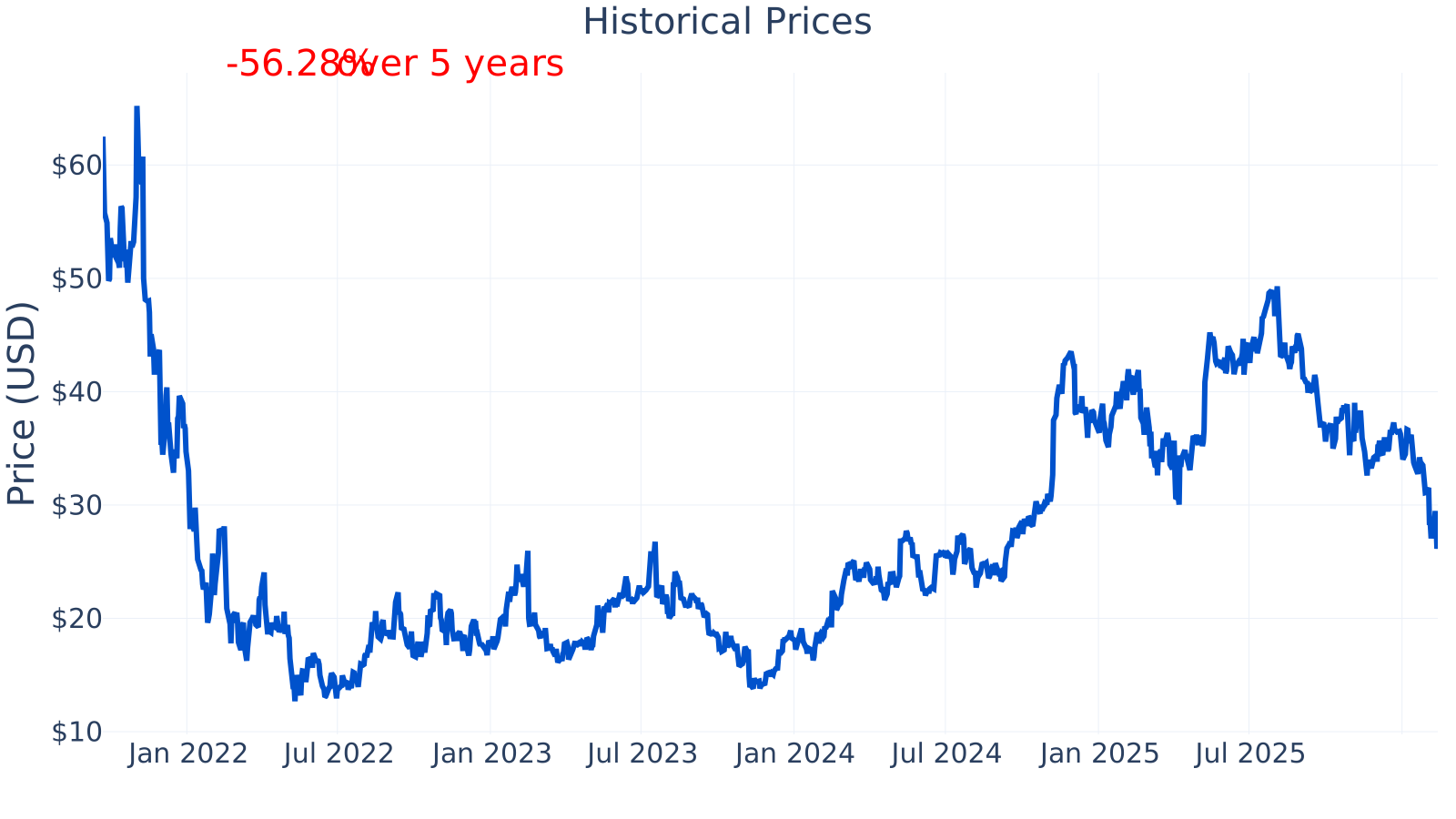
Toast’s market capitalization is about $16.1B, and its beta (1.93) indicates the stock has historically moved more than the broader market (higher volatility). The company’s most recent profit margin is ~5.56% versus an industry median around 6.91%, showing Toast has reached profitability but still trails the typical peer margin in its broad industry grouping. On growth, Toast shows ~22% year-over-year revenue growth versus an industry median around 15.25%. Balance-sheet leverage appears low with debt-to-equity ~1.88% versus an industry median near 19.82%. Free cash flow over the trailing twelve months is shown at about $608M, indicating the business has recently been generating cash after operating expenses and capital spending.
Growth (Medium)
Toast operates in the market for restaurant technology: digital point-of-sale, payments, and software tools that support online ordering, loyalty programs, workforce management, and multi-location operations. Long-term demand in this space is generally tied to restaurants continuing to modernize their operations, adopt more digital ordering, and use software to manage labor and costs. This is less like a one-time hardware purchase and more like an ongoing software-and-services relationship, which can support recurring revenue if customer retention remains strong.
Toast’s strategy is built around bundling: the more a restaurant uses Toast for payments, front-of-house operations, and back-office tools, the more the platform can become embedded in daily workflows. This approach can support expansion within existing customers over time (adding more modules) and can also help Toast serve more complex customers such as larger multi-unit operators, where integration and centralized management can matter more.
Revenue growth has remained positive while gradually slowing from very high rates in 2021–2022 to more moderate levels more recently (around the low-20% range by late 2025). This pattern is common as companies scale, but it also means future results may depend more on execution (retention, product adoption, and payments volume) than on purely adding new customers at an early-stage pace.
Cash generation has improved meaningfully over time, moving from negative levels earlier in the period shown to positive and growing free cash flow more recently. For long-term business durability, consistent positive free cash flow can matter because it may reduce reliance on external funding and provides flexibility for product investment and scaling operations.
Risks (High)
This article is for informational purposes only and does not constitute financial advice. Some content is AI-generated. See Disclaimer