Stock Analysis · Thor Industries Inc (THO)
Overview
Thor Industries, Inc. (THO) is a manufacturer of recreational vehicles (RVs). Through a portfolio of brands, the company designs and builds motorized RVs (such as motorhomes) and towable RVs (such as travel trailers and fifth wheels). It sells primarily through independent dealers rather than directly to most end customers, which means Thor’s results are closely tied to dealer inventory levels, consumer demand for discretionary purchases, and the overall health of the RV retail channel.
Thor reports its business mainly through two operating segments: North American RV and European RV. In general terms, revenue is largely generated by wholesale shipments of RVs to dealers, with additional contributions from related parts, services, and other RV-related activities depending on the segment and brand. (Percentages can vary significantly by year as regional demand cycles change.)
From a “what brings in the money” perspective, Thor’s revenue mix is typically dominated by RV unit sales, split across geography and product type:
- North American RV (towable and motorized RVs sold through dealers)
- European RV (motorcaravans and caravans sold through European dealer networks)
Across the last several fiscal years shown, total revenue peaked in the 2022 period displayed (about $16.3B) and then stepped down through 2023–2025 (to about $9.6B). Over the same span, operating income and net income compressed notably, showing how profitability can fall faster than revenue when the market cools and costs do not decline at the same pace.
Key Figures
| Metric | Value | Industry ⓘ |
|---|---|---|
| Date | Feb 08, 2026 | |
| Context | ||
| Sector | Consumer Cyclical | |
| Industry | Recreational Vehicles | |
| Market Cap ⓘ | $6.34B | |
| Beta ⓘ | 1.41 | |
| Fundamental | ||
| P/E Ratio ⓘ | 22.72 | 27.33 |
| Profit Margin ⓘ | 2.87% | 2.07% |
| Revenue Growth ⓘ | 11.50% | 12.75% |
| Debt to Equity ⓘ | 0.07% | 113.36% |
| PEG ⓘ | 1.29 | |
| Free Cash Flow ⓘ | $373.02M | |
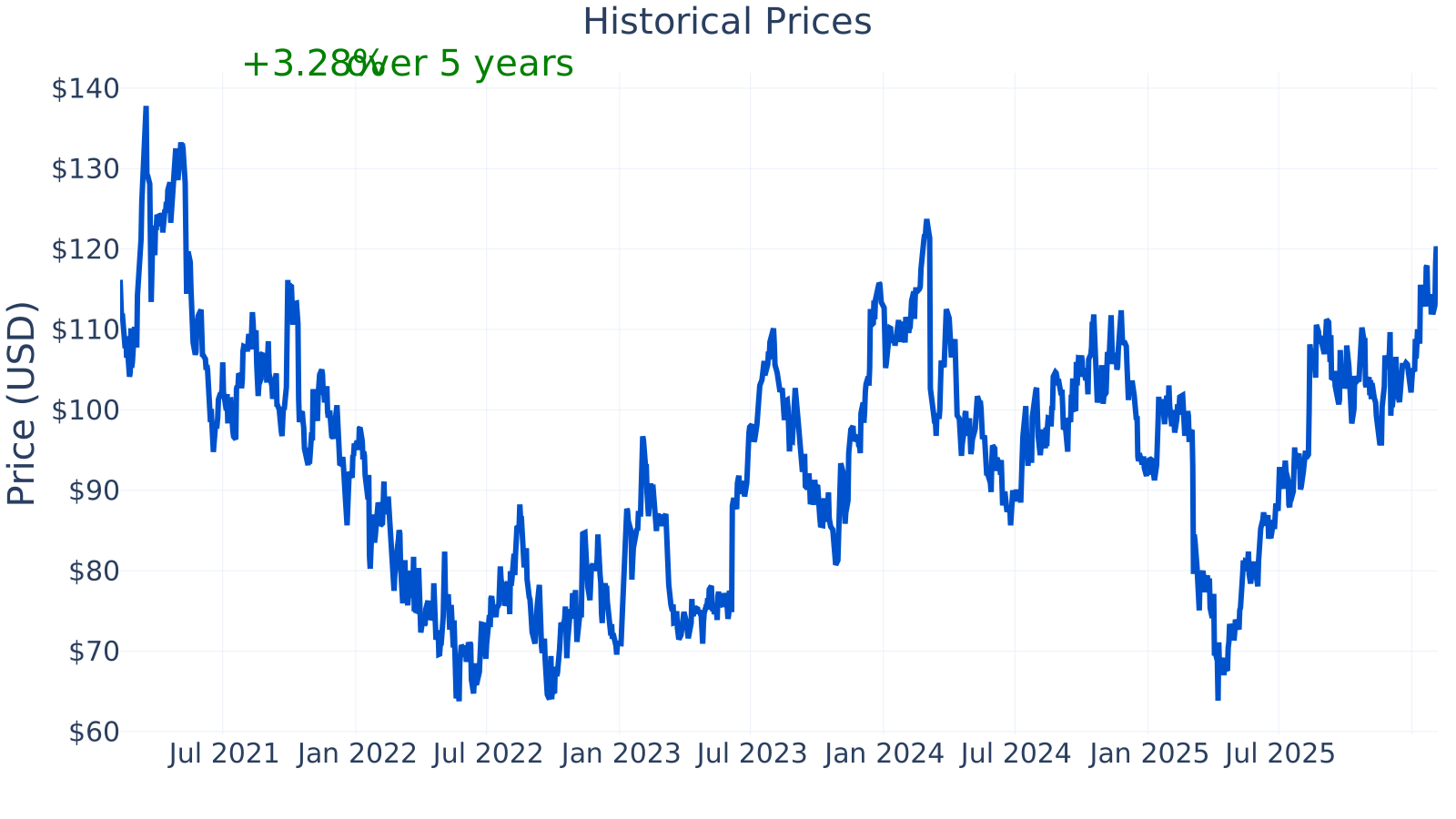
Thor’s market capitalization is about $6.34B, and the stock’s beta of 1.41 suggests it has tended to move more than the broader market. The current P/E ratio is ~22.7, below the industry median shown (~27.3). Profitability is modest but slightly above the industry median in the table, with a profit margin of ~2.87% versus ~2.07% for the median peer. Year-over-year revenue growth is shown at ~11.5%, slightly below the industry median (~12.75%). Reported debt-to-equity is near zero (~0.07%) versus an industry median above 100%, indicating an unusually low leverage position at the latest point displayed. Trailing twelve-month free cash flow is about $373M.
Growth (Medium)
The RV industry is cyclical. Demand often rises when consumers feel confident, credit is available, and outdoor travel trends are strong, and it can fall when interest rates rise, affordability weakens, or dealers work down inventory. This means “growth” tends to arrive in waves rather than in a steady upward line, and company strategy matters most in how well a manufacturer manages through downturns and is positioned for the next upcycle.
Thor’s overall approach—operating multiple brands, serving both North America and Europe, and offering a range of towable and motorized products—can provide diversification across customer needs and regions. Potential longer-term catalysts can include a recovery in dealer restocking after inventory corrections, easing financing conditions for consumers, and new product refresh cycles that encourage upgrades. That said, these drivers are heavily influenced by macro conditions that are difficult to control.
The year-over-year revenue growth pattern shown is consistent with a cyclical reset: very strong growth in 2021–early 2022, followed by a long stretch of negative comparisons through 2023 and much of 2024, and then a return to positive growth in the most recent period shown (about +11.5%). This kind of swing is typical for discretionary, dealer-driven industries.
Free cash flow remains positive across the periods shown, but it trends downward from about $715M (2022) to $539M (2025), with the latest table value at about $373M. In practical terms, this suggests the business has still been generating cash even as the cycle cooled, but with reduced cash generation compared with the peak period.
Risks (High)
This article is for informational purposes only and does not constitute financial advice. Some content is AI-generated. See Disclaimer