Stock Analysis · Texas Roadhouse Inc (TXRH)
Overview
Texas Roadhouse, Inc. (TXRH) operates casual dining restaurants, best known for its Texas Roadhouse steakhouse concept. The company’s restaurants focus on made-from-scratch food, a high-energy dine-in experience, and company-run operations (rather than primarily franchising). In addition to its flagship brand, the company also operates other restaurant concepts, including Bubba’s 33 and Jaggers.
Revenue is largely generated from selling food and beverages to guests in its restaurants. Based on the company’s segment reporting in its SEC filings, the business is primarily driven by these areas (largest to smallest):
- Texas Roadhouse restaurants (core steakhouse concept; the largest contributor)
- Bubba’s 33 (sports-bar-style concept)
- Jaggers (fast-casual concept)
- Other revenue streams such as franchise royalties/fees (smaller relative to restaurant sales)
From a profitability standpoint, restaurant businesses typically depend on keeping guest traffic strong while managing key costs like food inputs, wages, occupancy (rent), and other operating expenses.
Across recent years shown, total revenue increased from about $3.46B (2021) to about $5.88B (2025), while net income rose from about $245M to about $406M. That combination suggests the company has been able to grow sales meaningfully while remaining profitable, although operating costs and other expenses remain a large part of the business model.
Key Figures
| Metric | Value | Industry ⓘ |
|---|---|---|
| Date | Feb 23, 2026 | |
| Context | ||
| Sector | Consumer Cyclical | |
| Industry | Restaurants | |
| Market Cap ⓘ | $11.88B | |
| Beta ⓘ | 0.87 | |
| Fundamental | ||
| P/E Ratio ⓘ | 27.34 | 27.46 |
| Profit Margin ⓘ | 6.90% | 7.73% |
| Revenue Growth ⓘ | 3.10% | 7.35% |
| Debt to Equity ⓘ | 129.12% | 99.20% |
| PEG ⓘ | 1.83 | |
| Free Cash Flow ⓘ | $730.07M | |
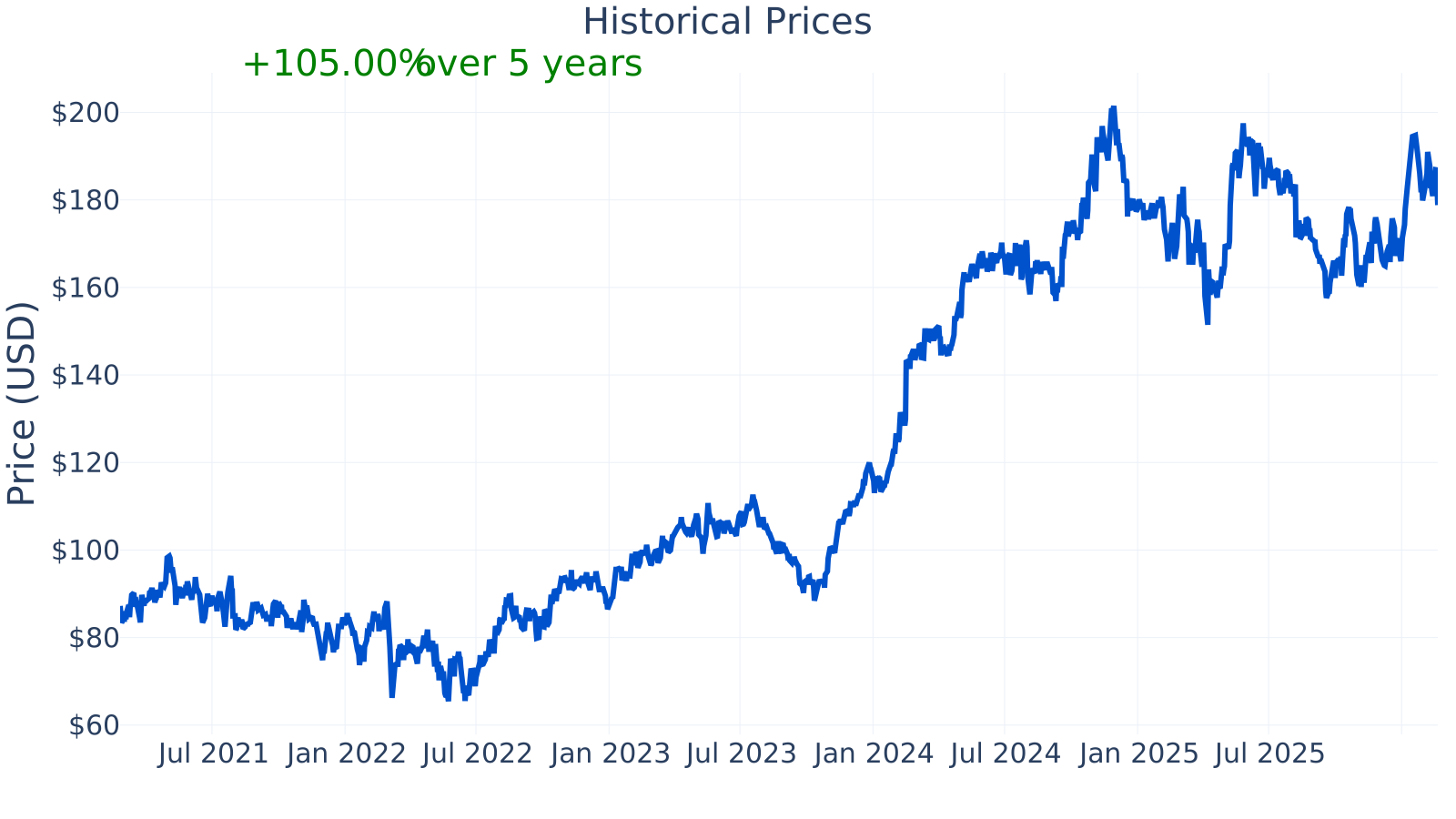
Texas Roadhouse’s market capitalization is about $11.9B, and the stock’s beta (~0.87) indicates it has historically moved somewhat less than the overall market. The latest P/E ratio is ~27.3, close to the restaurant industry median (~27.5). The latest profit margin is ~6.9% versus an industry median of about 7.7%, while the latest year-over-year revenue growth is ~3.1% versus an industry median near 7.35%. The latest debt-to-equity is ~129% (industry median ~99%). Trailing twelve-month free cash flow is ~$730M, and the PEG ratio (~1.83) is commonly interpreted as a valuation measure that relates price multiples to expected growth (lower values generally imply “more growth per unit of valuation,” but outcomes depend heavily on whether growth expectations are met).
Growth (Medium)
The restaurant industry is mature, but it can still grow over time through new restaurant openings, taking market share from weaker operators, pricing (menu price increases), and improving the guest experience to drive repeat visits. For Texas Roadhouse, a long-term growth approach has typically combined: (1) expanding its restaurant base, and (2) driving higher sales at existing restaurants through execution and operational consistency.
The year-over-year revenue growth trend shown is strong in earlier periods (reflecting recovery and expansion) and moderates later, reaching about 3.1% in the most recent point shown. For a restaurant operator, slower top-line growth can occur when comparisons get tougher, consumer demand softens, or when growth depends more heavily on new unit openings rather than big increases at existing locations.
Free cash flow (cash generated after operating needs and capital spending) rose meaningfully in the period shown, increasing from roughly $240M to about $394M across the dates displayed, with the latest metrics indicating a higher trailing value of about $730M. For long-term business building, steady cash generation can help fund new restaurant development, remodels, and other investments while supporting the balance sheet.
Potential catalysts for future growth generally come from successfully opening new locations (and doing so with attractive economics), maintaining strong restaurant-level execution, and continuing to build its newer concepts (Bubba’s 33 and Jaggers) in a disciplined way. Whether these drivers translate into sustained growth depends on consumer spending conditions, the pace and cost of new builds, and management’s ability to keep the guest experience consistent as the footprint expands.
Risks (Medium)
This article is for informational purposes only and does not constitute financial advice. Some content is AI-generated. See Disclaimer