Stock Analysis · Texas Instruments Incorporated (TXN)
Overview
Texas Instruments Incorporated (TI) is a semiconductor company best known for making “analog” and “embedded processing” chips. These components are the quiet workhorses inside everyday electronics: they help devices sense the real world (sound, temperature, motion, power), convert signals so electronics can use them, and control basic functions reliably for many years.
TI sells largely to industrial and automotive customers, where products often stay in use for a long time and must meet strict reliability standards. A key part of TI’s model is selling many different chips in high volume over long product lifecycles, supported by a broad catalog and a large global sales and distribution network. TI also manufactures a meaningful portion of its chips in its own facilities, which can support supply control and long-term capacity planning (but also requires sustained capital spending).
In its reporting, TI groups revenue mainly into two segments. Based on company filings, the main sources of revenue are:
- Analog (largest): chips that manage power and process real-world signals for industrial and automotive systems, communications equipment, and consumer electronics.
- Embedded Processing: processors and microcontrollers used to control electronic systems (commonly found in industrial equipment, vehicles, and connected devices).
TI also reports a smaller category typically described as Other (which can include items such as calculators and certain other products), but the business is primarily driven by Analog and Embedded Processing in its SEC filings.
Across the last several years shown, total revenue and profit dollars move with the semiconductor cycle: revenue declined from 2022 to 2024, then increased in 2025. At the same time, operating costs such as research and development rose gradually, while interest expense increased versus earlier years, which can matter more in weaker demand periods.
Key Figures
| Metric | Value | Industry ⓘ |
|---|---|---|
| Date | Feb 07, 2026 | |
| Context | ||
| Sector | Technology | |
| Industry | Semiconductors | |
| Market Cap ⓘ | $201.21B | |
| Beta ⓘ | 0.99 | |
| Fundamental | ||
| P/E Ratio ⓘ | 40.63 | 45.89 |
| Profit Margin ⓘ | 28.28% | 9.42% |
| Revenue Growth ⓘ | 10.40% | 13.10% |
| Debt to Equity ⓘ | 86.33% | 25.62% |
| PEG ⓘ | 1.69 | |
| Free Cash Flow ⓘ | $2.60B | |
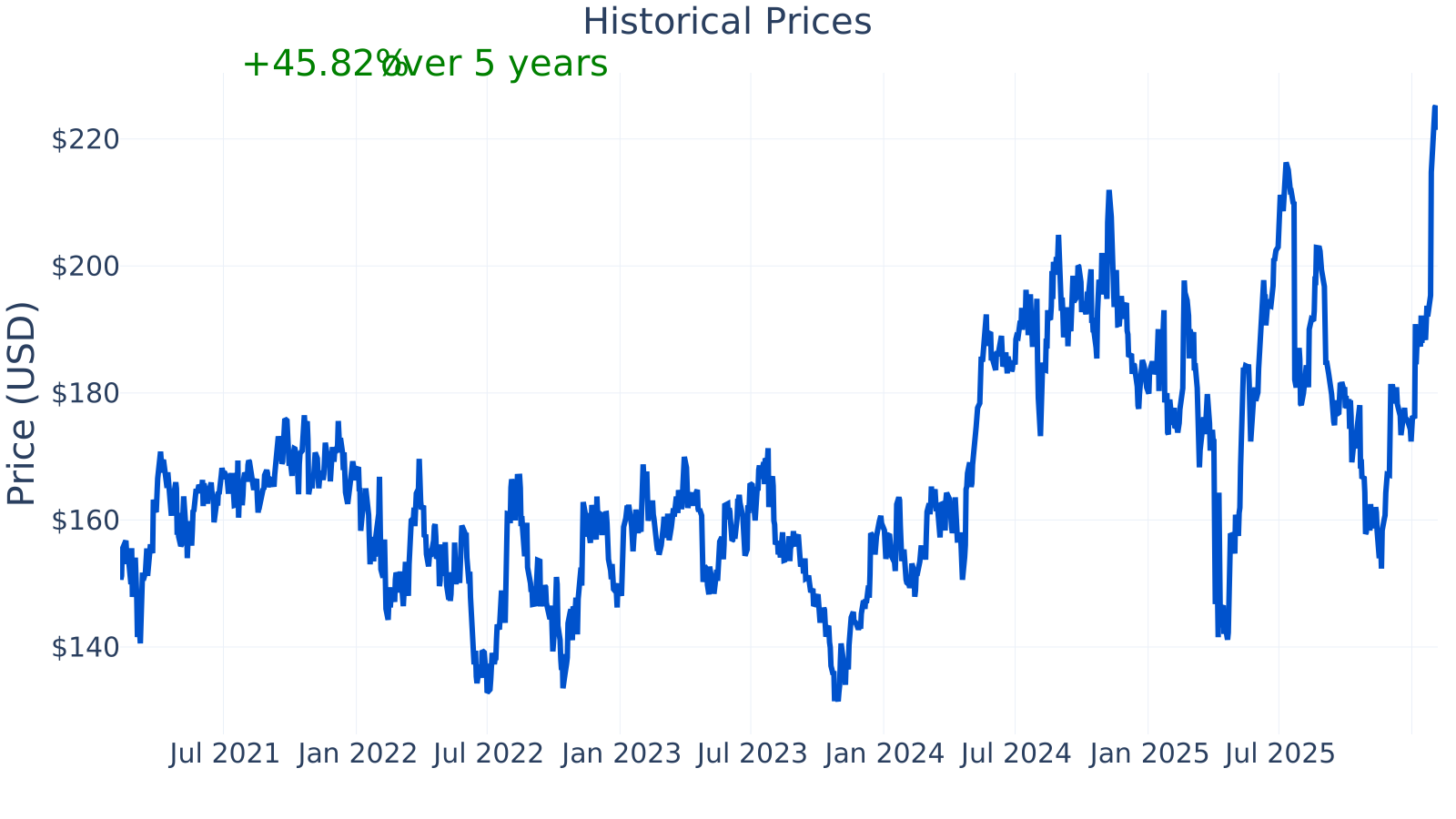
Texas Instruments shows a large market capitalization (about $201B) and a beta near 1.0, which often corresponds to price moves that are broadly in line with the overall equity market. The company’s profit margin is about 28%, which is notably higher than the industry median near 9% in this peer set—an indicator of strong profitability even after a downcycle. Recent year-over-year revenue growth is about 10%, slightly below the industry median around 13%. Leverage is higher than the industry median, with debt-to-equity around 86% versus an industry median near 26%. Trailing free cash flow is about $2.6B, which is positive, though it has fluctuated materially over time (discussed below).
Growth (Medium)
TI operates in semiconductors, a foundational industry that benefits over long periods from electrification, automation, and the rising amount of electronics inside industrial equipment and vehicles. Unlike some chip companies that rely heavily on short product cycles (for example, cutting-edge consumer devices), TI’s emphasis on analog and embedded chips is typically tied to long-lived end products and multi-year customer programs.
TI’s strategy has historically focused on a broad product portfolio, deep customer relationships in industrial and automotive markets, and significant internal manufacturing. In long time horizons, this can support steadier supply, consistent quality, and a cost position that improves with scale—while also exposing the company to the need for disciplined spending when demand weakens.
The revenue growth pattern highlights the cyclical nature of demand. After strong growth in 2021 and early 2022, growth turned negative through much of 2023 and 2024, before returning to positive territory in 2025 (ending around 10% year-over-year). For long-term context, this kind of swing is common in semiconductors as customers adjust inventories and end-market demand changes.
Free cash flow (cash left after operating needs and capital spending) declined meaningfully from 2021–2022 levels (above $6B) to under $1B in 2024, then improved to around $1.5B in 2025. This drop-and-recovery can reflect both the downcycle in profits and ongoing investment needs. For a company that builds and expands manufacturing capacity, free cash flow can be especially sensitive to the timing of large capital projects.
Risks (Medium)
This article is for informational purposes only and does not constitute financial advice. Some content is AI-generated. See Disclaimer