Stock Analysis · Tesla Inc (TSLA)
Overview
Tesla, Inc. designs and manufactures fully electric vehicles and also sells energy generation and storage products. In simple terms, it is primarily a car company centered on electric vehicles, with additional businesses that include batteries for homes and utilities, solar products, and a software and services layer built around its vehicles (such as connectivity and driver-assistance features). Tesla also operates a fast-charging network and provides vehicle-related services, which together aim to make owning an electric vehicle easier and keep customers in the company’s ecosystem.
Based on Tesla’s segment reporting in its annual filings, its main revenue sources typically break down into:
- Automotive (the largest share): vehicle sales and vehicle leasing, plus items closely tied to vehicles (such as regulatory credits and certain automotive services depending on how they are classified in filings).
- Energy generation and storage: battery storage systems and solar-related products/services.
- Services and other: after-sales services, used vehicles, parts, repairs, charging-related revenue, insurance (in certain regions), and other ancillary activities.
Tesla’s reported mix can shift over time, but the overall picture is that vehicle-related revenue dominates, while energy and services provide additional (and strategically important) diversification.
Over the last several years, total revenue expanded significantly from 2021 into 2024, then dipped in 2025. At the same time, operating expenses rose steadily (notably research and development as well as selling, general, and administrative costs), while net income declined materially by 2025 versus earlier peaks—showing that profitability has been more volatile than revenue.
Key Figures
| Metric | Value | Industry ⓘ |
|---|---|---|
| Date | Feb 08, 2026 | |
| Context | ||
| Sector | Consumer Cyclical | |
| Industry | Auto Manufacturers | |
| Market Cap ⓘ | $1.54T | |
| Beta ⓘ | 1.89 | |
| Fundamental | ||
| P/E Ratio ⓘ | 384.21 | 21.50 |
| Profit Margin ⓘ | 4.00% | 1.46% |
| Revenue Growth ⓘ | -3.10% | 9.40% |
| Debt to Equity ⓘ | 10.20% | 87.12% |
| PEG ⓘ | 6.67 | |
| Free Cash Flow ⓘ | $6.22B | |
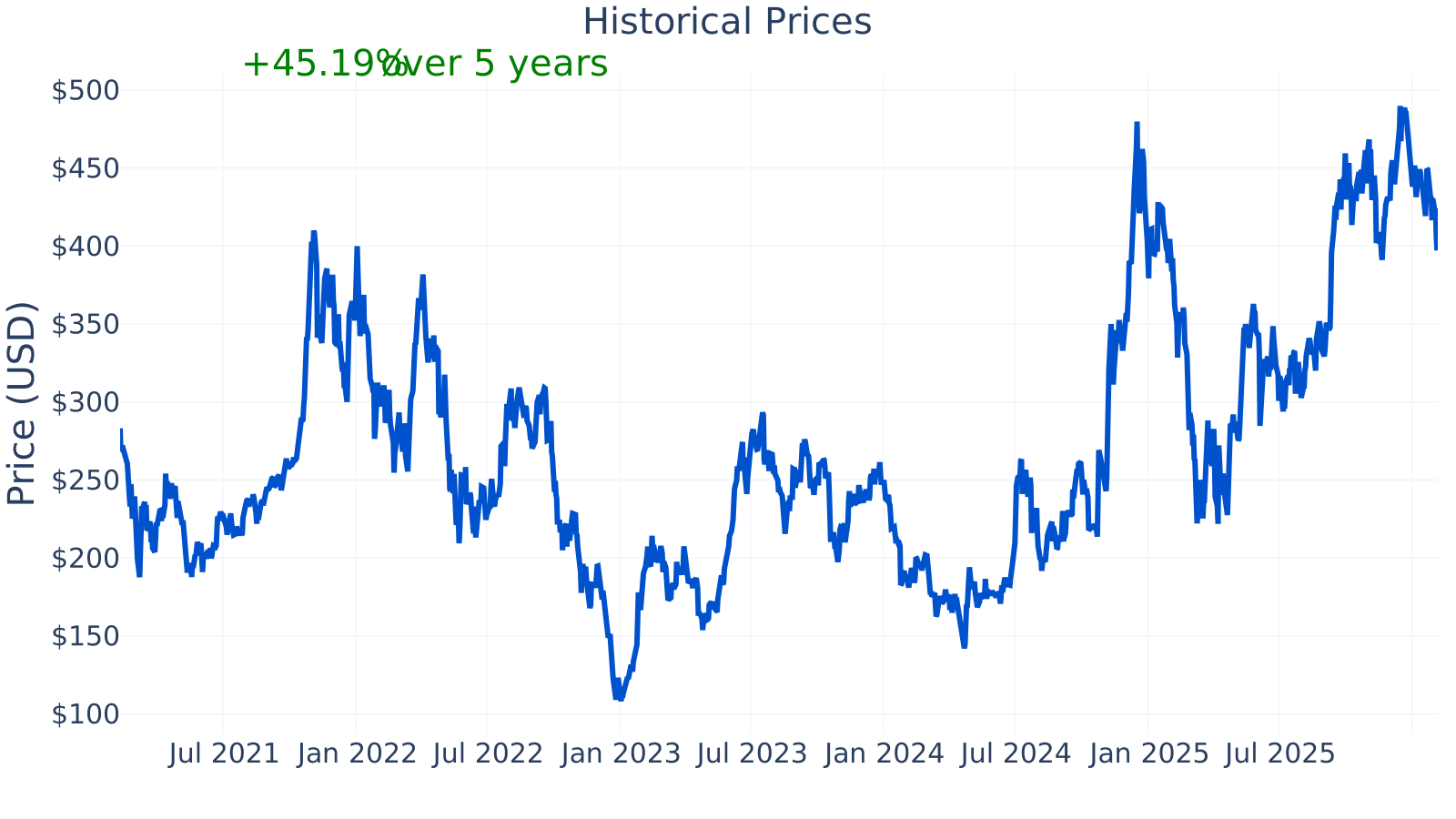
Tesla’s market capitalization is about $1.54 trillion, and the stock’s beta (~1.89) indicates it has historically moved more than the broader market (higher volatility). The latest P/E ratio (~384) is far above the industry median (~21.5), meaning the market price implies very high expectations relative to current earnings. Profit margin is about 4.0% versus an industry median of about 1.46%. Revenue growth year-over-year is about -3.1% (industry median about +9.4%). Debt-to-equity is about 10%, well below the industry median (about 87%), indicating comparatively low balance-sheet leverage. Trailing twelve-month free cash flow is about $6.22 billion.
Growth (Medium)
Tesla operates in industries shaped by long-term trends: the shift from internal combustion engines to electric vehicles, the buildout of charging infrastructure, and the need for grid-scale and home energy storage. These themes can support growth over long periods, but they do not guarantee smooth year-to-year results because auto demand is cyclical and competition has intensified across price points.
Tesla’s strategy is built around scale manufacturing, cost reduction, and integrating software and energy products around the vehicle. In theory, this can create multiple growth “levers” beyond unit sales alone: expanding the installed vehicle base (which can support software/services), increasing energy storage deployments, and improving production efficiency over time. However, the company’s recent numbers show that growth has not been consistent, and profitability has fluctuated meaningfully.
The revenue growth pattern shows a sharp slowdown from very high growth rates in 2021–2022 to much lower growth in 2023–2024, with declines appearing in parts of 2024 and again in 2025 (ending around -3.1% year-over-year). This kind of deceleration can happen when a company becomes larger, when prices fall, when demand normalizes, or when competition increases.
Free cash flow (cash generated after operating needs and capital spending) has also moved noticeably over time: rising strongly into 2022, weakening into 2024, and then improving again by 2025 (about $6.78B around Q1 2025 in the series, and about $6.22B on a trailing basis in the latest snapshot). For a manufacturing-heavy business, this metric matters because it reflects how much cash remains after funding factories, equipment, and expansion.
Risks (High)
This article is for informational purposes only and does not constitute financial advice. Some content is AI-generated. See Disclaimer