Stock Analysis · Tenable Holdings Inc (TENB)
Overview
Tenable Holdings Inc is a cybersecurity software company focused on helping organizations find, understand, and reduce weaknesses across their technology environments. In simple terms, it provides tools that continuously look for “exposures” (such as unpatched systems, misconfigurations, or other security gaps) across IT systems, cloud environments, and identity-related assets, so security teams can prioritize what to fix first.
The company primarily generates revenue by selling software subscriptions and related services to businesses and public-sector organizations. Like many software companies, it aims to grow by expanding usage within existing customers (more users, more systems monitored, more modules) and by adding new customers over time.
Public filings typically describe revenue in two broad categories:
- Subscription revenue (the core of the business; recurring software access sold under term-based contracts)
- Professional services and other revenue (implementation support, training, and related services; usually smaller and less recurring)
Over the last several years, total revenue has risen meaningfully, and the business model has shown high gross profit (typical for subscription software), while operating expenses (especially research & development and go-to-market costs) have been a major driver of overall profitability.
From 2021 to 2025, total revenue increased from about $541M to about $999M, and gross profit increased from about $435M to about $780M. Operating income moved from a loss in 2021–2023 to a small profit in 2024–2025, indicating progress toward operating breakeven as the company scaled.
Key Figures
| Metric | Value | Industry ⓘ |
|---|---|---|
| Date | May 04, 2026 | |
| Context | ||
| Sector | Technology | |
| Industry | Software - Infrastructure | |
| Market Cap ⓘ | $2.43B | |
| Beta ⓘ | 0.75 | |
| Fundamental | ||
| P/E Ratio ⓘ | N/A | 29.58 |
| Profit Margin ⓘ | -1.15% | 6.71% |
| Revenue Growth ⓘ | 9.60% | 18.30% |
| Debt to Equity ⓘ | 168.93% | 24.92% |
| PEG ⓘ | 0.98 | |
| Free Cash Flow ⓘ | $263.18M | |
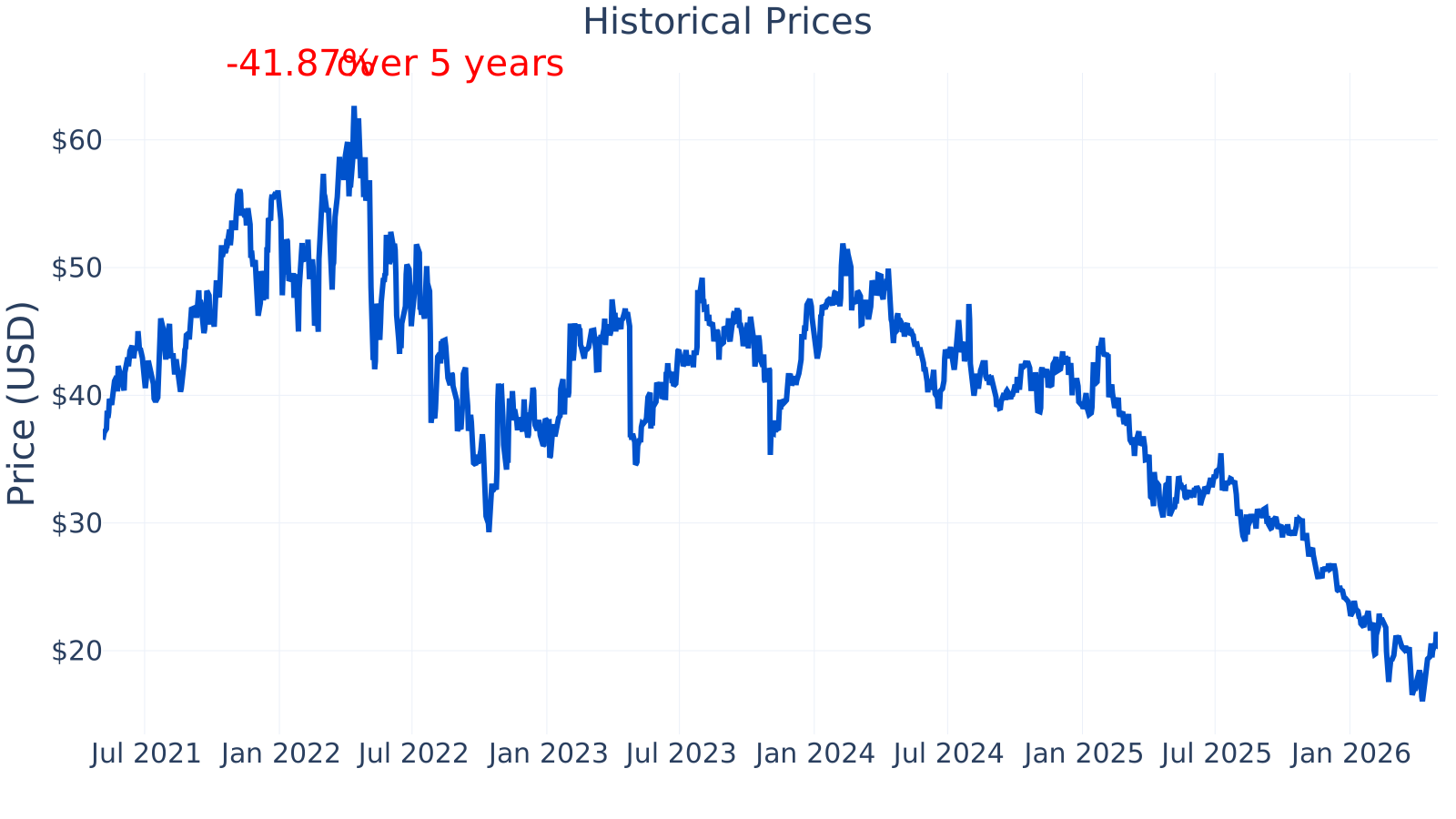
Tenable’s market capitalization is about $2.43B, and its stock has shown a beta of ~0.75 (historically less volatile than the broader market). The company’s profit margin is about -1.15%, which is below the industry median (~6.71%), but it is relatively close to break-even compared with earlier periods. Year-over-year revenue growth is about 9.6%, below the industry median (~18.3%) for its peer group. Debt-to-equity is about 169%, substantially above the industry median (~25%), which makes balance-sheet risk more important to monitor. Despite reported net losses, trailing twelve-month free cash flow is about $263M, indicating the business has recently been generating cash after operating needs and capital spending. The PEG ratio is ~0.98, a commonly used (but assumption-dependent) metric that relates valuation to expected growth.
Growth (medium)
Cybersecurity is generally considered a structurally important area because organizations continue to expand digital systems (cloud services, remote work, software-heavy operations) while facing constant threats. Within cybersecurity, Tenable’s focus on continuous visibility and prioritization of exposures aligns with a long-running enterprise need: knowing what assets exist, where the biggest weaknesses are, and what to fix first.
A long-term growth strategy in this type of software business typically rests on three pillars: maintaining strong product relevance (so customers renew), increasing recurring subscription revenue per customer (expansion), and controlling operating costs as scale grows. Tenable’s recent shift toward positive operating income (even if modest) fits the “scale improves operating results” pattern often seen in subscription software businesses.
The revenue growth trend shows a clear deceleration from the mid-20% range in 2021–2022 to about 9.6% most recently. This does not imply the business is shrinking, but it suggests the company is operating in a more mature growth phase or facing a tougher selling environment, stronger competition, or larger-customer budget scrutiny.
Free cash flow has improved over time, rising from about $81M (TTM as of 2022-03-31) to about $263M (TTM as of 2026-03-31). For long-term business durability, sustained cash generation can matter because it provides flexibility to fund product development, repay obligations, or pursue acquisitions without relying as heavily on external financing.
Risks (high)
A primary risk is competitive pressure in cybersecurity and infrastructure software. Enterprise buyers can choose from many vendors, and categories can overlap (for example, vulnerability management features may be bundled into broader security platforms). This can lead to pricing pressure, longer sales cycles, or slower growth.
Another key risk is profitability and operating leverage. While operating income turned slightly positive in 2024–2025, the company’s net margin remains slightly negative most recently. A sustained return to wider losses (from higher costs, slower renewals, or tougher pricing) would reduce financial flexibility over time.
Debt-to-equity has increased to about 169% most recently, far above the industry median (~25%). The ratio has also been volatile over the years, which can happen when companies use debt and/or when equity levels move due to accounting and market dynamics. A higher leverage profile can amplify risk if operating conditions weaken or if refinancing becomes more expensive.
Profit margin has improved materially from deeply negative levels (around the -10% to -13% range in 2022–2023) to about -1.15% most recently, but it still trails the industry median (about 6.95% at the latest point shown). This gap highlights that peers, on average, are currently producing stronger bottom-line profitability.
On competitive advantages, Tenable’s differentiation is typically positioned around broad visibility into exposures and prioritization workflows that help security teams focus resources. However, it is not the only well-known vendor in this area, and some competitors offer broader platform suites that can be appealing to large enterprises seeking vendor consolidation.
Main competitors often include large cybersecurity platform companies and vulnerability/exposure management specialists. In practice, Tenable commonly competes with:
- Qualys (vulnerability and cloud security with a long-standing platform approach)
- Rapid7 (exposure and security operations offerings)
- Large platform vendors that bundle adjacent capabilities (which can increase competitive pressure via consolidation)
Relative positioning can depend heavily on customer size, security stack preferences, and whether buyers want a specialist tool or a broader all-in-one platform. This makes customer retention and product pace (feature development, integrations, and cloud coverage) central to long-term outcomes.
Valuation
A traditional price-to-earnings (P/E) ratio is not currently meaningful for Tenable in the chart shown because the company’s P/E is displayed as 0, which typically occurs when earnings are negative or when the ratio is otherwise not informative. For comparison, the industry median P/E in the peer group shown is around the high-20s to low-30s across the displayed dates. In cases like this, valuation analysis often leans more on revenue multiples, cash flow measures, and the path to sustained profitability—topics that are typically detailed in company filings and investor materials.
With revenue growth recently around 9.6% and profit margin still slightly negative, valuation context tends to hinge on whether the company can (1) re-accelerate growth through product expansion and customer upsell and/or (2) expand margins further through scale and cost discipline. The company’s positive and rising free cash flow supports the idea that cash generation is improving even while accounting earnings remain slightly negative.
Conclusion
Tenable operates in cybersecurity, an area with persistent demand driven by the ongoing need to identify and reduce security weaknesses across complex IT and cloud environments. Over several years, the company has grown revenue substantially and improved operating results toward breakeven, alongside a notable rise in free cash flow.
At the same time, the recent pace of revenue growth is lower than earlier years and below the industry median for its peer set, while profitability still trails the peer median. The balance-sheet profile also stands out: debt-to-equity is high versus peers, which can increase sensitivity to business slowdowns or financing conditions. Overall, the long-term picture depends on execution in a competitive market—maintaining product relevance and renewals, driving efficient expansion within customers, and translating scale into durable profitability.
Sources:
- SEC EDGAR — Tenable Holdings, Inc. Form 10-K (Annual Report)
- SEC EDGAR — Tenable Holdings, Inc. Form 10-Q (Quarterly Reports)
- Tenable Investor Relations — SEC filings and shareholder materials
- Wikipedia — “Tenable, Inc.” (basic company background)
This article is for informational purposes only and does not constitute financial advice. Some content is AI-generated. See Disclaimer