Stock Analysis · Somnigroup International Inc (SGI)
Overview
Somnigroup International Inc (SGI) operates in the consumer cyclical sector, within the furnishings, fixtures & appliances industry. In practical terms, this is a business tied to household spending patterns: when consumers feel confident and housing activity is healthy, demand for home-related products tends to be stronger; when conditions tighten, demand often cools.
From its financial profile, SGI appears to generate revenue primarily from selling consumer products in its category (home/furnishings-related offerings) through its commercial channels. The company’s results also show meaningful operating costs (cost of revenue and operating expenses) typical of product-based businesses, where manufacturing/sourcing, distribution, and sales/marketing can represent large portions of the income statement.
Revenue mix by product line or geography (with percentages) is typically disclosed in annual reports and segment notes; it is not included in the information shown here, so this section stays at a high level rather than listing exact shares.
Across 2021–2025, total revenue was roughly flat around $4.9B through 2024, then increased sharply in 2025 to about $7.48B. Over the same span, operating income rose to about $985M in 2025, but net income stayed around $384M, suggesting that below-operating line items (notably interest expense) became more important in the final earnings picture.
Key Figures
| Metric | Value | Industry ⓘ |
|---|---|---|
| Date | Feb 23, 2026 | |
| Context | ||
| Sector | Consumer Cyclical | |
| Industry | Furnishings, Fixtures & Appliances | |
| Market Cap ⓘ | $19.14B | |
| Beta ⓘ | 1.28 | |
| Fundamental | ||
| P/E Ratio ⓘ | 57.72 | 19.28 |
| Profit Margin ⓘ | 5.14% | 3.93% |
| Revenue Growth ⓘ | 54.70% | 1.70% |
| Debt to Equity ⓘ | 265.92% | 100.45% |
| PEG ⓘ | N/A | |
| Free Cash Flow ⓘ | $633.20M | |
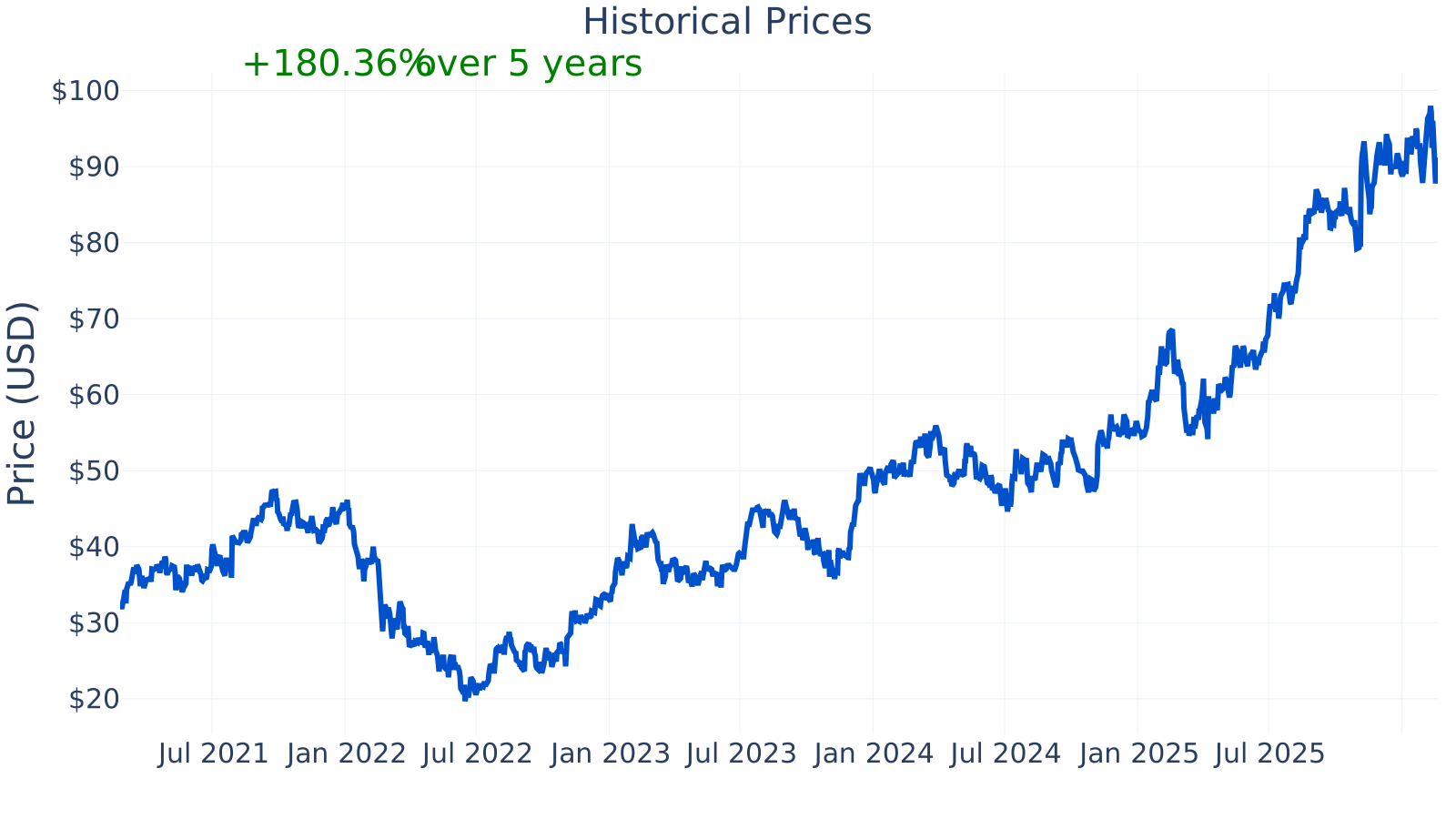
SGI’s market capitalization is about $19.1B. The stock’s beta is about 1.28, which indicates the share price has historically moved more than the broader market on average (higher volatility than a beta near 1).
On valuation, the latest P/E ratio is about 57.7 versus an industry median near 19.3. Profit margin is about 5.14% versus an industry median near 3.93%. Year-over-year revenue growth is shown at about 54.7% versus an industry median near 1.7%, and trailing twelve-month free cash flow is about $633M. Debt-to-equity is about 265.9% versus an industry median near 100.5%, indicating heavier leverage than many peers in the same industry.
Growth (Medium)
SGI operates in a consumer cyclical category, where long-term demand is often linked to household formation, housing turnover, renovation cycles, and consumer purchasing power. That backdrop can support multi-year growth, but it is usually not a straight line: periods of strong demand can be followed by pullbacks when interest rates rise or consumer budgets tighten.
The most recent year-over-year revenue growth figures accelerate materially into 2025 (rising into the ~35% to ~63% range across the year, ending around ~55%). That pattern can reflect a business expansion, acquisitions, distribution gains, pricing changes, or comparisons against weaker prior periods. For long-term analysis, a key question is whether the higher revenue level can be maintained once the comparison becomes “harder” in the following year.
Free cash flow (a rough measure of cash generated after operating needs and capital spending) is positive and has increased in the periods shown (from about $468M to about $553M in the trailing twelve-month snapshots provided, with the latest level shown in the table around $633M). Positive free cash flow can help a company fund reinvestment, reduce debt, or handle downturns without depending as much on external financing—though the strength and consistency over a full cycle matter.
Potential “catalysts” for continued growth typically include expanding distribution, taking market share, product innovation, and (in cyclical industries) a more supportive housing/consumer environment. Whether these drivers are durable depends on SGI’s competitive position and balance sheet flexibility, discussed below.
Risks (High)
This article is for informational purposes only and does not constitute financial advice. Some content is AI-generated. See Disclaimer