Stock Analysis · Telephone and Data Systems Inc (TDS)
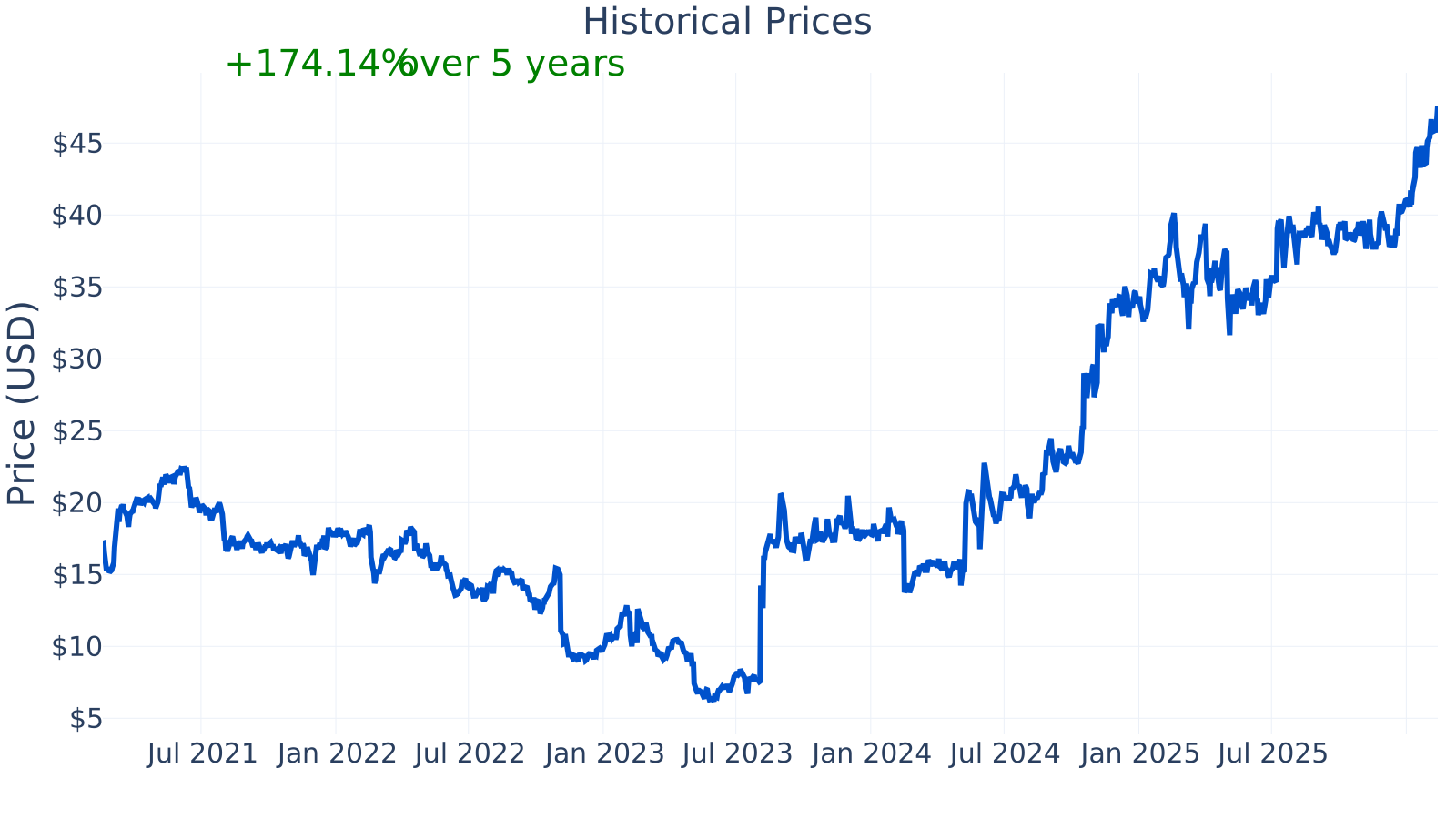
Overview
Telephone and Data Systems, Inc. (TDS) is a U.S. telecommunications company. Through its businesses, it provides wireless service and devices, and it also offers broadband and voice services (including fiber and fixed wireless) mainly in certain U.S. markets. In simple terms, TDS makes money by connecting people and households to mobile networks and home internet, and by selling related services and equipment.
TDS reports results through operating segments that include its majority-owned wireless business (UScellular) and its cable/broadband business (TDS Telecom). In telecom, most revenue typically comes from recurring monthly service charges (wireless plans and broadband subscriptions), with a smaller portion tied to equipment sales and other fees. Exact revenue mix percentages can vary by year and are detailed in the company’s annual report by segment and service categories.
Main sources of revenue (highest to lowest, described at a high level):
- Wireless service revenue (monthly service from UScellular customers)
- Broadband / internet service revenue (primarily from TDS Telecom)
- Equipment sales (handsets/devices and related items)
- Other revenues (fees, roaming, and other smaller items)
The company’s recent income statement pattern shows a business with fairly stable gross profit dollars, but with operating income and net income that have been volatile—suggesting that operating costs, depreciation/amortization, restructuring items, or other charges can meaningfully affect bottom-line results from year to year.
From 2021 to 2024, total revenue declined (about $5.33B to $4.96B), while gross profit remained relatively steady (about $2.86B to $2.83B). Over the same period, interest expense increased (about $232M to $279M), which can put pressure on net income when operating performance is not consistently strong.
Key Figures
| Metric | Value | Industry ⓘ |
|---|---|---|
| Date | Feb 16, 2026 | |
| Context | ||
| Sector | Communication Services | |
| Industry | Telecom Services | |
| Market Cap ⓘ | $5.50B | |
| Beta ⓘ | 0.34 | |
| Fundamental | ||
| P/E Ratio ⓘ | N/A | 15.09 |
| Profit Margin ⓘ | -1.18% | 6.18% |
| Revenue Growth ⓘ | -5.80% | 2.10% |
| Debt to Equity ⓘ | 31.57% | 113.97% |
| PEG ⓘ | 4.56 | |
| Free Cash Flow ⓘ | $286.25M | |
TDS has a market capitalization of about $5.50B and a relatively low beta of 0.34, which indicates the stock has historically moved less than the broader market. Profitability is currently a key weak point: the latest profit margin is about -1.18%, compared with an industry median near 6.18%. Revenue trends are also negative in the latest period shown: year-over-year revenue growth of about -5.8% versus an industry median near +2.1%. On the balance sheet side, reported leverage looks lower than many peers, with debt-to-equity around 31.6% versus an industry median near 113.97%. Free cash flow over the trailing twelve months is positive at about $286M, which matters because telecom networks require ongoing investment, and free cash flow is a key measure of financial flexibility.
Growth (Low)
Telecom is a mature industry in the U.S. Demand for connectivity is durable—people tend to keep mobile service and home internet even in weaker economic periods—but industry growth is often incremental rather than rapid. Newer growth pockets (like fiber expansion, fixed wireless, and continued 5G-related upgrades) can help, yet competition is intense and network investment requirements are high.
A practical way to view TDS’s growth profile is to separate “industry demand” from “company momentum.” Even if the broader need for connectivity keeps rising, the company still needs to maintain and grow subscribers, improve network economics, and keep pricing competitive to translate demand into sustained revenue and earnings growth.
The revenue growth pattern shown is mostly negative in recent years, with a notable deterioration in the latest quarter displayed. Persistently negative year-over-year revenue growth can signal customer losses, pricing pressure, business mix changes, or strategic repositioning—and it generally makes long-term compounding harder unless margins or cash generation improve meaningfully.
One more constructive signal is the improvement in free cash flow over time: it moved from deeply negative levels (2021–2022) to positive levels (2023–2025 in the periods shown). In capital-intensive businesses, a shift toward sustained positive free cash flow can act as a potential catalyst because it can support network investment, debt reduction, or other corporate priorities without relying as heavily on external financing. That said, positive free cash flow alone does not guarantee growth; it needs to coincide with stable or improving operating performance.
Risks (High)
This article is for informational purposes only and does not constitute financial advice. Some content is AI-generated. See Disclaimer


