Stock Analysis · Teledyne Technologies Incorporated (TDY)
Overview
Teledyne Technologies Incorporated is a diversified industrial-technology company that designs and manufactures specialized products used in demanding environments. Its portfolio spans digital imaging sensors and cameras, marine and environmental instruments (including sonar and monitoring equipment), aerospace and defense electronics, and engineered components. In practical terms, Teledyne sells high-performance hardware (and related software and services) to customers who prioritize reliability and measurement accuracy—such as government agencies, aerospace and defense contractors, industrial companies, and research organizations.
In its SEC filings, Teledyne groups its business into four reporting segments that represent the main revenue streams:
- Digital Imaging (cameras, sensors, imaging components and systems)
- Instrumentation (marine, environmental, and test/measurement instruments)
- Aerospace and Defense Electronics (mission-critical electronics and subsystems)
- Engineered Systems (select integrated solutions and specialized systems)
Exact percentages by segment can change year to year and are provided in the company’s annual report segment disclosures.
The multi-segment structure can help diversify demand: a slowdown in one end-market (for example, parts of industrial demand) may be partially offset by strength in another (such as certain defense-related programs), although diversification is not a guarantee against downturns.
Over recent years, revenue has generally risen while profitability has remained meaningful. Operating income has tended to track revenue growth, and interest expense appears modest relative to operating income, which can matter in higher-rate environments.
Key Figures
| Metric | Value | Industry ⓘ |
|---|---|---|
| Date | Apr 27, 2026 | |
| Context | ||
| Sector | Technology | |
| Industry | Scientific & Technical Instruments | |
| Market Cap ⓘ | $30.05B | |
| Beta ⓘ | 1.01 | |
| Fundamental | ||
| P/E Ratio ⓘ | 32.89 | 38.35 |
| Profit Margin ⓘ | 14.99% | 12.96% |
| Revenue Growth ⓘ | 7.60% | 8.05% |
| Debt to Equity ⓘ | 23.13% | 24.92% |
| PEG ⓘ | 1.40 | |
| Free Cash Flow ⓘ | $1.05B | |
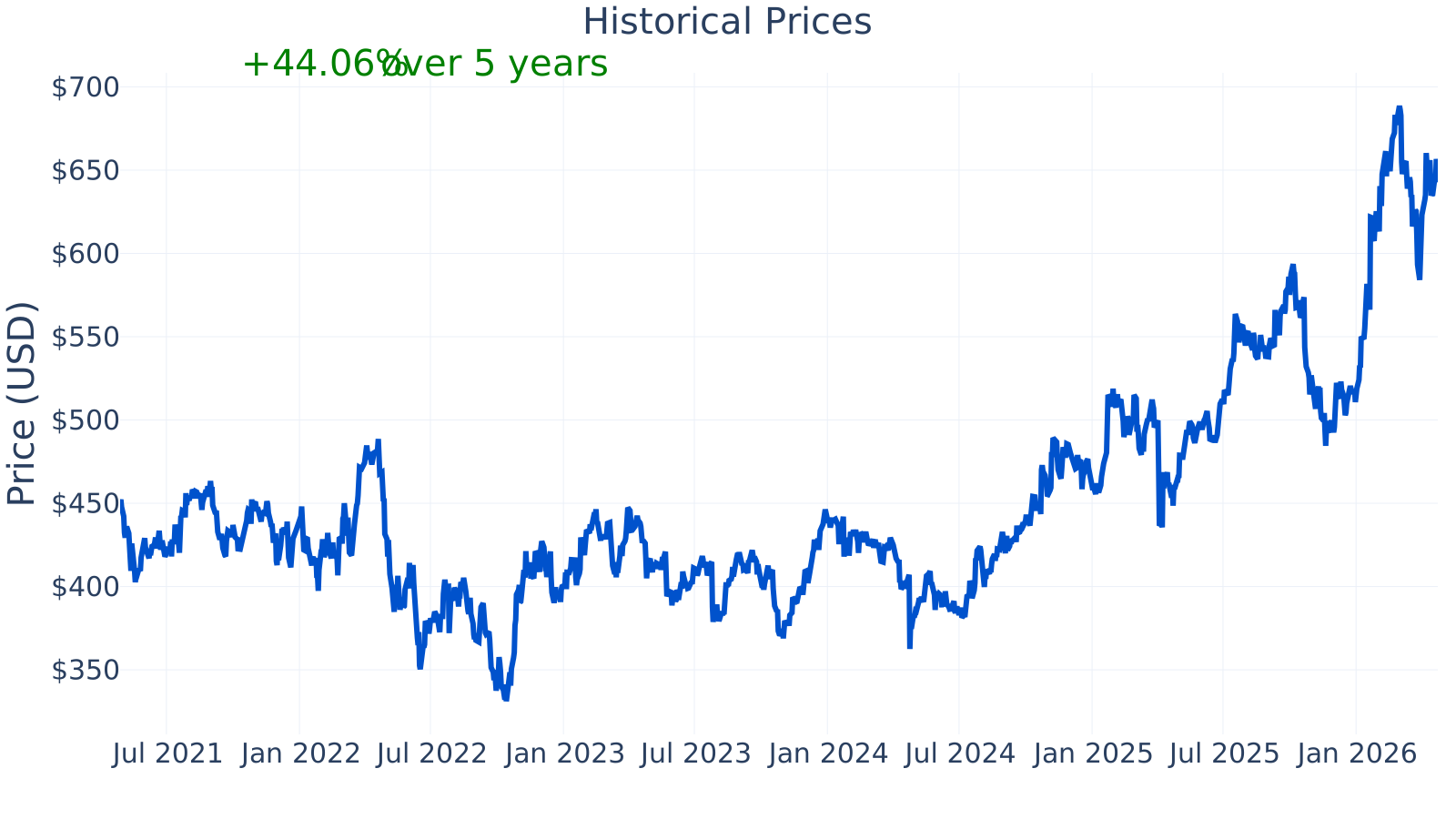
Teledyne’s market capitalization is about $30.0B, and the stock’s beta (~1.01) indicates price movement that has been roughly in line with the broader market. The company’s P/E ratio is ~32.9, below the industry median shown (~38.4). Profitability looks solid versus peers: profit margin ~15.0% compared with an industry median of ~12.96%.
Near-term growth is positive but not exceptionally high: revenue growth year-over-year ~7.6%, close to the industry median (~8.05%). Balance sheet leverage looks moderate with debt-to-equity ~23% versus an industry median of ~25%. Trailing twelve-month free cash flow is about $1.05B, indicating the business is generating cash after operating needs and capital spending.
Growth (Medium)
Teledyne participates in several long-lived demand areas rather than a single, fast-cycling trend. These include imaging (used in industrial inspection, science, aerospace, and defense applications), marine and environmental sensing (monitoring, navigation, subsea mapping), and aerospace/defense electronics (often tied to multi-year programs). These markets can benefit from continued investment in automation and inspection, persistent demand for advanced sensing, and government spending cycles—although the pace can vary by year and by program.
The company’s strategy, as described in its filings, emphasizes specialized engineered products, long customer relationships, and a mix of organic investment and acquisitions. This approach can support growth if Teledyne continues to integrate acquisitions effectively and maintain technology differentiation in niches where performance and reliability matter.
Revenue growth shows a surge in earlier periods followed by a normalization to mid-single-digit growth, including a brief dip into slightly negative territory before returning to positive levels. The most recent reading is about 7.6% year-over-year, which is broadly in line with the peer-group median shown.
Free cash flow expanded materially from 2022 to 2023 and has remained around the $0.8B–$1.05B range more recently, with the latest near $1.05B. Consistent cash generation can support reinvestment, debt reduction, and acquisitions, but it can still fluctuate with working capital needs and the timing of customer deliveries.
Risks (Medium)
Teledyne’s end-markets include areas that can be cyclical or program-driven. Demand may depend on government budgets (notably in defense-related businesses), the timing of large customer orders, and industrial spending conditions. Some products are also subject to lengthy qualification cycles and strict customer requirements, which can make revenue timing uneven.
Competition is another key risk. Teledyne operates in specialized markets with capable rivals, and pricing or technology shifts can pressure margins. Competitive dynamics vary by segment. Depending on the product area, alternatives can include large diversified instrument and aerospace electronics companies as well as focused niche providers. In many of Teledyne’s niches, differentiation often comes from performance, reliability, certifications, and integration into customer workflows rather than from lowest cost.
On competitive positioning, Teledyne’s potential advantages commonly include:
- Specialization and engineered performance in sensing/imaging and mission-critical electronics
- Customer stickiness where qualification, reliability requirements, and long replacement cycles matter
- Portfolio breadth across imaging, instruments, and aerospace/defense electronics, which can broaden customer relationships
Whether it is the “leader” depends on the exact niche (for example, a specific sensor type or marine instrument category). The company generally competes across multiple narrower categories rather than one single market where any firm is universally dominant.
Leverage has trended downward over time: debt-to-equity moved from roughly the 65% range in 2021 toward about 23% most recently, and it now sits slightly below the industry median shown. Lower leverage can reduce financial flexibility risks during downturns, though it does not remove operating or market risks.
Profit margin improved from roughly 10%–11% in 2021 to the mid-teens more recently, with the latest around 15%. Across much of the period shown, Teledyne’s margin appears above the industry median, which can indicate favorable product mix, cost control, or pricing power—while also setting a higher bar to maintain those levels if costs rise or competition intensifies.
Valuation
Valuation is often discussed using the price-to-earnings (P/E) ratio, which compares the stock price to the company’s earnings. Teledyne’s latest P/E is about 32.9, while the industry median shown is about 38.4. This places Teledyne below the peer-group median on that single measure, although P/E ratios can be influenced by accounting items, acquisition-related charges, and differences in business mix.
Historically, Teledyne’s P/E ratio in the period shown ranged from the low 20s to the high 40s, with the most recent readings in the low-to-mid 30s. Relative to the industry median on the chart, Teledyne has often traded at a discount in several recent periods, though it has also traded above the median at times. The company’s PEG ratio (~1.40) provides a growth-adjusted valuation reference point, but it is sensitive to how future growth is estimated and can change materially as expectations shift.
In context, the valuation appears to reflect a business with steady cash generation, mid-single-digit revenue growth recently, and profit margins that have been competitive versus peers. At the same time, the multiple embeds expectations around continued execution, end-market stability, and maintaining margins in specialized categories.
Conclusion
Teledyne Technologies is a diversified provider of specialized imaging, instrumentation, and aerospace/defense electronics, with revenue spread across four operating segments and customers that often require high reliability and performance. Recent metrics show mid-single-digit revenue growth, a profit margin around 15% (above the industry median shown), and about $1.05B in trailing free cash flow.
The main considerations for long-term context are the company’s ability to sustain differentiation in niche markets, manage program and industrial-cycle variability, and continue converting earnings into cash while maintaining disciplined balance sheet leverage. On valuation, the current P/E is below the industry median shown, while still reflecting meaningful expectations for continued performance given Teledyne’s business quality and margin profile.
Sources:
- SEC EDGAR — Teledyne Technologies Incorporated Forms 10-K, 10-Q (Segment reporting; risk factors; financial statements)
- Teledyne Technologies Incorporated — Investor Relations materials and SEC filing documents (as posted by the company)
- Wikipedia — “Teledyne Technologies” (general company background)
This article is for informational purposes only and does not constitute financial advice. Some content is AI-generated. See Disclaimer