Stock Analysis · Teledyne Technologies Incorporated (TDY)
Overview
Teledyne Technologies Incorporated (TDY) designs and manufactures specialized equipment that helps customers sense, image, and measure the world in demanding environments. Its products are used in areas such as aerospace and defense, factory automation, environmental monitoring, marine applications, and digital imaging. In practice, this often means high-performance sensors, cameras, test-and-measurement instruments, and monitoring systems that are embedded into larger customer platforms or workflows.
Teledyne’s revenue base is diversified across multiple operating segments that generally combine hardware, software, and services. This mix tends to emphasize engineered products where performance, reliability, and long product cycles matter, rather than consumer electronics volume.
In its annual report, Teledyne breaks revenue into operating segments (listed from largest to smaller in typical reporting order), such as:
- Digital Imaging
- Instrumentation
- Aerospace and Defense Electronics
- Engineered Systems
Percentages by segment vary year to year and are provided in the company’s Form 10-K segment reporting tables.
Across the years shown, total revenue rose from about $4.6B (2021) to about $6.1B (2025). Operating income also increased over the period, with net income rising as well, indicating that profit dollars expanded alongside sales even as costs and operating expenses fluctuated.
Key Figures
| Metric | Value | Industry ⓘ |
|---|---|---|
| Date | Feb 07, 2026 | |
| Context | ||
| Sector | Technology | |
| Industry | Scientific & Technical Instruments | |
| Market Cap ⓘ | $30.40B | |
| Beta ⓘ | 1.01 | |
| Fundamental | ||
| P/E Ratio ⓘ | 33.33 | 45.31 |
| Profit Margin ⓘ | 14.63% | 12.33% |
| Revenue Growth ⓘ | 7.30% | 7.45% |
| Debt to Equity ⓘ | 23.54% | 49.68% |
| PEG ⓘ | 0.98 | |
| Free Cash Flow ⓘ | $1.07B | |
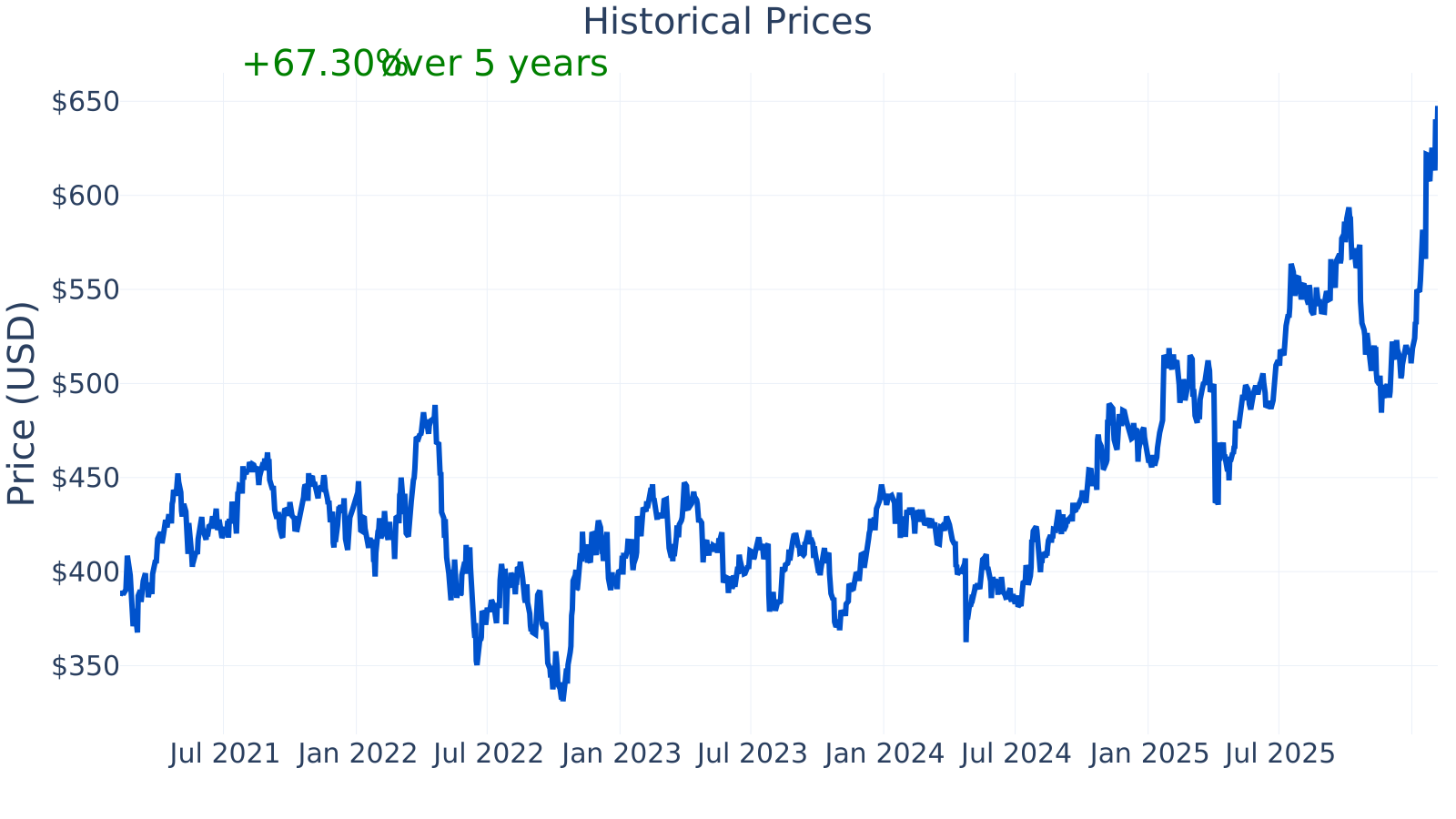
Teledyne’s market capitalization is about $30.4B, with a beta near 1.0 (historically, price moves have been roughly in line with the broader market). The current P/E ratio is about 33.3 versus an industry median near 45.3, while profit margin is about 14.6% versus an industry median near 12.3%. Revenue growth is about 7.3% year over year, close to the industry median near 7.5%. Debt-to-equity is about 23.5% versus an industry median near 49.7%, suggesting a lower leverage profile than many peers. Free cash flow over the trailing twelve months is about $1.07B, and the PEG ratio is about 0.98 (a valuation measure that relates P/E to expected earnings growth).
Growth (medium)
Teledyne operates in niches that are supported by long-term demand for sensing, automation, and high-reliability electronics. Many of its end markets—such as defense electronics, space-related payloads, industrial inspection, marine monitoring, and advanced imaging—tend to value performance and qualification history, which can create steady replacement and upgrade cycles. The company’s approach of combining specialized hardware with software and application knowledge is aligned with these markets, where customers often need integrated solutions rather than commodity components.
The year-over-year revenue growth trend shows very strong growth in 2021–2022 (which can happen after large acquisitions or major step-ups in demand), then a normalization to low single digits in 2023–2024, and a return to mid-to-high single digits in 2025 (about 7%–10% during the year). This pattern suggests that after a period of unusually rapid expansion, the business moved through a slower patch and then re-accelerated.
Free cash flow has increased meaningfully over time in the points shown, rising from roughly $0.60B (2021) to about $1.06B (2025). For long-term business quality, this matters because free cash flow can be used to pay down debt, reinvest in product development, or fund acquisitions—activities that can reinforce competitive positioning when executed well.
Potential catalysts described in company filings typically include new program ramps in aerospace/defense electronics, new imaging or sensing product cycles, and disciplined acquisition integration when the company targets complementary technologies or customer channels. The durability of these catalysts depends on customer budgets, program timing, and execution.
Risks (medium)
This article is for informational purposes only and does not constitute financial advice. Some content is AI-generated. See Disclaimer


