Stock Analysis · Take-Two Interactive Software Inc (TTWO)
Overview
Take-Two Interactive Software, Inc. is a video game publisher and developer. It creates, markets, and distributes games for consoles, PCs, and mobile devices, and it also runs ongoing “live” game services where players keep spending after the initial purchase (for example through extra content, in-game items, or subscriptions). The company operates mainly through its well-known labels Rockstar Games, 2K, Private Division, and Zynga (mobile).
Take-Two’s business is built around a portfolio of established franchises (for example Grand Theft Auto, Red Dead Redemption, NBA 2K, and Sid Meier’s Civilization), plus mobile titles from Zynga. Like many large publishers, results can vary significantly by year depending on the timing and success of major releases.
In its financial reporting, Take-Two commonly groups revenue into a few broad buckets. The mix changes over time, but the main sources typically include:
- Recurrent consumer spending (ongoing spending tied to existing games, such as virtual currency, add-on content, in-game purchases, and subscriptions)
- Full game sales (digital and physical)
- In-game advertising and other
Geographically, the company sells globally, with revenue split between the United States and international markets (exact shares are disclosed in annual filings and can shift year to year).
Over the past several fiscal years, revenue has generally grown, but operating costs (notably game development and other operating expenses) expanded sharply, contributing to large operating losses in the most recent periods shown. Gross profit stayed positive, indicating the core products still generate profit after direct costs, while the heavier spending and non-cash charges flowed through below that line.
Key Figures
| Metric | Value | Industry ⓘ |
|---|---|---|
| Date | Feb 07, 2026 | |
| Context | ||
| Sector | Communication Services | |
| Industry | Electronic Gaming & Multimedia | |
| Market Cap ⓘ | $36.22B | |
| Beta ⓘ | 0.93 | |
| Fundamental | ||
| P/E Ratio ⓘ | N/A | |
| Profit Margin ⓘ | -60.45% | 3.16% |
| Revenue Growth ⓘ | 24.90% | 8.70% |
| Debt to Equity ⓘ | 111.11% | 31.70% |
| PEG ⓘ | 2.14 | |
| Free Cash Flow ⓘ | $487.80M | |
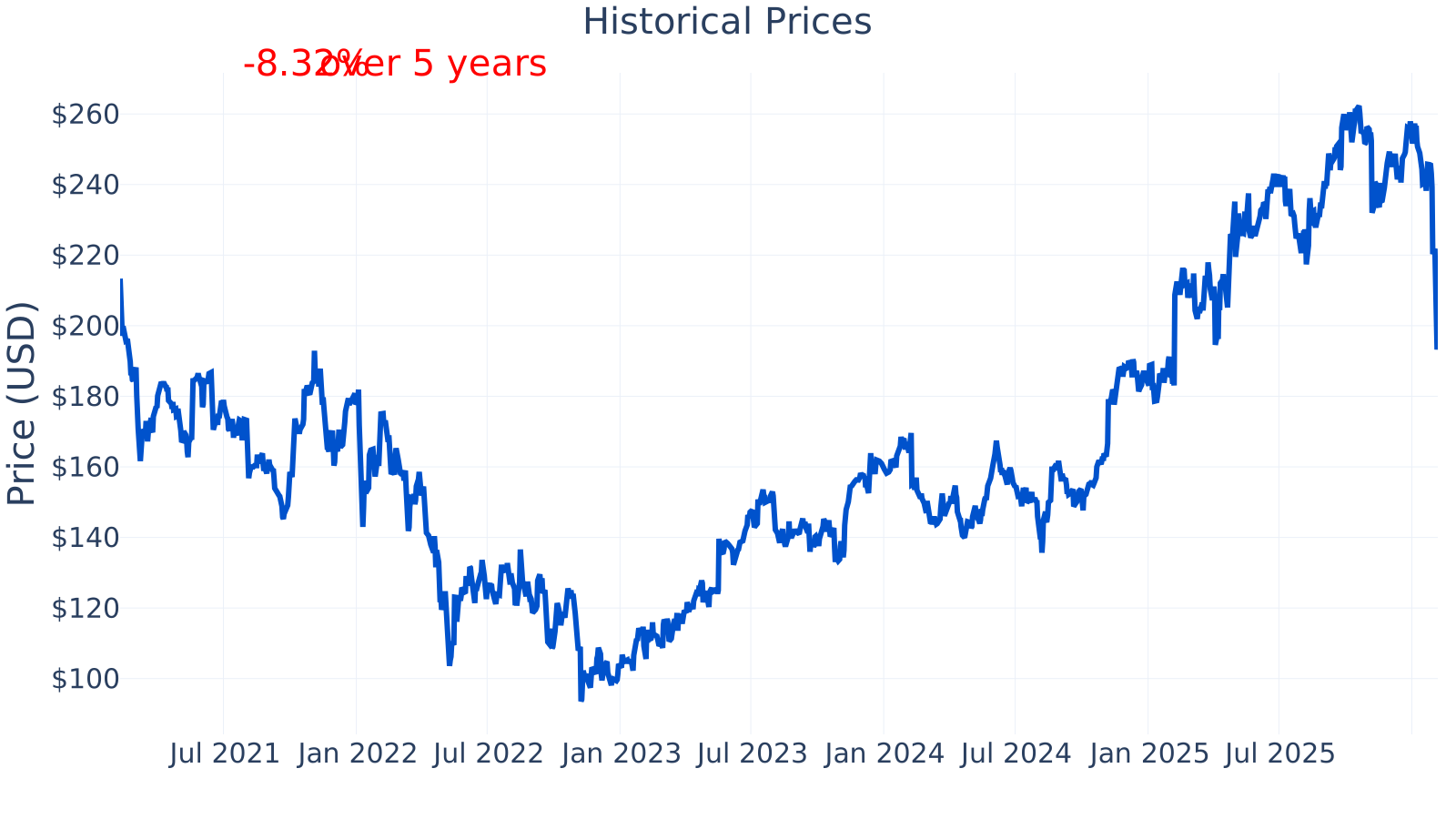
Take-Two’s market capitalization is about $36.2B, placing it among the larger publicly traded game publishers. The stock’s beta of ~0.93 suggests it has historically moved somewhat similarly to the broader market on average (though game stocks can still be volatile around major launches). The most recent profit margin is -60.45%, far below the industry median shown (about 3.16%), reflecting substantial losses. At the same time, the company’s most recent year-over-year revenue growth is 24.94%, above the industry median shown (about 8.7%). Debt-to-equity is ~111%, higher than the industry median shown (about 31.7%). Trailing twelve-month free cash flow is about $487.8M, indicating positive cash generation recently even while reported profitability is negative.
Growth (Medium)
The video game industry has long-term tailwinds: large global player bases, ongoing shifts toward digital distribution, and monetization models that extend a game’s life through updates and live services. Mobile gaming is also a significant segment, and Take-Two participates through Zynga. These trends generally support publishers that can consistently deliver popular content and keep players engaged over time.
Take-Two’s strategy focuses on a combination of (1) blockbuster, premium releases from major franchises and (2) recurring spending from ongoing content and online ecosystems. In practice, this model can produce uneven results year to year—big launches can create spikes, while quieter release periods can look softer. A potential catalyst in this business model is a major new installment in a top franchise (and the follow-on monetization that tends to come from online modes and add-on content), though the timing and commercial impact of any specific title is inherently uncertain.
The year-over-year revenue growth pattern shows meaningful swings: very strong growth in parts of 2022–2023, followed by slower or slightly negative comparisons in portions of 2023–2024, and then a re-acceleration into 2025 (ending at about 24.94% year-over-year). This highlights how release timing and live-service performance can materially affect reported growth from quarter to quarter.
Free cash flow has also been volatile across the timeline shown, moving from positive levels in 2021 to negative in 2023–2025 (on a trailing basis in that chart). At the same time, the latest metrics table shows positive trailing twelve-month free cash flow (~$487.8M), suggesting a more recent improvement versus some of the earlier trailing periods displayed in the chart. For long-term business durability, consistency of cash generation matters because it supports ongoing development investment without relying as heavily on new financing.
Risks (High)
A central risk for Take-Two is release concentration: a limited number of large franchises can represent a meaningful portion of sales and engagement. Development cycles are long and expensive, and delays or underperformance on a major title can have an outsized impact. The company also faces execution risk in live services—keeping communities active over many years requires continual content, reliable online operations, and careful balancing of player satisfaction with monetization.
Another key risk is the company’s recent profitability profile. While strong brands can support revenue, Take-Two has reported substantial losses in recent periods, influenced by high operating expenses and other charges disclosed in filings. If costs remain elevated relative to revenue for extended periods, that can pressure flexibility for future investment.
Leverage increased materially over time, rising from very low levels in 2021 to about 111% most recently, which is also notably above the industry median shown (about 31.7%). Higher leverage can increase financial risk, particularly if cash flows weaken or if the company needs additional funding for development, acquisitions, or restructuring.
Profit margin moved from positive territory in 2021 to persistently negative levels afterward, reaching very large losses in 2024–2025 (most recently about -60.45%, versus an industry median shown of about 3.16%). This gap emphasizes that, despite strong franchises, the company’s recent cost structure and charges have outweighed revenues on a net basis.
Competition is intense. Large global publishers and platform-adjacent companies compete for player time and spending, including:
- Electronic Arts (EA) (sports and live services)
- Activision Blizzard (now part of Microsoft) (major franchises and online ecosystems)
- Ubisoft and other international publishers
- Tencent (broad games portfolio and investments)
- Platform companies (Sony, Microsoft, Nintendo) that influence distribution and economics
Take-Two’s competitive advantages largely come from brand strength and intellectual property (iconic franchises), creative talent and studios, and the ability to monetize over long product life cycles. It is not the overall industry leader by size, but it holds a strong position in premium console/PC releases and certain sports and mobile segments through its labels.
Valuation
Valuation for game publishers is often discussed using earnings-based measures like the price-to-earnings (P/E) ratio, but P/E can become less informative when earnings are negative or unusually volatile. That context matters for Take-Two because recent net income and profit margins have been negative.
The historical P/E values displayed are concentrated earlier in the period (for example, readings around the high-20s to mid-70s in 2021–2022), while later periods are not meaningful on this view because earnings were negative (the chart omits extreme or non-meaningful values). In this situation, investors and analysts often lean more on other lenses—such as revenue scale, cash flow generation, balance sheet leverage, and expectations around future release cycles—rather than a single earnings multiple.
With a market capitalization around $36B and a business where results can change significantly depending on major launches, the market price typically embeds expectations about future titles, recurring spending durability, and whether profitability can normalize as development and operating costs evolve. A key question for valuation is whether future operating performance can improve enough (and consistently enough) to justify today’s scale, especially given elevated leverage versus the industry median shown and the recent negative profitability.
Conclusion
Take-Two is a major interactive entertainment company with globally recognized franchises and a business model that combines blockbuster releases with ongoing player spending. The industry backdrop includes structural growth drivers such as digital distribution, live services, and mobile gaming, and Take-Two has assets that can benefit from these trends.
At the same time, the company’s recent fundamentals show a challenging mix: stronger-than-median revenue growth alongside deeply negative profit margins and meaningfully higher leverage than the industry median shown. For a long-term perspective, the main factual areas to monitor are (1) how consistently the company converts revenue into sustainable profits, (2) whether free cash flow remains positive across cycles, and (3) how leverage develops relative to operating performance—especially through major release periods and the ongoing monetization of its largest franchises.
Sources:
- SEC EDGAR — Take-Two Interactive Software, Inc. Form 10-K (Annual Report)
- SEC EDGAR — Take-Two Interactive Software, Inc. Form 10-Q (Quarterly Reports)
- Take-Two Interactive Investor Relations — Earnings releases and shareholder materials
- Wikipedia — “Take-Two Interactive” (basic corporate background)
This article is for informational purposes only and does not constitute financial advice. Some content is AI-generated. See Disclaimer