Stock Analysis · TTM Technologies Inc (TTMI)
Overview
TTM Technologies Inc. is a manufacturer of printed circuit boards (often shortened to “PCBs”), which are the flat boards that connect and hold electronic components inside devices. These boards are used in many end-products, ranging from communications equipment and computers to industrial systems and aerospace/defense electronics. In simple terms, TTM sits in the middle of the electronics supply chain: it makes a critical “building block” that other companies need to assemble finished electronic systems.
The company’s revenue primarily comes from producing and selling different types of circuit boards, including more advanced boards used in complex or high-reliability applications. In its SEC filings, TTM discusses end-market exposure such as aerospace and defense, data center/compute-related demand, networking/communications, and industrial/medical, among others. (The exact mix can move around depending on customer order cycles and broader electronics demand.)
Based on the way this business typically works, the main revenue drivers are generally:
- Printed circuit boards for complex electronics (core manufacturing revenue)
- Higher-technology / higher-layer boards used in demanding applications (often tied to better pricing power than commodity boards)
- Programs tied to regulated or high-reliability markets (commonly including aerospace and defense requirements)
For a percentage breakdown by end-market or product category, the most reliable source is the company’s latest Form 10-K / 10-Q segment and customer disclosures (these mixes can shift year to year).
Over the 2021–2025 period shown, total revenue rises overall (from about $2.25B in 2021 to about $2.91B in 2025), while operating income and net income fluctuate meaningfully. This pattern is common in manufacturing-heavy businesses where utilization, pricing, product mix, and costs (materials, labor, energy) can change margins substantially.
Key Figures
| Metric | Value | Industry ⓘ |
|---|---|---|
| Date | Feb 16, 2026 | |
| Context | ||
| Sector | Technology | |
| Industry | Electronic Components | |
| Market Cap ⓘ | $9.49B | |
| Beta ⓘ | 1.75 | |
| Fundamental | ||
| P/E Ratio ⓘ | 54.64 | 41.71 |
| Profit Margin ⓘ | 6.11% | 6.11% |
| Revenue Growth ⓘ | 19.00% | 13.80% |
| Debt to Equity ⓘ | 51.99% | 39.00% |
| PEG ⓘ | 0.52 | |
| Free Cash Flow ⓘ | $35.80M | |
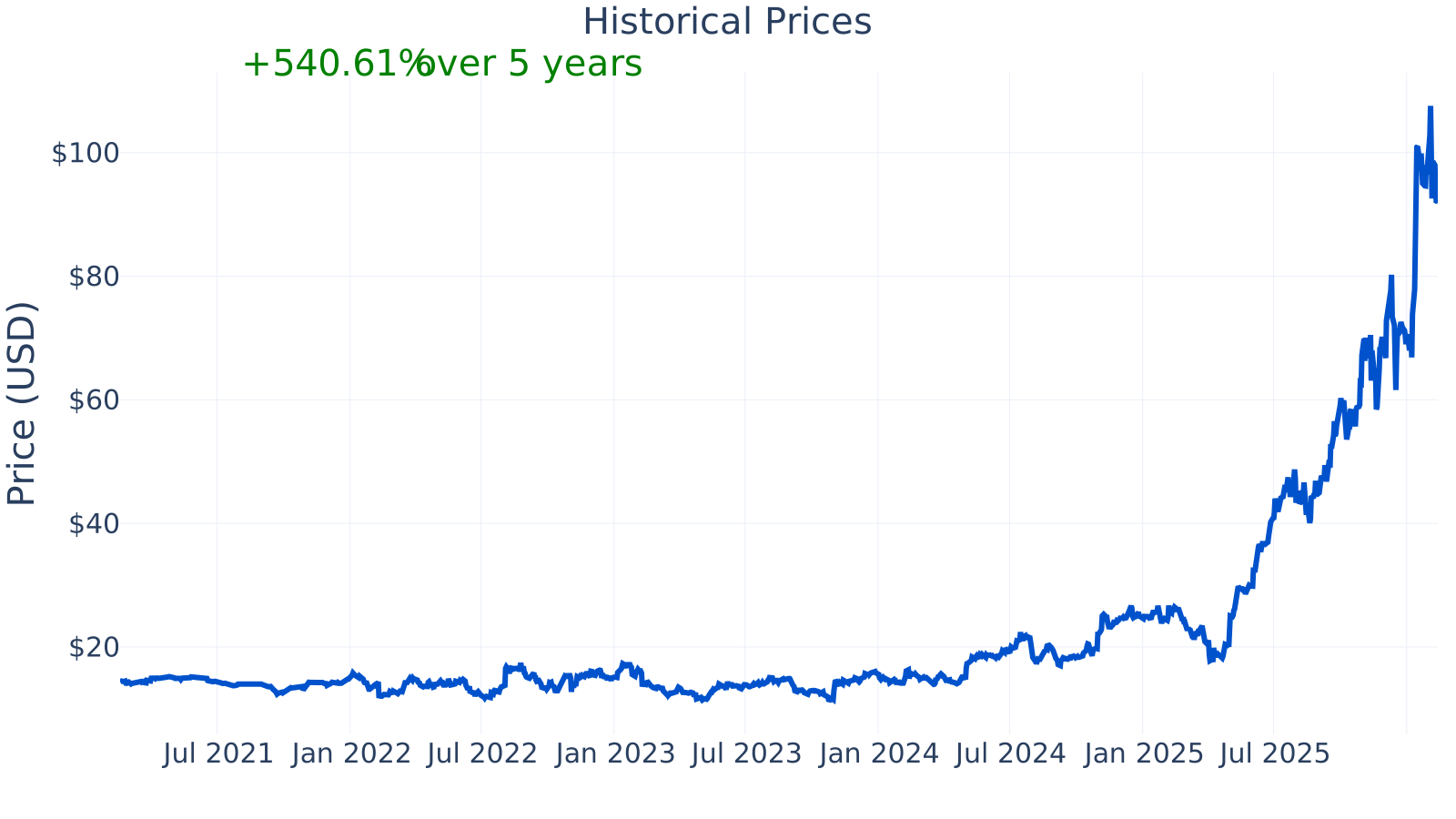
TTM Technologies Inc. has an estimated market capitalization of about $9.49B. The stock’s beta of ~1.75 suggests the share price has historically moved more than the overall market (higher up-and-down potential).
Profitability is currently shown at about 6.11% profit margin, which is in line with the industry median in the provided peer set. Recent revenue growth year over year is ~19%, above the industry median (~13.8%) shown here, indicating stronger recent top-line momentum versus the median peer.
Balance-sheet leverage is reflected in a debt-to-equity ratio of ~52%, higher than the industry median (~39%) in the peer set. Free cash flow over the trailing twelve months is shown at about $35.8M, which is positive but relatively modest for a company of this size (and has been volatile over time, as noted later).
Growth (Medium)
TTM operates in the electronic components ecosystem, and circuit boards are essential for essentially all modern electronics. Long-run demand is supported by ongoing digitization, increasing electronics content in equipment, and rising complexity in computing and connectivity hardware. That said, the PCB industry is also known for cyclical demand patterns (electronics up-cycles and down-cycles), and results can be sensitive to customer inventory corrections and broader industrial conditions.
Strategically, companies like TTM typically try to improve long-term positioning by focusing on higher-complexity boards, high-reliability end markets, and manufacturing consistency at scale. If executed well, that approach can support steadier demand and potentially better margins than commodity PCB production. However, growth depends not only on end-market demand, but also on factory utilization, pricing, and the ability to win/retain large programs.
The year-over-year revenue growth line shows a clear dip in 2023 (negative growth for multiple quarters), followed by a rebound through 2024 and into 2025. By late 2025, year-over-year growth is shown around the high-teens to low-20% range (ending near ~19%), indicating a recovery phase after the prior downturn.
Free cash flow has been uneven. It is shown as strongly positive in 2021, lower in 2022, higher again in 2023, then turning slightly negative around 2024–2025 before returning to a small positive trailing figure most recently (about $35.8M). For long-term business quality, this volatility matters because free cash flow is often what ultimately funds debt reduction, reinvestment, and financial flexibility.
Risks (High)
This article is for informational purposes only and does not constitute financial advice. Some content is AI-generated. See Disclaimer


