Stock Analysis · TKO Group Holdings Inc (TKO)
Overview
TKO Group Holdings, Inc. is a sports and entertainment company built around two major combat-sports brands: UFC (mixed martial arts) and WWE (professional wrestling). The business model centers on organizing live events, producing media content, and monetizing fan attention across broadcasting/streaming, sponsorships, and consumer products. TKO was formed through the combination of UFC and WWE under a single publicly traded company structure.
In simple terms, TKO earns money when audiences watch its events and shows (through media partners), when brands pay to be associated with its properties (sponsorship), when fans attend events (ticketing), and when fans buy products tied to its stars and storylines (merchandising and licensing). A key feature of this type of business is that strong brands and “must-see” events can travel globally and can be repackaged across many platforms (live events, TV/streaming, social media clips, and licensed products).
Main revenue streams are generally described in company reporting along these lines (exact percentages can shift by period and contract timing):
- Media rights (fees from broadcast/cable/streaming partners)
- Live events (ticket sales and on-site event revenue)
- Sponsorship (brand partnerships and advertising tied to events/programming)
- Consumer products & licensing (merchandise, video games, and other licensed products)
Across the years shown, total revenue rises notably from about $1.10B (2021) to about $2.80B (2024). At the same time, operating costs and other expenses also increase, and interest expense becomes a more visible deduction from operating profit, which helps explain why net income can swing even when revenue grows.
Key Figures
| Metric | Value | Industry ⓘ |
|---|---|---|
| Date | Feb 07, 2026 | |
| Context | ||
| Sector | Communication Services | |
| Industry | Entertainment | |
| Market Cap ⓘ | $17.40B | |
| Beta ⓘ | 0.23 | |
| Fundamental | ||
| P/E Ratio ⓘ | 80.57 | 50.96 |
| Profit Margin ⓘ | 8.99% | 4.93% |
| Revenue Growth ⓘ | -27.30% | 5.20% |
| Debt to Equity ⓘ | 105.81% | 80.15% |
| PEG ⓘ | N/A | |
| Free Cash Flow ⓘ | $994.50M | |
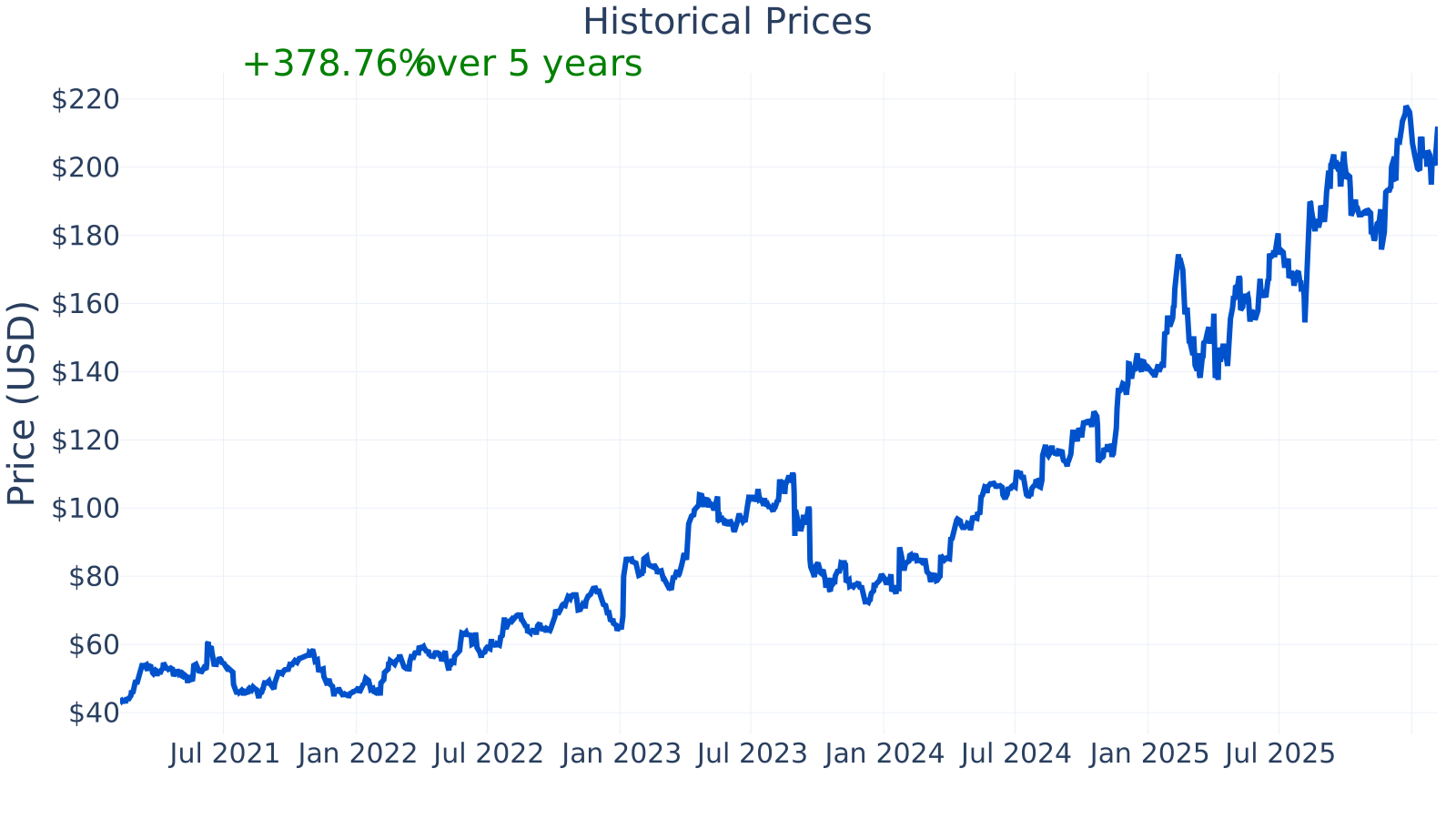
TKO’s market capitalization is about $17.4B and its beta is about 0.23, which indicates the share price (historically) has moved less than the broader market on average. The company’s P/E ratio (~80.6) is above the industry median (~51.0), while its profit margin (~9.0%) is also above the industry median (~4.9%). Revenue growth year-over-year is shown at -27.3%, below the industry median of about 5.2%, illustrating that growth can be uneven depending on timing, comparisons, and business mix. The debt-to-equity (~106%) is above the industry median (~80%), and trailing twelve-month free cash flow is about $994.5M, highlighting meaningful cash generation alongside a more leveraged balance sheet.
Growth (medium)
TKO operates in the global sports and entertainment market, where premium live content tends to be valuable because it attracts real-time audiences. Live sports-like programming is often harder to replace than scripted content, which can support demand from media partners seeking engagement and advertising opportunities. Combat sports and sports entertainment also benefit from international expansion, multilingual distribution, and the ability to create frequent “tentpole” events.
Strategically, combining UFC and WWE under one roof can create potential benefits such as shared expertise in event promotion, production, global distribution relationships, and sponsorship sales. The logic of the model is to maximize the value of content libraries and live events across media deals, partnerships, and direct-to-fan channels, while using star power and storylines to keep audiences engaged year-round.
Year-over-year revenue growth is volatile in the period shown, ranging from declines in parts of 2022–2023 to very high growth rates in some 2024 quarters, before returning to more moderate growth in 2025. For a business influenced by event timing, contract structures, and comparison effects, this pattern can occur even when longer-term demand remains solid.
Free cash flow trends upward overall in the period shown, rising from about $139M (2021) to about $732M (2025) (trailing twelve-month figures shown at selected points). For long-term analysis, free cash flow matters because it is a practical measure of how much cash the business produces after operating needs and capital spending—cash that can be used for debt reduction, reinvestment, or shareholder returns (depending on management decisions and constraints).
Risks (high)
This article is for informational purposes only and does not constitute financial advice. Some content is AI-generated. See Disclaimer


