Stock Analysis · Synnex Corporation (SNX)
Overview
Synnex Corporation (traded as SNX) operates under the TD SYNNEX brand after the combination of Synnex’s distribution business with Tech Data. The company is a large IT distributor and solutions aggregator: it sits between technology manufacturers (hardware and software vendors) and thousands of business partners such as resellers, systems integrators, managed service providers, and retailers. In practical terms, TD SYNNEX helps partners source products, finance purchases, manage logistics, and bundle hardware with software and services.
Its business model is typically high volume, low margin. That means revenue can be very large because the company sells a lot of product, but profitability depends on efficiency, scale, and controlling costs (shipping, warehousing, credit risk, and operating expenses).
Based on how the company reports its operations in filings, revenue is primarily organized by operating segments rather than individual product lines. The main sources of revenue are:
- Endpoint Solutions (typically includes PCs, mobile devices, peripherals, and related products/services)
- Advanced Solutions (typically includes data center technologies, cloud, software, and higher-complexity infrastructure solutions)
Percentages by segment can vary by year and are best read directly from the company’s most recent Form 10-K segment note, since the mix shifts with enterprise spending cycles and product availability.
One notable pattern in recent years is the scale of revenue relative to profit: total revenue is very large (tens of billions of dollars annually), while net income is much smaller (hundreds of millions). This is consistent with a distribution-focused model where costs of revenue take up most of sales and operating discipline is important.
Key Figures
| Metric | Value | Industry ⓘ |
|---|---|---|
| Date | Feb 07, 2026 | |
| Context | ||
| Sector | Technology | |
| Industry | Electronics & Computer Distribution | |
| Market Cap ⓘ | $13.96B | |
| Beta ⓘ | 1.37 | |
| Fundamental | ||
| P/E Ratio ⓘ | 17.22 | 18.34 |
| Profit Margin ⓘ | 1.32% | 1.72% |
| Revenue Growth ⓘ | 9.70% | 9.70% |
| Debt to Equity ⓘ | 54.56% | 54.56% |
| PEG ⓘ | 1.05 | |
| Free Cash Flow ⓘ | $1.39B | |
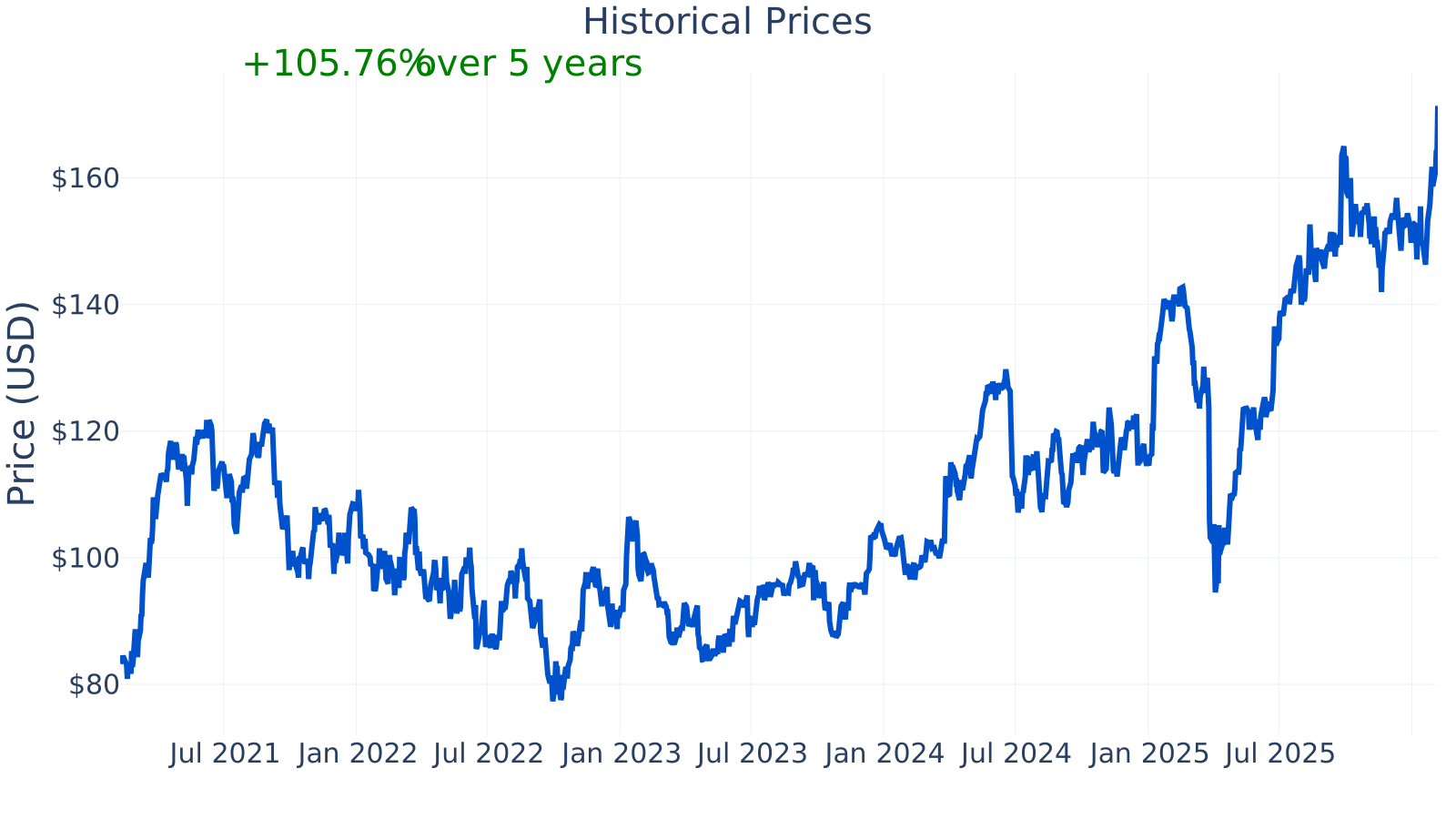
TD SYNNEX’s market capitalization is about $14.0B, placing it among the larger companies in its niche. The stock’s beta of 1.37 suggests the share price has tended to move more than the broader market (higher volatility than a typical “market-like” stock).
On valuation, the current P/E ratio is ~17.2, slightly below the industry median (~18.3) in the provided peer set. Profitability is thin: the latest profit margin is ~1.32% versus an industry median ~1.72%. Revenue growth year-over-year is about 9.7%, matching the peer median in the provided industry sample.
Leverage looks in-line with peers: debt-to-equity is ~54.6% (also matching the peer median shown). Free cash flow over the last twelve months is shown as ~$1.39B, though cash generation can swing meaningfully from year to year in distribution businesses due to working-capital needs (inventory and receivables).
Growth (Medium)
TD SYNNEX operates in the broad market for IT hardware, software, and cloud-related consumption delivered through a partner ecosystem. This is a mature but essential part of the technology supply chain: even when end-demand slows, businesses still refresh devices, maintain infrastructure, and increasingly adopt hybrid IT environments that combine on-premises equipment with cloud services.
A key element of the company’s long-term strategy is scale: being a large distributor can matter because partners want broad catalogs, reliable availability, fast delivery, and consolidated purchasing. Scale can also help with vendor relationships and operational efficiency across logistics and credit management. In addition, distribution companies often try to expand “value-add” capabilities (for example, services that help partners configure solutions, manage renewals, or support cloud programs), which can be meaningful because margins on pure product movement are typically limited.
The year-over-year revenue growth pattern is cyclical: there were periods of very high growth (notably around 2021–2022) followed by declines in 2023 and a return to positive growth more recently, reaching roughly ~9–10% YoY in the latest period shown. This kind of swing is common in distribution because results can be influenced by product cycles, supply conditions, and customer inventory adjustments.
Free cash flow has been uneven across the periods shown, ranging from strongly positive to negative. This is often tied to working capital: when the company builds inventory or extends more credit to customers, cash flow can decline even if reported earnings remain positive. The latest free cash flow level shown (~$1.39B) indicates substantial cash generation in the most recent trailing period, but the historical variability highlights that cash conversion is not constant year to year.
Risks (Medium)
This article is for informational purposes only and does not constitute financial advice. Some content is AI-generated. See Disclaimer