Stock Analysis · Synopsys Inc (SNPS)
Overview
Synopsys Inc. is a business-to-business software company that helps semiconductor and electronics companies design and verify computer chips and complex electronic systems. In simple terms, when a company wants to create a new chip (for smartphones, data centers, cars, industrial equipment, etc.), Synopsys provides tools that help engineers design the chip, check that it works correctly, and prepare it for manufacturing.
The company operates in an area often described as “electronic design automation” (EDA), plus related fields such as semiconductor intellectual property (pre-designed building blocks used inside chips) and software security testing. Because chip designs have become extremely complex, these tools tend to be deeply integrated into customers’ engineering workflows, and switching to a different toolset can be difficult and time-consuming.
Synopsys reports revenue primarily through two main segments in its filings:
- Design Automation (the largest): software tools used to design, verify, and implement chips and systems
- Design IP: licensed semiconductor IP blocks (and related products) used inside customers’ chip designs
Within these segments, Synopsys generally earns revenue through a mix of time-based software licenses, maintenance/support, services, and IP licensing/royalties. (Percentages by revenue source can vary by year and are detailed in the company’s annual report.)
Over the last several fiscal years, total revenue expanded steadily (from about $4.2B in fiscal 2021 to about $7.1B in fiscal 2025). Research and development spending also increased substantially over this period, reflecting the need to continuously improve tools as chip design requirements evolve. Net income was more volatile, influenced by items such as interest expense and other non-operating factors.
Key Figures
| Metric | Value | Industry ⓘ |
|---|---|---|
| Date | Feb 07, 2026 | |
| Context | ||
| Sector | Technology | |
| Industry | Software - Infrastructure | |
| Market Cap ⓘ | $81.67B | |
| Beta ⓘ | 1.13 | |
| Fundamental | ||
| P/E Ratio ⓘ | 50.76 | 25.66 |
| Profit Margin ⓘ | 18.89% | 6.68% |
| Revenue Growth ⓘ | 37.80% | 15.20% |
| Debt to Equity ⓘ | 50.46% | 19.82% |
| PEG ⓘ | 2.58 | |
| Free Cash Flow ⓘ | $1.35B | |
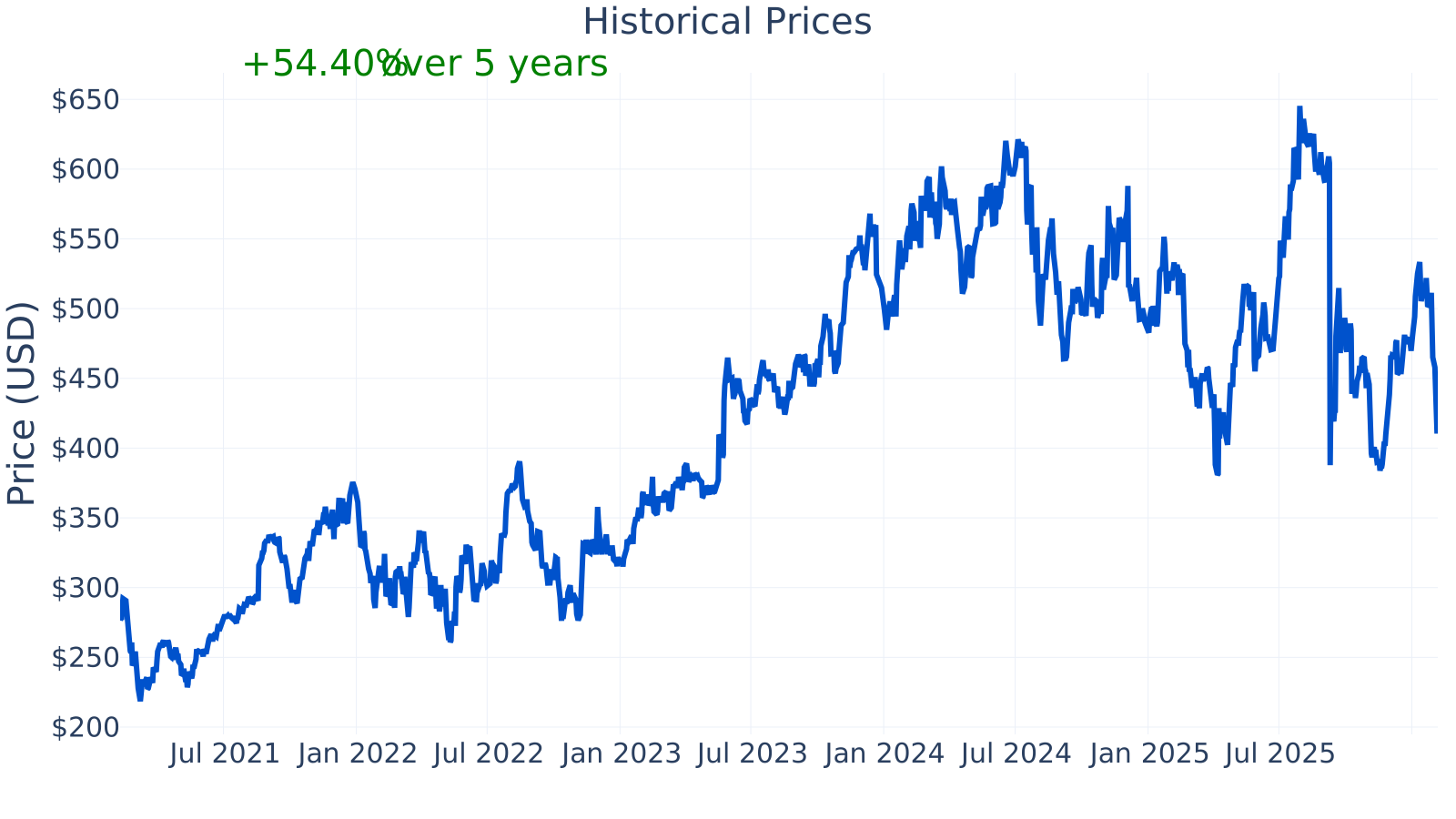
Synopsys is a large company by market value (about $81.7B) with a stock that has tended to move somewhat more than the broader market (beta ~1.13). The business shows strong profitability for its industry group: the latest profit margin is about 18.9% versus an industry median around 6.7%. Recent year-over-year revenue growth is shown at about 37.8%, higher than the industry median (about 15.2%), while leverage is also higher than the industry median (debt-to-equity about 50% vs. ~20%). The company also generated about $1.35B in trailing twelve-month free cash flow.
Growth (medium)
Synopsys operates in a part of the technology stack that is closely tied to long-run semiconductor demand. Even when chip sales fluctuate in the short term, the long-term trend has been toward more chips in more places: cloud computing, AI workloads, automotive electronics, industrial automation, and connected devices. As chips get more complex, design teams typically need more sophisticated software, more verification, and more pre-built IP blocks to reduce development time.
Strategically, Synopsys benefits from two reinforcing dynamics. First, its software tools are used early and repeatedly throughout the design process, which can support recurring revenue through licenses and support. Second, its IP portfolio can increase “design reuse,” where customers integrate proven building blocks rather than creating everything from scratch—often a practical necessity as engineering costs rise.
The recent revenue growth rate has been uneven across quarters but shows a sharp pickup in the most recent period displayed (around 37.8% year over year). That kind of jump can reflect customer timing, contract structure, and broader chip-industry cycles, so it is typically more informative to watch the multi-year direction rather than any single quarter.
Free cash flow has been consistently positive over the periods shown (roughly $1.3B–$1.6B across the trailing twelve-month snapshots). Consistent cash generation can matter for long-term resilience because it helps fund research and development, acquisitions, and other strategic investments without relying entirely on external financing.
Risks (medium)
This article is for informational purposes only and does not constitute financial advice. Some content is AI-generated. See Disclaimer