Stock Analysis · Synaptics Incorporated (SYNA)
Overview
Synaptics Incorporated is a semiconductor company that designs chips and related software used to help electronic devices “sense” and connect. Its products are commonly found in consumer electronics and other connected devices, supporting functions such as touch and display interfaces, device connectivity (for example Wi‑Fi and Bluetooth), and other embedded processing needs. Synaptics is a “fabless” chip designer, meaning it typically designs products and relies on manufacturing partners to produce them.
In its SEC filings, Synaptics describes revenue being generated from selling semiconductor products and licensing or related items connected to its technology portfolio. The company’s business is generally discussed in terms of product families and end markets (rather than a simple single-product model), and results can shift as demand changes across device categories.
Main revenue streams are typically described along these lines (exact mix varies by period and company reporting):
- IoT / embedded solutions (connectivity and embedded processing for connected devices)
- Mobile (touch and display interface solutions historically associated with smartphones)
- PC-related solutions (human interface solutions used in laptops and peripherals)
- Licensing / other (generally smaller and more variable)
Because the revenue split by category and percentages can change by reporting period, the most reliable place to confirm the latest breakdown is Synaptics’ most recent Form 10-K and quarterly investor materials.
Across the periods shown, total revenue fluctuates meaningfully (for example, about $1.74B in FY2022 vs. about $0.96B in FY2024), while research and development spending remains a large, relatively steady cost line (roughly in the mid-$300M range in the fiscal-year snapshots shown). This combination can create profit volatility when revenue weakens.
Key Figures
| Metric | Value | Industry ⓘ |
|---|---|---|
| Date | Feb 08, 2026 | |
| Context | ||
| Sector | Technology | |
| Industry | Semiconductors | |
| Market Cap ⓘ | $3.48B | |
| Beta ⓘ | 1.68 | |
| Fundamental | ||
| P/E Ratio ⓘ | N/A | 45.89 |
| Profit Margin ⓘ | -5.41% | 9.42% |
| Revenue Growth ⓘ | 13.20% | 12.95% |
| Debt to Equity ⓘ | 60.41% | 25.62% |
| PEG ⓘ | 0.48 | |
| Free Cash Flow ⓘ | $144.70M | |
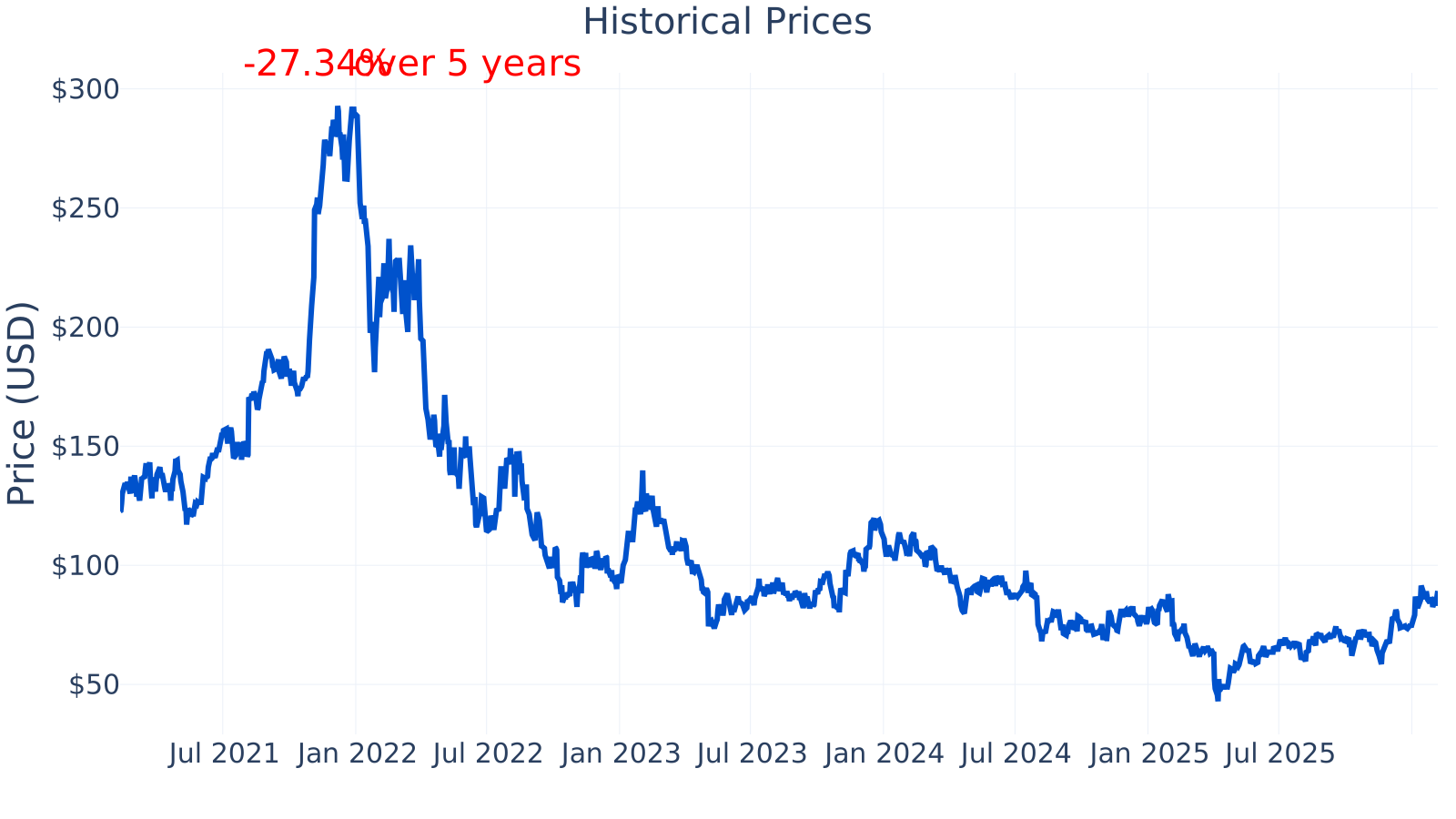
Synaptics’ market capitalization is about $3.48B, placing it in the smaller range within the Semiconductor industry. The stock’s beta of 1.68 indicates it has historically moved more than the overall market (higher volatility). The company shows year-over-year revenue growth of ~13.2%, roughly in line with the industry median (~13.0%) in the table, but its profit margin is negative (~-5.4%) compared with a positive industry median (~9.4%). Leverage is higher than the industry median, with debt-to-equity around 60% versus an industry median around 26%. Trailing twelve-month free cash flow is about $144.7M, and the PEG ratio (~0.48) is listed as relatively low, though PEG depends heavily on growth estimates and can be unstable when earnings are volatile.
Growth (medium)
Synaptics operates in semiconductors, a sector supported over the long run by ongoing digitization: more connected devices, more sensors, more connectivity, and more computing at the “edge” (devices doing more processing locally). Within that broad backdrop, the company’s positioning around embedded and connectivity solutions aligns with a world where everyday products increasingly include networking and interface capabilities.
At the same time, Synaptics’ historical results show that demand can be cyclical, especially where end markets are tied to consumer electronics and device upgrade cycles. This makes “growth” less like a straight line and more dependent on timing—product cycles, customer inventory adjustments, and broader hardware spending conditions.
The year-over-year revenue growth pattern illustrated is volatile: strong positive growth in parts of 2021–2022, then a deep contraction through 2023 into early 2024, followed by a return to positive growth through 2024–2025 (around the low‑teens most recently). For long-term context, this suggests the company can participate in upswings but may also experience sharp downswings.
Free cash flow also varies widely across the periods shown—from several hundred million dollars in 2021–2023 to near break-even levels around 2024, then improving again by 2025. This matters because free cash flow is the pool of cash a business can use for reinvestment, debt reduction, or other corporate needs, and volatility here can affect financial flexibility during weaker parts of the cycle.
Potential catalysts discussed in company materials often relate to (1) new product ramps, (2) customer wins, and (3) recovery in end-market demand after inventory corrections. Whether these translate into sustained expansion depends on execution, competition, and the durability of demand across targeted device categories.
Risks (high)
This article is for informational purposes only and does not constitute financial advice. Some content is AI-generated. See Disclaimer