Stock Analysis · SUPER HI INTERNATIONAL HOLDING LTD (HDL)
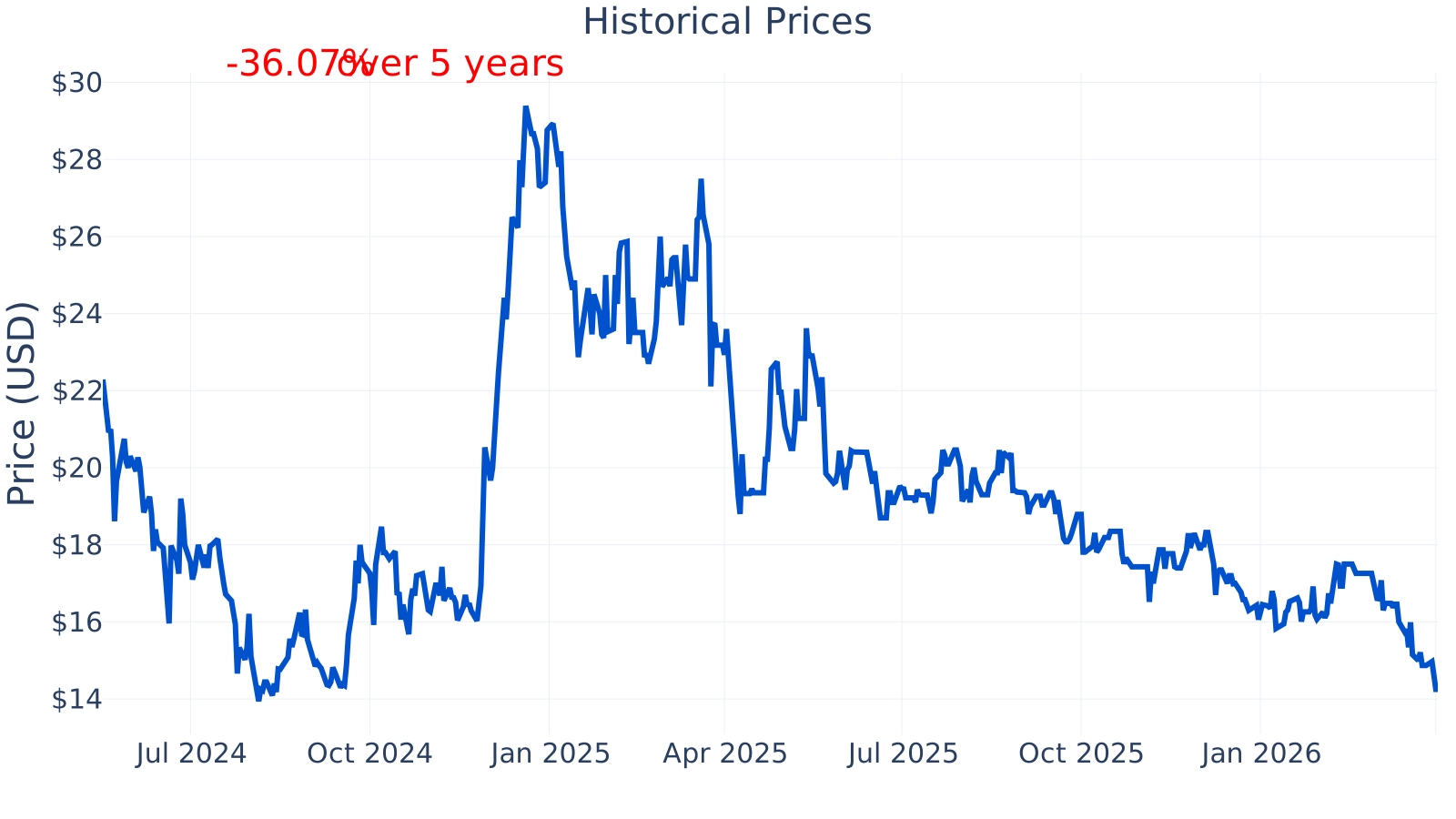
Overview
SUPER HI INTERNATIONAL HOLDING LTD (HDL) operates in the restaurants industry within the Consumer Cyclical sector. In simple terms, it is a foodservice business that generates sales by serving customers through its restaurant operations and related services.
At a high level, restaurant companies typically earn money from (1) food and beverage sales to dine-in customers, (2) takeout and delivery orders (directly and/or via delivery platforms), and (3) other items such as membership/loyalty programs, franchise/management fees (if applicable), and ancillary sales. Exact revenue split details depend on what the company discloses in its official filings.
The multi-year income “bridge” below helps visualize how revenue turns into profit (and which costs are the biggest deductions).
Across 2021–2024, total revenue increased materially (from about $312M to about $780M). Over the same period, the company moved from a large net loss (2021–2022) to positive net income (2023–2024), suggesting that scaling the business and cost management have been important themes. Costs of revenue remain the largest expense line, which is typical for restaurants because ingredients, labor, and store-level operating costs are substantial.
Key Figures
| Metric | Value | Industry ⓘ |
|---|---|---|
| Date | Apr 06, 2026 | |
| Context | ||
| Sector | Consumer Cyclical | |
| Industry | Restaurants | |
| Market Cap ⓘ | $838.42M | |
| Beta ⓘ | 0.67 | |
| Fundamental | ||
| P/E Ratio ⓘ | 14.25 | 26.23 |
| Profit Margin ⓘ | 4.33% | 7.24% |
| Revenue Growth ⓘ | 9.50% | 7.15% |
| Debt to Equity ⓘ | 58.21% | 93.31% |
| PEG ⓘ | N/A | |
| Free Cash Flow ⓘ | $93.26M | |
HDL’s market capitalization is about $838M, placing it in the small-cap range. The stock’s beta (~0.67) indicates it has historically been less volatile than the broader market on average (though individual stocks can still move sharply, especially in small-cap consumer companies).
On profitability, the latest profit margin shown is about 4.33%, below the industry median of about 7.24%. On growth, revenue growth year-over-year is about 9.5%, which is higher than the industry median of about 7.15%. The latest debt-to-equity is about 58%, below the industry median of about 93%, indicating comparatively lower balance-sheet leverage versus peers. The company also shows positive free cash flow (TTM) of about $93M, which can matter because cash generation helps fund operations, new locations, and debt service.
Growth (medium)
Restaurants are generally a mature industry, but growth can still come from expanding locations, improving same-store sales, menu innovation, and increasing off-premise demand (takeout/delivery). Because the sector is consumer-driven, long-term performance tends to depend on brand strength, execution, and cost discipline as much as on overall industry expansion.
For HDL specifically, recent figures suggest a pattern of growing revenue while maintaining positive earnings in the most recent years shown. That combination is often a sign that a concept is scaling beyond early-stage losses, although restaurants can still face margin pressure from wages, food costs, and rent.
The year-over-year revenue growth shown in recent quarters remains positive (roughly mid-to-high single digits), which is consistent with ongoing expansion and/or improving sales productivity. A key question for future growth is whether the company can sustain this pace without needing outsized discounting or seeing store-level profitability weaken.
Free cash flow over the trailing twelve months is positive (about $97M down to about $93M across the periods shown). For a restaurant operator, sustained positive free cash flow can act as a practical “fuel source” for opening new locations, upgrading existing ones, and absorbing periodic downturns—although reinvestment needs can rise during faster expansion cycles.
Risks (high)
Restaurant businesses commonly face a set of structural risks: they are exposed to shifts in consumer spending, intense competition, and cost inflation (food inputs and labor). Even when sales grow, profits can fluctuate if operating costs rise faster than revenue.
The profit margin trend shown is variable (moving from roughly 2.8% up to about 6.8%, then down to about 2.5% in the latest point displayed). This kind of swing highlights a key risk for long-term results: profitability can be sensitive to pricing power, promotional intensity, labor scheduling, and commodity costs. The industry median line is higher and comparatively steadier in the periods shown, which suggests HDL may be operating with less margin cushion than the typical peer at times.
Debt-to-equity is around the high-50% range and has been relatively stable across the dates shown. While this is below the industry median, it is still meaningful leverage for a consumer business where earnings can be cyclical. If operating conditions weaken, debt servicing and refinancing conditions can become more important.
Competitive positioning is critical in restaurants because customers can easily switch to alternatives. Competitive advantages in this space usually come from recognizable branding, consistent customer experience, good locations, efficient supply chain, and the ability to keep unit economics attractive as the store base grows. Without relying on unverified claims, the most observable indicators of competitive strength over time tend to be: (1) durable revenue growth, (2) stable or improving margins, and (3) disciplined leverage. In HDL’s recent history, growth looks solid, but margin stability appears less consistent, which can matter when competing against other restaurant brands.
Main competitors are other restaurant operators in the same broad category and geography, plus local independent restaurants and delivery-oriented food options. In practice, competitive pressure shows up through marketing spend, discounting, delivery platform fees, and the ongoing “race” to secure good sites and retain staff.
Valuation
Restaurant stocks are often discussed using the price-to-earnings (P/E) ratio, which compares the stock price to earnings per share. A lower P/E than peers can sometimes indicate the market expects slower growth or higher risk, though it can also reflect differences in margins, business mix, or earnings quality.
The latest P/E shown for HDL is about 14.25, compared with an industry median of about 26.23. That places the company below the peer midpoint on this metric. The historical P/E points displayed are much higher in prior periods (above 50 in the most recent history shown), which can happen when earnings were temporarily low (making the ratio spike) or when profitability is uneven quarter-to-quarter.
In context, valuation interpretation depends heavily on whether HDL can (a) maintain positive earnings, (b) reduce margin volatility, and (c) continue growing without materially increasing leverage. If margins remain below the industry median or fluctuate widely, the market may assign a lower multiple even if revenue continues to expand.
Conclusion
HDL is a restaurant operator that has shown substantial revenue growth over recent years and has transitioned from earlier losses to positive net income in the latest annual periods shown. Recent year-over-year revenue growth is above the industry median, and free cash flow is positive, both of which are constructive operating signals for a consumer business.
At the same time, the company’s profit margin has been volatile and has recently been below the industry median, highlighting the importance of cost control and pricing power in a competitive sector. Leverage appears lower than the industry median but still meaningful, which can matter in economic slowdowns.
On valuation metrics shown, HDL trades at a lower P/E than the industry median, while historical P/E levels have varied widely—consistent with a business where profitability has not been perfectly steady. Overall, the long-term picture depends most on whether HDL can keep growing while improving the consistency of margins and maintaining disciplined balance-sheet management.
Sources:
- SEC EDGAR — Company filings for SUPER HI INTERNATIONAL HOLDING LTD (HDL)
- SUPER HI INTERNATIONAL HOLDING LTD — Investor Relations materials (filings/press releases as published by the company)
- Wikipedia — “Super Hi International Holding Ltd” (basic company background)
This article is for informational purposes only and does not constitute financial advice. Some content is AI-generated. See Disclaimer


