Stock Analysis · Sunrun Inc (RUN)
Overview
Sunrun Inc. (RUN) is a U.S. residential solar company. It sells, installs, and services solar energy systems for homes, and it also offers home battery storage that can store solar power for use later (for example at night or during grid outages). A key part of Sunrun’s model is that many customers do not buy the equipment outright; instead, they sign longer-term arrangements where Sunrun finances, owns, and maintains the system while the homeowner pays over time. This approach can make solar easier to start for customers, but it also means the company needs substantial financing to fund installations up front.
In Sunrun’s filings, revenue is generally discussed through broad categories rather than a simple “product A / product B” retail breakdown. The main sources typically include customer agreements that create ongoing payments over time, plus revenue recognized when systems or components are sold (including loans) and service-related items. The mix can shift based on how many customers choose a subscription-style arrangement versus purchasing/financing equipment.
Common revenue streams described in company reports include:
- Customer agreements (long-term solar and storage arrangements, such as leases or power purchase agreements, where customers pay over time)
- Solar energy systems and product sales (systems sold outright or financed through loans, and related equipment)
- Incentives and other revenue items (items tied to programs, credits, and other components described in filings)
Because the exact percentage split can vary by period and accounting treatment, it is typically best confirmed directly in the most recent Form 10-K and subsequent 10-Q filings.
Across recent years, total revenue rose from about $1.61B (2021) to about $2.32B (2022), then eased to about $2.04B (2024). Over the same span, operating losses widened sharply, and interest expense increased materially (from about $328M in 2021 to about $848M in 2024), highlighting how financing costs have become a central driver of overall results.
Key Figures
| Metric | Value | Industry ⓘ |
|---|---|---|
| Date | Feb 08, 2026 | |
| Context | ||
| Sector | Technology | |
| Industry | Solar | |
| Market Cap ⓘ | $4.62B | |
| Beta ⓘ | 2.38 | |
| Fundamental | ||
| P/E Ratio ⓘ | N/A | |
| Profit Margin ⓘ | -106.50% | 0.27% |
| Revenue Growth ⓘ | 34.90% | 33.90% |
| Debt to Equity ⓘ | 493.21% | 139.55% |
| PEG ⓘ | 0.45 | |
| Free Cash Flow ⓘ | -$2.24B | |
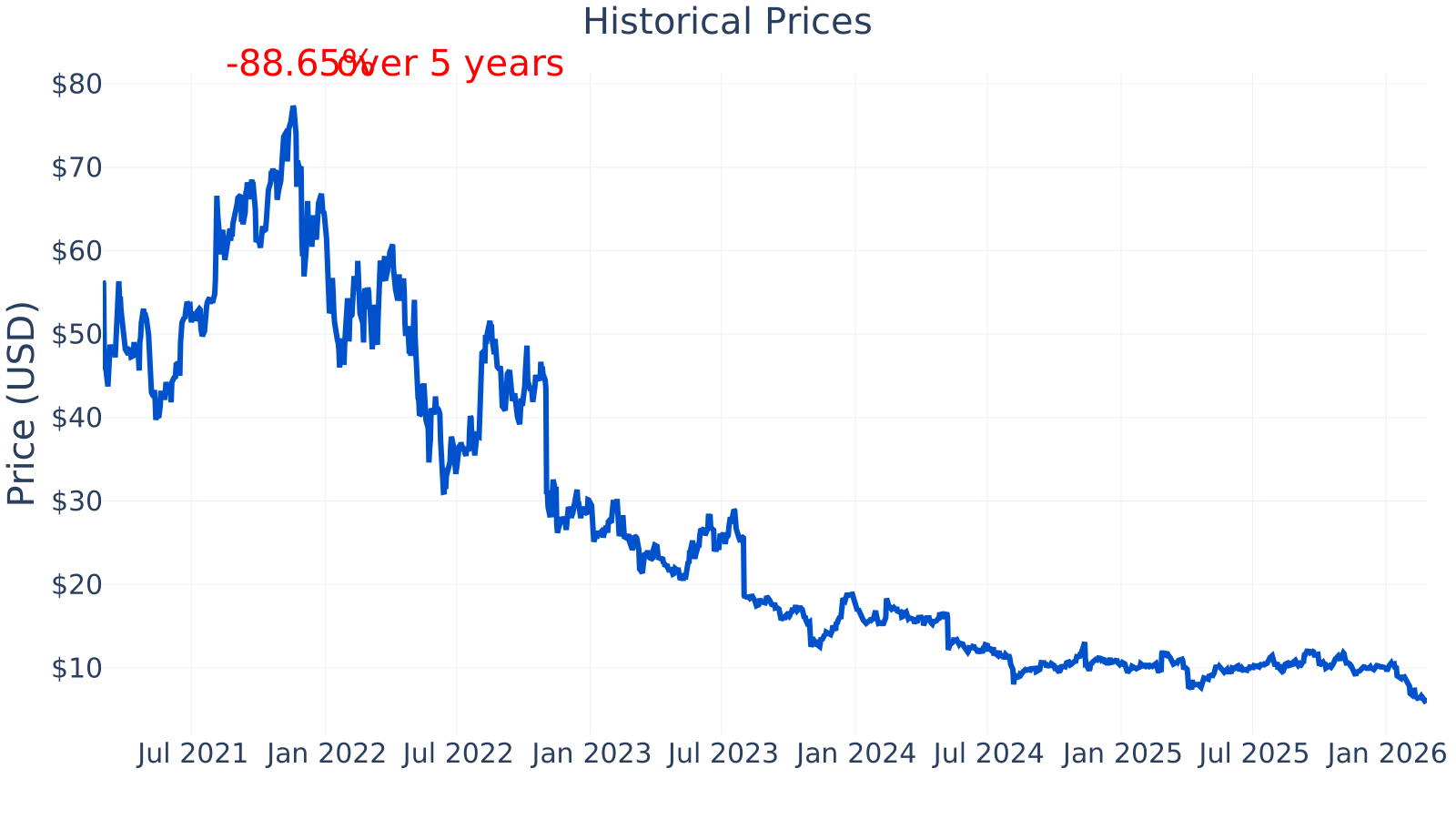
Sunrun’s market capitalization is about $4.62B. The stock’s beta of 2.38 indicates it has historically moved much more than the broader market (higher volatility). The company’s profit margin is -106.5% versus an industry median near 0.27%, reflecting substantial net losses relative to revenue. Latest year-over-year revenue growth is 34.9%, slightly above the industry median near 33.9%. Leverage is elevated: debt-to-equity is about 493% versus an industry median near 140%. Over the trailing twelve months, free cash flow is about -$2.24B, meaning cash outflows exceeded inflows after operating costs and capital spending. A PEG ratio of 0.45 is shown, but it can be difficult to interpret when earnings are volatile or negative, so it is usually not sufficient on its own.
Growth (Medium)
Residential solar and battery storage operate within a broader, long-term shift toward electrification and distributed energy (power generated closer to where it is used). In principle, the industry can benefit from rising electricity demand, greater interest in home resilience (backup power), and policy support for renewable energy. Sunrun’s focus on pairing solar with batteries can also align with a future grid that increasingly values flexible, “dispatchable” energy resources (stored energy that can be delivered when needed).
That said, the near-to-medium-term growth path for residential solar can be sensitive to interest rates and consumer financing conditions, because many customers evaluate solar based on monthly payment economics. A business model that funds systems up front may see demand fluctuate as financing becomes more or less expensive.
The revenue growth pattern has been uneven over the past several years: very strong growth in 2021 and 2022, followed by contractions through much of 2023 and 2024, and then a return to positive growth in 2025 (most recently about 34.9% year-over-year). For long-term business building, a key question is whether growth becomes more consistent while unit economics and funding costs improve.
Free cash flow has been deeply negative over multiple years (around -$1.50B in 2021, worsening to roughly -$3.54B by 2025 based on the trailing period shown, and most recently about -$2.24B). For a capital-intensive model, negative free cash flow can occur during expansion, but persistence at large magnitudes raises the importance of continued access to financing and/or a clear path to improved cash generation.
Potential catalysts that can matter for Sunrun over time include broader adoption of battery storage, grid-services programs that pay aggregated home batteries for supporting the grid (where available), and any sustained reduction in financing costs that improves customer economics and company funding costs. Execution—especially controlling costs while maintaining installation volume—also tends to be a major swing factor.
Risks (Very High)
This article is for informational purposes only and does not constitute financial advice. Some content is AI-generated. See Disclaimer