Stock Analysis · STMicroelectronics NV (STM)
Overview
STMicroelectronics NV (STM) designs and sells semiconductors (“chips”) used to sense, process, and control electricity and data inside electronic devices. In simple terms, its products help cars run safely and efficiently, help factories automate equipment, help phones and wearables detect motion, and help many everyday devices manage power and connectivity. The company sells primarily to other businesses (manufacturers and industrial customers), and its results tend to move with global demand cycles for electronics.
STMicroelectronics reports revenue mainly by product groups that reflect how chips are used. In recent annual reporting, the company’s revenue mix is typically concentrated in a few large families of products (percentages vary by year and semiconductor cycle):
- Automotive and discrete (power-related) products (often the largest share): chips for electric power conversion and control, and automotive applications.
- Analog, MEMS, and sensors: motion sensors and other sensing components used in consumer and industrial equipment.
- Microcontrollers and digital ICs: “embedded brains” that run features in cars, appliances, industrial gear, and other electronics.
Geographically, STMicroelectronics sells worldwide, with meaningful exposure to Europe, Asia, and the Americas, reflecting where electronics are manufactured and where end-demand is strongest.
Over the last few years, the company’s revenue and profit levels have shown a strong upcycle into 2022–2023, followed by a notable downshift in 2024–2025. The same pattern appears in operating profit and net income, which fell sharply after peaking in 2023—typical of a cyclical industry where customer inventory levels and end-market demand can change quickly.
Key Figures
| Metric | Value | Industry ⓘ |
|---|---|---|
| Date | Feb 07, 2026 | |
| Context | ||
| Sector | Technology | |
| Industry | Semiconductors | |
| Market Cap ⓘ | $26.96B | |
| Beta ⓘ | 1.32 | |
| Fundamental | ||
| P/E Ratio ⓘ | 165.83 | 45.89 |
| Profit Margin ⓘ | 1.41% | 9.42% |
| Revenue Growth ⓘ | 0.20% | 13.10% |
| Debt to Equity ⓘ | 11.96% | 25.62% |
| PEG ⓘ | 0.42 | |
| Free Cash Flow ⓘ | $106.19M | |
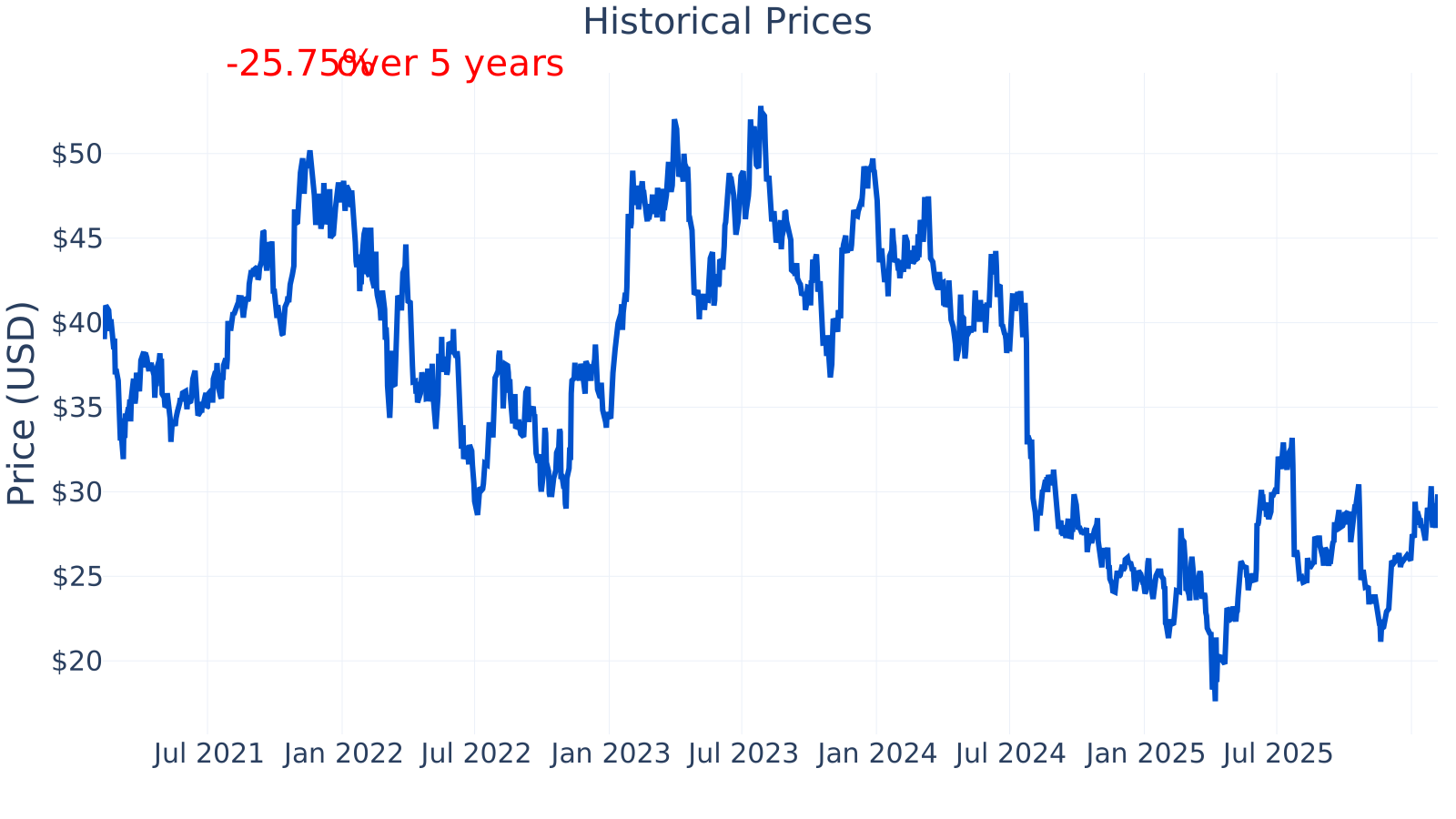
STMicroelectronics’ market capitalization is about $27.0B, and the stock’s beta of ~1.32 indicates it has historically moved more than the broader market (higher volatility). The latest P/E ratio is ~165.8, well above the semiconductor industry median shown here (~45.9), while the profit margin is ~1.41%, below the industry median (~9.42%). Revenue growth year-over-year is close to flat at about 0.2% versus an industry median of ~13.1%. On leverage, debt-to-equity is ~12%, lower than the industry median (~26%). The PEG ratio (~0.42) can appear low when the “G” (expected growth) is measured off a cycle trough or when earnings are depressed; it is best read alongside the company’s cycle position. Trailing twelve-month free cash flow is about $106M, which is modest for a company of this size and may reflect a period of heavier investment and/or weaker operating conditions.
Growth (Medium)
Semiconductors are a long-term growth industry because more “electronics content” is being added to products over time. STMicroelectronics is positioned in several end-markets that have structural drivers:
- Automotive electrification and driver assistance: electric vehicles and advanced safety systems require more power electronics, sensors, and microcontrollers.
- Industrial automation and energy infrastructure: factories and power systems increasingly use electronics for efficiency and control.
- Connected devices: sensors and embedded processors continue to spread across consumer and industrial products.
Strategy-wise, STMicroelectronics has emphasized areas where performance and reliability matter (for example, automotive-grade components and power management). In the semiconductor industry, multi-year product lifecycles—especially in automotive and industrial—can support longer demand visibility than purely consumer-driven categories, even though the overall business remains cyclical.
The year-over-year revenue growth trend shows a clear shift from strong expansion in 2021–2022 to negative growth across much of 2024–2025, ending near flat. This pattern is consistent with an industry downturn after an earlier surge, often driven by inventory corrections at customers and softer end demand in certain markets.
Free cash flow improved into 2023, then weakened materially in 2024 and turned negative by early 2025 before recovering to a small positive level more recently. For chipmakers, this can happen when profits decline while the company continues spending heavily on manufacturing capacity and technology upgrades. A key swing factor for future results is whether demand normalizes while capital spending becomes more efficient relative to sales.
Risks (High)
This article is for informational purposes only and does not constitute financial advice. Some content is AI-generated. See Disclaimer