Stock Analysis · Stagwell Inc (STGW)
Overview
Stagwell Inc is a marketing services company. In simple terms, it helps other organizations (brands, companies, and institutions) create and run marketing programs—such as advertising, digital campaigns, media planning and buying, content, communications, and data-driven marketing—so they can reach customers and measure results.
Like many companies in advertising agencies, Stagwell’s revenue generally comes from delivering services (people and expertise) and, in some cases, placing media on behalf of clients. Client spending patterns and the mix between service work and pass-through media costs can meaningfully influence reported revenue and profitability from year to year.
Main revenue streams are typically described in company filings along lines such as:
- Marketing and advertising services fees (strategy, creative, digital experience, performance marketing, communications)
- Media-related activity (planning/buying and other media services; may include pass-through costs depending on contract structure)
- Data/analytics and technology-enabled marketing services
Percentages by source can vary by reporting approach and period, and are best confirmed directly in Stagwell’s most recent annual report (Form 10-K) segment/revenue disclosures.
From 2021 to 2024, total revenue increased (about $1.47B in 2021 to about $2.84B in 2024). Over the same period, interest expense rose materially (about $31.9M to about $92.3M), and net income remained very small in 2023–2024 despite positive operating income, highlighting how financing costs and other below-operating-line items can weigh on bottom-line results.
Key Figures
| Metric | Value | Industry ⓘ |
|---|---|---|
| Date | Feb 08, 2026 | |
| Context | ||
| Sector | Communication Services | |
| Industry | Advertising Agencies | |
| Market Cap ⓘ | $1.34B | |
| Beta ⓘ | 1.52 | |
| Fundamental | ||
| P/E Ratio ⓘ | 74.00 | 29.48 |
| Profit Margin ⓘ | 0.68% | 6.10% |
| Revenue Growth ⓘ | 4.50% | 8.10% |
| Debt to Equity ⓘ | 235.00% | 62.76% |
| PEG ⓘ | N/A | |
| Free Cash Flow ⓘ | $202.31M | |
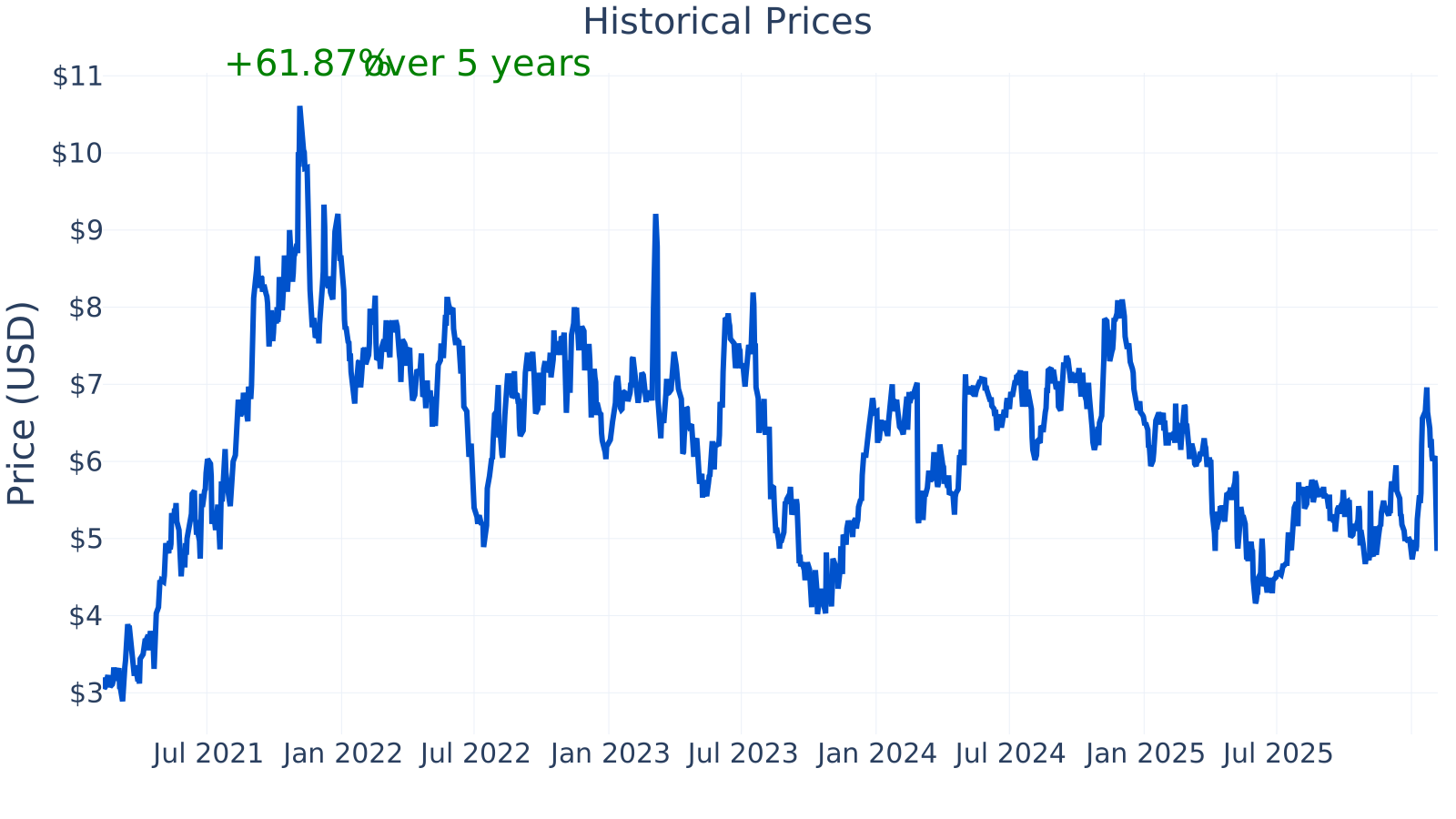
Stagwell’s market capitalization is about $1.34B. The stock’s beta of ~1.52 indicates it has historically been more volatile than the broader market. The P/E ratio is ~74 versus an industry median near 29.5, while the profit margin is ~0.68% versus an industry median around 6.1%. Latest year-over-year revenue growth is ~4.5% (industry median ~8.1%). Debt-to-equity is ~235% compared with an industry median near 63%. Trailing twelve-month free cash flow is about $202M.
Growth (Medium)
Advertising and marketing services are long-running industries that tend to grow over time with overall economic activity, brand competition, and the continued shift toward digital channels. A structural tailwind across the industry is the need for measurable marketing outcomes (performance marketing, analytics, and optimization), although budgets can still fluctuate with the economic cycle.
Stagwell’s strategy—building a scaled marketing platform and emphasizing digital and data-driven services—aligns with where many clients are directing spending. In practice, the durability of growth depends on keeping and expanding client relationships, integrating acquired capabilities (if acquisitions are part of the strategy), and protecting margins while investing in talent and technology.
Recent revenue growth has been uneven: very high growth in 2021–2022 (reflecting a combination of recovery and company-specific factors) followed by declines through much of 2023, then a return to positive growth in 2024. The most recent reading (about 4.5% YoY) is positive but below the industry median shown (about 8.1%), suggesting growth has recently been more modest than many peers.
Free cash flow (cash generated after operating needs and capital spending) has also fluctuated: roughly $121M (2021), $158M (2022), $265M (2023), then lower levels in 2024–2025 before reaching about $202M on a trailing basis. For long-term business strength, the key question is whether cash generation can stay consistent through different ad cycles and whether it is sufficient relative to debt service needs.
Risks (High)
This article is for informational purposes only and does not constitute financial advice. Some content is AI-generated. See Disclaimer