Stock Analysis · SoundHound AI Inc (SOUN)
Overview
SoundHound AI Inc is a software company focused on voice and conversational AI. In plain terms, it builds technology that lets people speak naturally to devices and services (for example in cars, restaurants, and other connected products) and get accurate, real-time responses. The company markets its platform as a way for businesses to add voice experiences to their own products, rather than building everything from scratch.
Based on the company’s public filings, SoundHound’s revenue is primarily generated from commercial agreements where customers pay to use its technology and related services. The exact mix can change over time depending on contract timing and how deals are structured, but the main categories described in filings typically include:
- Platform and usage-based revenue tied to voice AI deployments (fees based on usage and/or volume)
- Subscriptions and licensing for access to software capabilities
- Professional services and implementation (integration, customization, and support work linked to deployments)
At a high level, the company has been scaling revenue over recent years, while still spending heavily on product development and commercialization.
Across the years shown, revenue rises from about $21.2M (2021) to $84.7M (2024), while operating costs remain high. Research and development is a major cost line, and total operating expenses expand sharply in 2024, alongside a much larger operating loss.
Key Figures
| Metric | Value | Industry ⓘ |
|---|---|---|
| Date | Feb 08, 2026 | |
| Context | ||
| Sector | Technology | |
| Industry | Software - Application | |
| Market Cap ⓘ | $3.60B | |
| Beta ⓘ | 2.88 | |
| Fundamental | ||
| P/E Ratio ⓘ | N/A | 27.79 |
| Profit Margin ⓘ | -210.68% | 6.02% |
| Revenue Growth ⓘ | 67.60% | 15.80% |
| Debt to Equity ⓘ | 1.21% | 25.15% |
| PEG ⓘ | N/A | |
| Free Cash Flow ⓘ | -$110.06M | |
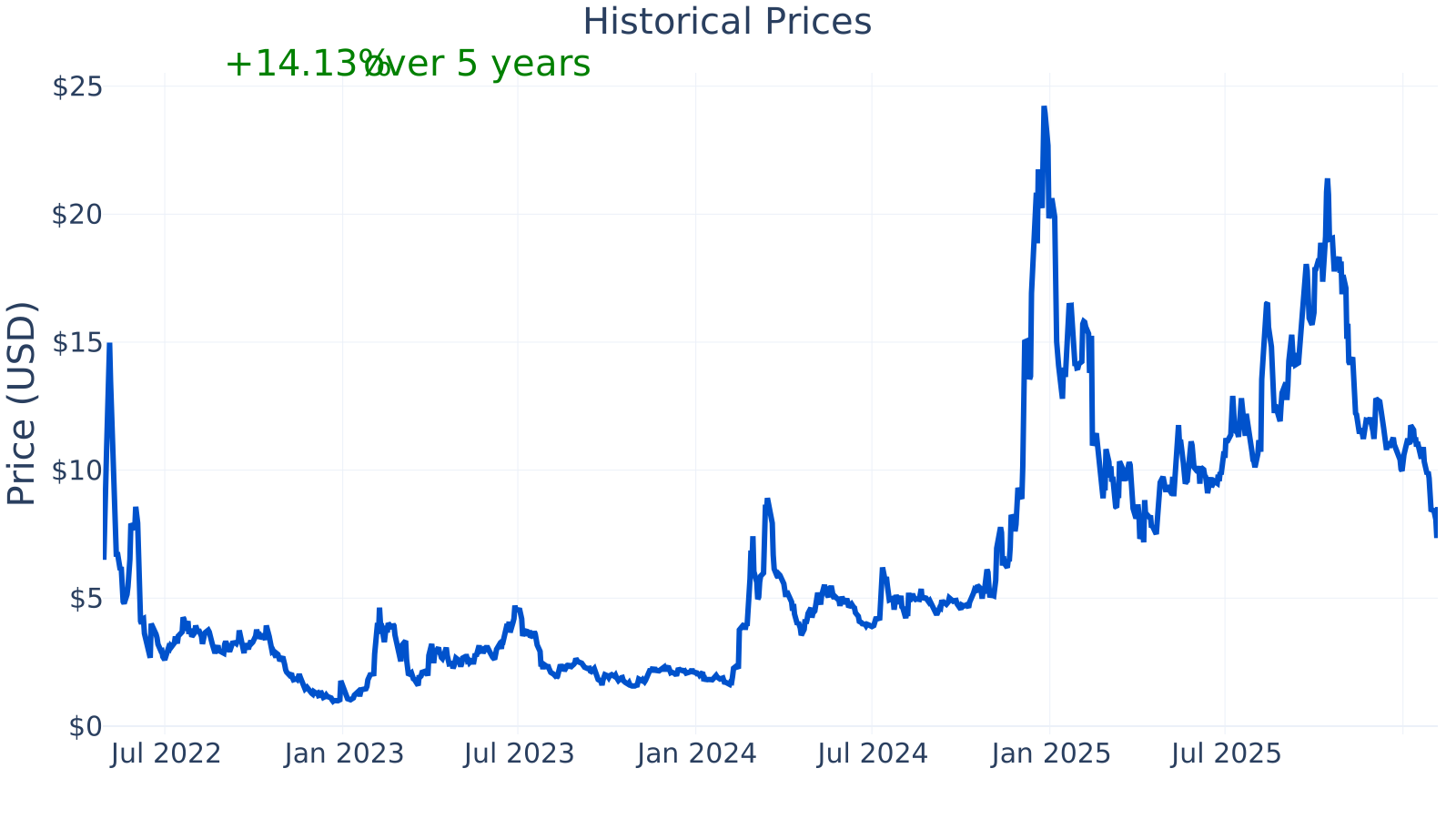
SoundHound’s market capitalization is about $3.6B. The stock’s beta (~2.88) indicates it has historically moved much more than the overall market, which can matter for long-term investors who prefer steadier price behavior.
On operating performance, the company shows a negative profit margin of about -211% versus an industry median around 6%, meaning it is currently unprofitable on a net basis. At the same time, its year-over-year revenue growth is about 67.6%, well above the industry median (~15.8%), reflecting rapid scaling from a smaller base.
Balance-sheet leverage looks modest in the most recent figure shown: debt-to-equity of about 1.2% versus an industry median near 25.2%. Free cash flow over the trailing twelve months is about -$110.1M, indicating the business is consuming cash overall.
Growth (High)
SoundHound operates in a part of the software market that is closely tied to the broader adoption of AI-driven interfaces. Voice and conversational systems can become more valuable as more devices and services add hands-free interaction (especially where speed and convenience matter, such as in vehicles and high-throughput customer service settings). This places the company in a segment that can expand if customers continue shifting toward AI-enabled user experiences.
From a strategy perspective, SoundHound’s approach is to provide a voice AI platform that can be embedded into customer products and workflows. In principle, this can support growth if the company converts pilots into large deployments and then expands usage over time within existing customers. However, the long-term outcome depends on whether deployments scale efficiently and whether the company can improve unit economics (gross margin and operating leverage) as revenue rises.
The growth profile is volatile quarter to quarter, but the overall pattern shows frequent periods of very high year-over-year expansion, including triple-digit growth in several quarters. The latest point shown is still strong at roughly 67.6%, compared with an industry median near 15.8%.
Free cash flow remains negative across the periods shown (roughly -$81.8M in mid-2022, improving to about -$77.0M by early 2024, then worsening again to about -$106.8M by early 2025, and around -$110.1M most recently). For long-term fundamentals, a key question is whether revenue growth eventually translates into improving cash generation as the company scales.
Risks (Very High)
This article is for informational purposes only and does not constitute financial advice. Some content is AI-generated. See Disclaimer