Stock Analysis · Sonos Inc (SONO)
Overview
Sonos Inc. designs and sells home sound products that connect over Wi‑Fi, letting people stream music and other audio across one or multiple rooms. Its product lineup includes soundbars and speakers for TV audio, standalone speakers, subwoofers, portable speakers, and related accessories. Sonos also sells software features and services that support its hardware ecosystem.
Sonos reports revenue primarily from product sales, with additional contribution from software and services. Based on the company’s segment reporting in its annual filings, revenue is typically organized as:
- Products (the large majority of revenue; hardware such as speakers and soundbars)
- Software and services (a smaller portion; features and services tied to the Sonos platform)
Because Sonos focuses on premium audio, its business model depends heavily on consumer demand for discretionary electronics and on continued engagement with its multi-room platform.
Over recent years, total revenue has declined (from about $1.72B in FY2021 to about $1.44B in FY2025), while operating costs have remained substantial. Research and development spending has stayed elevated (roughly $230M–$305M across the period shown), reflecting ongoing investment in the product and software platform even as profitability has weakened.
Key Figures
| Metric | Value | Industry ⓘ |
|---|---|---|
| Date | Feb 07, 2026 | |
| Context | ||
| Sector | Technology | |
| Industry | Consumer Electronics | |
| Market Cap ⓘ | $2.06B | |
| Beta ⓘ | 1.99 | |
| Fundamental | ||
| P/E Ratio ⓘ | N/A | |
| Profit Margin ⓘ | -1.22% | |
| Revenue Growth ⓘ | -0.90% | |
| Debt to Equity ⓘ | 25.11% | |
| PEG ⓘ | N/A | |
| Free Cash Flow ⓘ | $122.47M | |
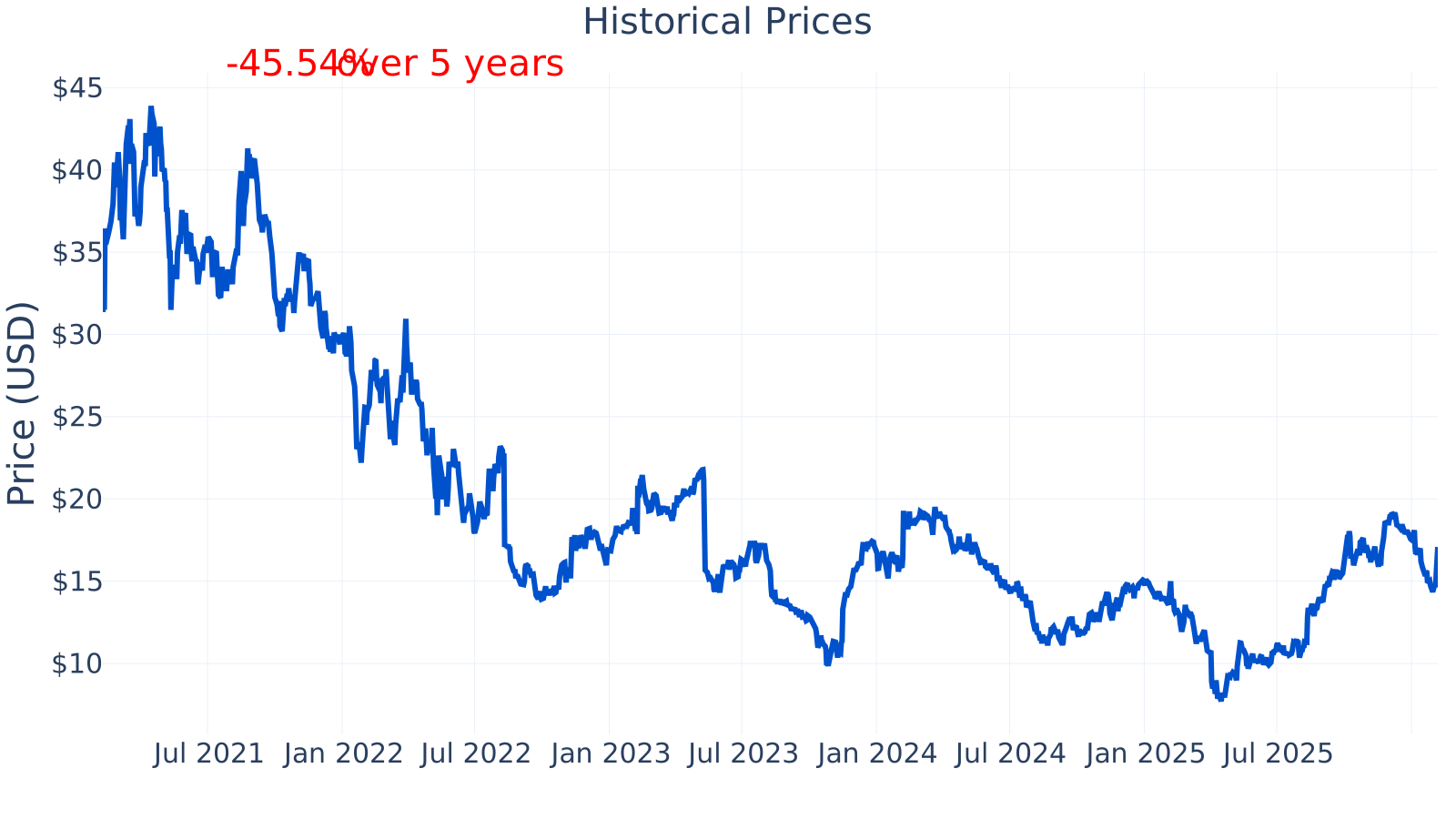
At the latest point shown, Sonos has a market capitalization of about $2.06B. The stock’s beta of ~1.99 indicates it has historically moved more than the overall market, which can mean larger swings up or down. Profitability is currently negative, with a net profit margin of about -1.22%. Revenue growth is close to flat to slightly negative at about -0.94% year over year. Leverage is moderate with debt-to-equity around 25%. Despite net losses, the company shows positive trailing twelve-month free cash flow of about $122.5M, which can happen when cash generation (for example, from working capital movements) is stronger than accounting earnings in a given period.
Growth (Medium)
Sonos operates in consumer electronics and home audio—markets tied to household spending, product replacement cycles, and competition for attention in the connected home. The long-term backdrop includes continued adoption of streaming and the broader trend toward connected devices in the home, but demand can be cyclical, with purchases often deferred when consumers feel pressure from inflation or uncertainty.
Sonos’s growth strategy generally centers on expanding its installed base (more households with at least one Sonos product) and encouraging repeat purchases as users add rooms, upgrade home theater setups, or buy additional components. This “ecosystem” approach can support repeat demand when customer satisfaction is strong and when products remain differentiated.
The year-over-year revenue pattern has been inconsistent. After very strong growth in parts of 2021, growth turned negative in multiple periods from 2022 through 2024, and the most recent value shown is slightly negative (around -0.94%). This suggests Sonos has recently faced a more challenging demand environment and/or tougher comparisons versus prior periods.
Free cash flow has also been volatile, shifting from strongly positive in 2021 (~$275M) to negative in 2023 (about -$95M), then back to positive in 2024 (~$152M) and lower but still positive in 2025 (~$65M at the March 2025 point shown, and ~$122M in the latest metrics section). For a hardware-focused company, this volatility can be influenced by inventory levels, supply chain timing, and the pace of sales.
Potential catalysts (in a neutral, informational sense) typically include successful new product launches, improved software experience that supports retention and repeat purchases, and stabilization in consumer discretionary demand. In addition, a return to consistent profitability would likely depend on a mix of revenue improvement and disciplined cost control.
Risks (High)
This article is for informational purposes only and does not constitute financial advice. Some content is AI-generated. See Disclaimer