Stock Analysis · SolarEdge Technologies Inc (SEDG)
Overview
SolarEdge Technologies Inc designs and sells equipment that helps solar panels produce electricity more efficiently and safely. In simple terms, it makes the “electronics” that sit between solar panels and the electric grid (or a home), converting and managing the power so it can be used. The company is best known for its inverter systems used in residential and commercial solar installations, and it also sells battery storage and energy-management solutions.
SolarEdge’s business is tied to how many solar systems get installed and how quickly installers and distributors work through existing inventory. When demand slows or customers reduce stock on hand, SolarEdge’s shipments can fall sharply even if long-term solar adoption continues.
Across its filings, SolarEdge typically describes revenue as coming primarily from sales of solar inverter systems and related products, with additional contributions from battery/storage and other energy solutions. Exact percentages can vary by year and are best read from the company’s latest Form 10-K segment and product disclosures.
Main sources of revenue (typical ordering based on company description in filings):
- Solar inverter systems and related components (core business; historically the largest share)
- Battery storage and energy solutions (smaller than inverters, but strategically important)
- Other / services (generally the smallest portion)
From a profitability standpoint, the company’s recent results show a major swing versus earlier years. In 2021–2023, SolarEdge generated positive gross profit and positive net income, while 2024 shows a steep contraction in revenue and a large reported loss.
Over 2021–2023, revenue was roughly $2.0B–$3.1B with positive gross profit. In 2024, revenue fell to about $0.9B and gross profit turned negative, alongside a large net loss. This kind of shift is often consistent with severe demand/inventory corrections and substantial charges that can compress margins well beyond the impact of lower sales alone.
Key Figures
| Metric | Value | Industry ⓘ |
|---|---|---|
| Date | Feb 08, 2026 | |
| Context | ||
| Sector | Technology | |
| Industry | Solar | |
| Market Cap ⓘ | $2.15B | |
| Beta ⓘ | 1.65 | |
| Fundamental | ||
| P/E Ratio ⓘ | N/A | |
| Profit Margin ⓘ | -53.65% | 0.27% |
| Revenue Growth ⓘ | 44.50% | 33.90% |
| Debt to Equity ⓘ | 86.67% | 139.55% |
| PEG ⓘ | 4.61 | |
| Free Cash Flow ⓘ | $37.54M | |
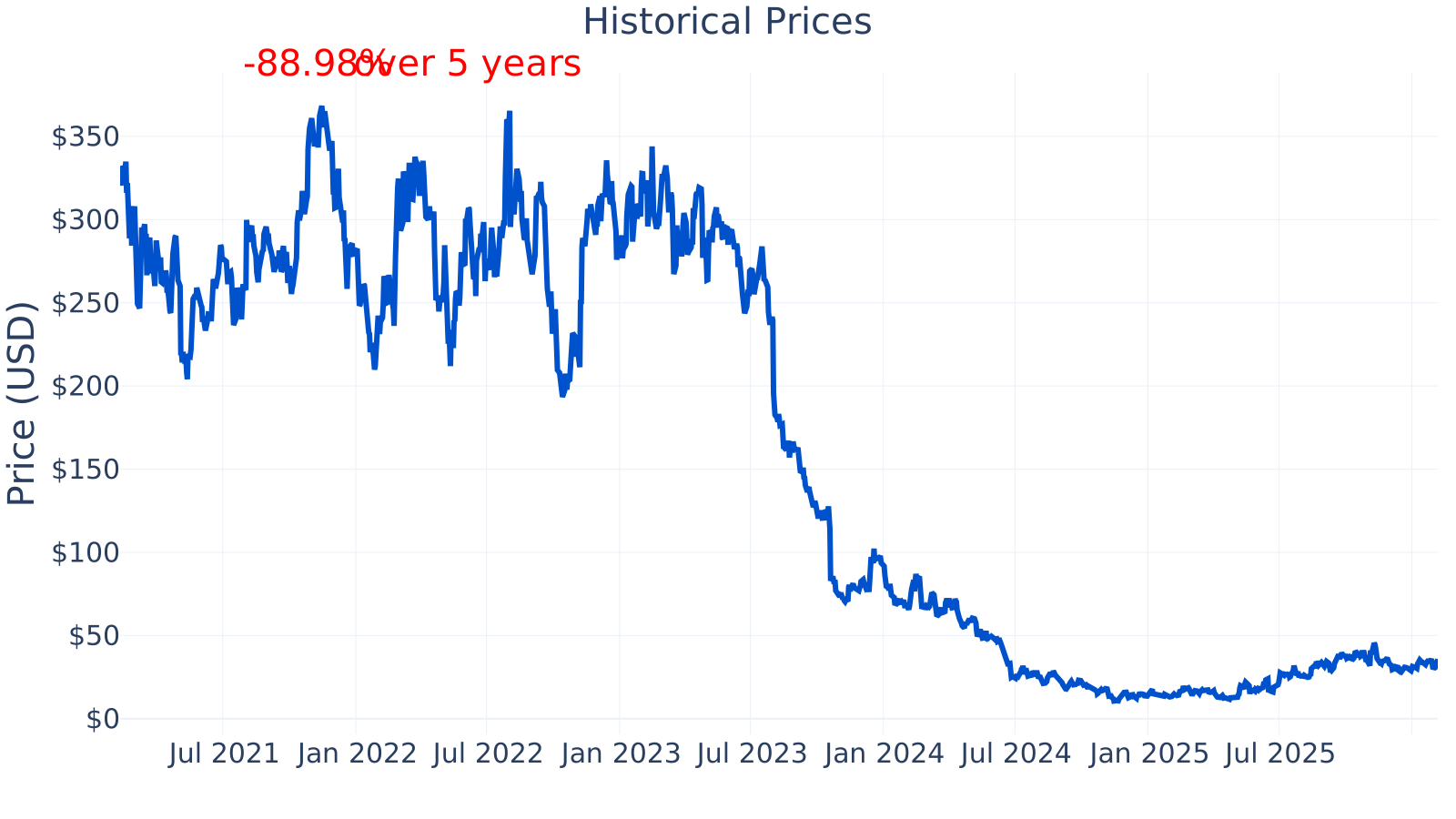
SolarEdge’s market capitalization is about $2.15B, placing it far below its size during prior peak years. The stock’s beta of 1.65 suggests it has historically moved more than the broader market (higher volatility). Profitability is currently pressured: the latest profit margin shown is about -53.65% versus an industry median near 0.27%. On the other hand, the latest year-over-year revenue growth shown is about 44.5% versus an industry median near 33.9%, which indicates a rebound in the most recent period after a weak stretch. Leverage (debt relative to equity) is about 86.7%, below the industry median shown (~139.6%). Free cash flow (trailing twelve months) is shown at about $37.5M, though recent history has included significant negative periods.
Growth (Medium)
SolarEdge operates in the solar and broader electrification ecosystem, where long-run demand is supported by ongoing adoption of renewable generation, electrification of end uses, and grid modernization. However, the company’s results can be highly cyclical because demand is influenced by interest rates, consumer financing, installer activity, policy incentives, and distributor inventory levels.
A practical way to think about SolarEdge’s growth path is that it depends on two things happening at the same time: (1) solar installations expanding over time, and (2) SolarEdge maintaining strong placement with installers and distribution partners versus alternative inverter approaches. The company’s strategy—integrating power electronics, monitoring/controls, and storage—aims to increase the value per installation and remain relevant as systems become more “energy management” oriented rather than only “solar production” oriented.
The pattern shown is a surge in growth during 2021–2022, a sharp contraction through 2023–2024 (deeply negative year-over-year comparisons), and then a return to positive growth in 2025 (with the latest point around 30.4%). This profile is consistent with an industry downcycle followed by early-stage recovery.
Free cash flow has been volatile: it was positive in 2021, turned sharply negative around 2022, recovered to modestly positive in 2023, then deteriorated significantly in 2024 and remained negative in early 2025 (based on the points shown). Volatility in cash generation matters for long-term holders because it can affect how much flexibility a company has to invest, withstand downturns, or avoid raising capital on unfavorable terms.
Risks (High)
This article is for informational purposes only and does not constitute financial advice. Some content is AI-generated. See Disclaimer


