Stock Analysis · Snowflake Inc (SNOW)
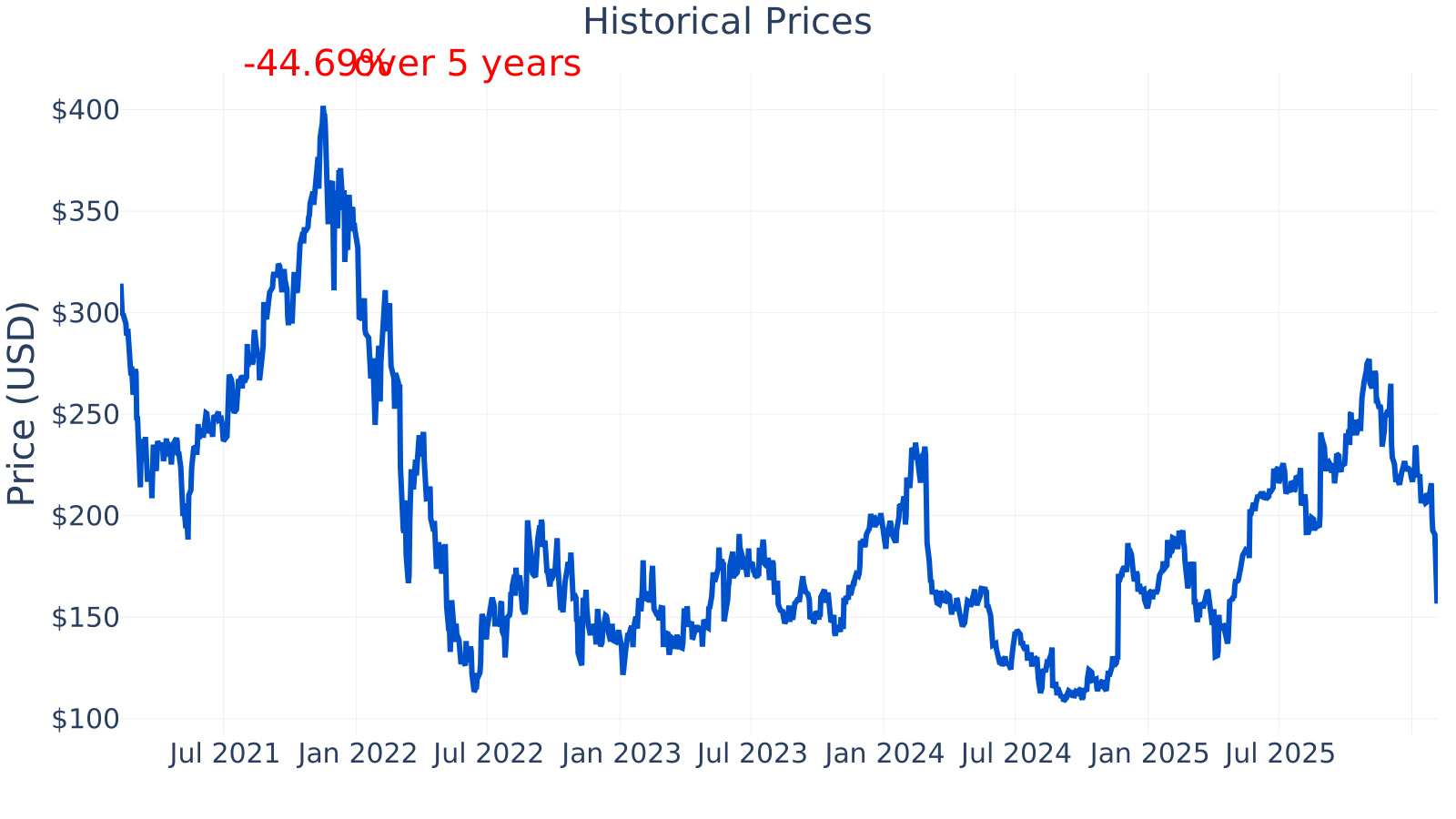
Overview
Snowflake Inc. is a cloud software company focused on helping organizations store, organize, and analyze large amounts of information in a centralized environment. In practical terms, it provides a platform that lets businesses bring together data from different systems, run analytics, share information across teams, and support modern uses like machine learning and AI-related workloads. Snowflake is designed to run on major public cloud providers rather than inside a customer’s own data center.
Snowflake’s revenue is primarily tied to how much customers use its platform. This usage-based approach means results can move up or down depending on customers’ activity levels and their cloud spending priorities.
Main sources of revenue (typical structure described by the company in its filings):
- Product revenue (majority): usage of the Snowflake platform (compute, storage, and related capabilities billed based on consumption).
- Professional services and other (small portion): implementation support, training, and related services.
From a high-level cost perspective, the company shows strong gross profit dollars, but operating expenses (especially research and development and sales/marketing-related costs) are large, which has kept GAAP profitability negative in recent years.
Across recent fiscal years, total revenue increased substantially, and gross profit rose as well. At the same time, operating expenses also expanded (notably research and development), which helps explain why operating income and net income remained negative despite higher revenue.
Key Figures
| Metric | Value | Industry ⓘ |
|---|---|---|
| Date | Feb 07, 2026 | |
| Context | ||
| Sector | Technology | |
| Industry | Software - Application | |
| Market Cap ⓘ | $57.64B | |
| Beta ⓘ | 1.15 | |
| Fundamental | ||
| P/E Ratio ⓘ | N/A | 27.79 |
| Profit Margin ⓘ | -30.76% | 6.02% |
| Revenue Growth ⓘ | 28.70% | 15.80% |
| Debt to Equity ⓘ | 125.91% | 25.15% |
| PEG ⓘ | 5.33 | |
| Free Cash Flow ⓘ | $776.68M | |
Snowflake’s market capitalization is about $57.6B, and its beta of ~1.15 suggests the stock has tended to move somewhat more than the broader market. The company shows a negative profit margin (~-30.8%) versus an industry median near +6.0%, reflecting ongoing GAAP losses. At the same time, most-recent year-over-year revenue growth is about 28.7%, above the industry median of about 15.8%. Debt-to-equity is about 125.9%, higher than the industry median near 25.2%. Free cash flow over the trailing twelve months is about $776.7M, indicating the business has been generating cash even while reporting GAAP net losses.
Growth (Medium)
Snowflake operates in the broader cloud software and data/analytics market, where organizations continue shifting workloads from on-premises systems to public cloud infrastructure. This shift is driven by the need for flexible computing, collaboration across distributed teams, and faster analytics. In that context, Snowflake’s core focus—making enterprise data easier to consolidate and use—aligns with a long-running trend rather than a short-lived one.
A notable part of Snowflake’s growth story is its usage-based model. When customers expand projects, run more analytics, or add new teams and data sources, spending can increase without a traditional “per seat” licensing step. The same structure can also work in reverse if customers optimize their consumption or reduce activity, which is why growth can fluctuate with customer behavior.
Revenue growth has remained positive but has slowed from extremely high rates earlier in the period (above 100% year-over-year in 2021) toward a more moderate pace more recently (around the high-20% range in the latest period shown). This pattern is common as a company scales to a larger revenue base, but it also raises the importance of demonstrating durable demand and expanding product adoption over time.
Free cash flow increased meaningfully over the period shown (from roughly $81M to over $900M at its peak, and about $777M most recently). For long-term business durability, consistent cash generation can matter because it provides flexibility to invest in product development and go-to-market efforts without relying as heavily on external financing.
Potential catalysts that can influence longer-term growth (described at a high level in company disclosures) include expanding adoption of cloud data platforms, customers consolidating tools onto fewer platforms, and growing demand for advanced analytics and AI-related use cases that depend on well-organized, accessible information.
Risks (High)
This article is for informational purposes only and does not constitute financial advice. Some content is AI-generated. See Disclaimer


