Stock Analysis · Skyline Corporation (SKY)
Overview
Skyline Corporation (ticker: SKY) operates in the Residential Construction industry within the Consumer Cyclical sector. In practical terms, the company participates in housing-related demand that tends to rise and fall with the broader economy, consumer confidence, and financing conditions (such as interest rates).
Because residential construction is cyclical, results can look very strong during housing up-cycles and can cool off when affordability tightens or demand softens. That cyclicality is an important lens for understanding Skyline’s revenue swings, profit margins, and valuation over time.
Public filings typically break down revenue by operating segments and/or product lines. (The specific mix and percentages should be taken directly from the most recent annual report/10-K segment disclosures.)
Across the periods shown, total revenue and profitability move meaningfully over time: revenue rises from about $1.42B (quarter ended 2021-03-31) to about $2.61B (2023-03-31), then drops to about $2.02B (2024-03-31) before increasing again to about $2.48B (2025-03-31). Over the same points, net income also fluctuates (about $84.8M in 2021-03-31, up to about $401.8M in 2023-03-31, down to about $146.7M in 2024-03-31, then about $198.4M in 2025-03-31), consistent with a cyclical business where pricing, volumes, and costs can change quickly.
Key Figures
| Metric | Value | Industry ⓘ |
|---|---|---|
| Date | Feb 07, 2026 | |
| Context | ||
| Sector | Consumer Cyclical | |
| Industry | Residential Construction | |
| Market Cap ⓘ | $4.67B | |
| Beta ⓘ | 1.05 | |
| Fundamental | ||
| P/E Ratio ⓘ | 22.29 | 12.00 |
| Profit Margin ⓘ | 8.10% | 8.48% |
| Revenue Growth ⓘ | 1.80% | -4.90% |
| Debt to Equity ⓘ | 7.48% | 34.53% |
| PEG ⓘ | N/A | |
| Free Cash Flow ⓘ | $259.69M | |
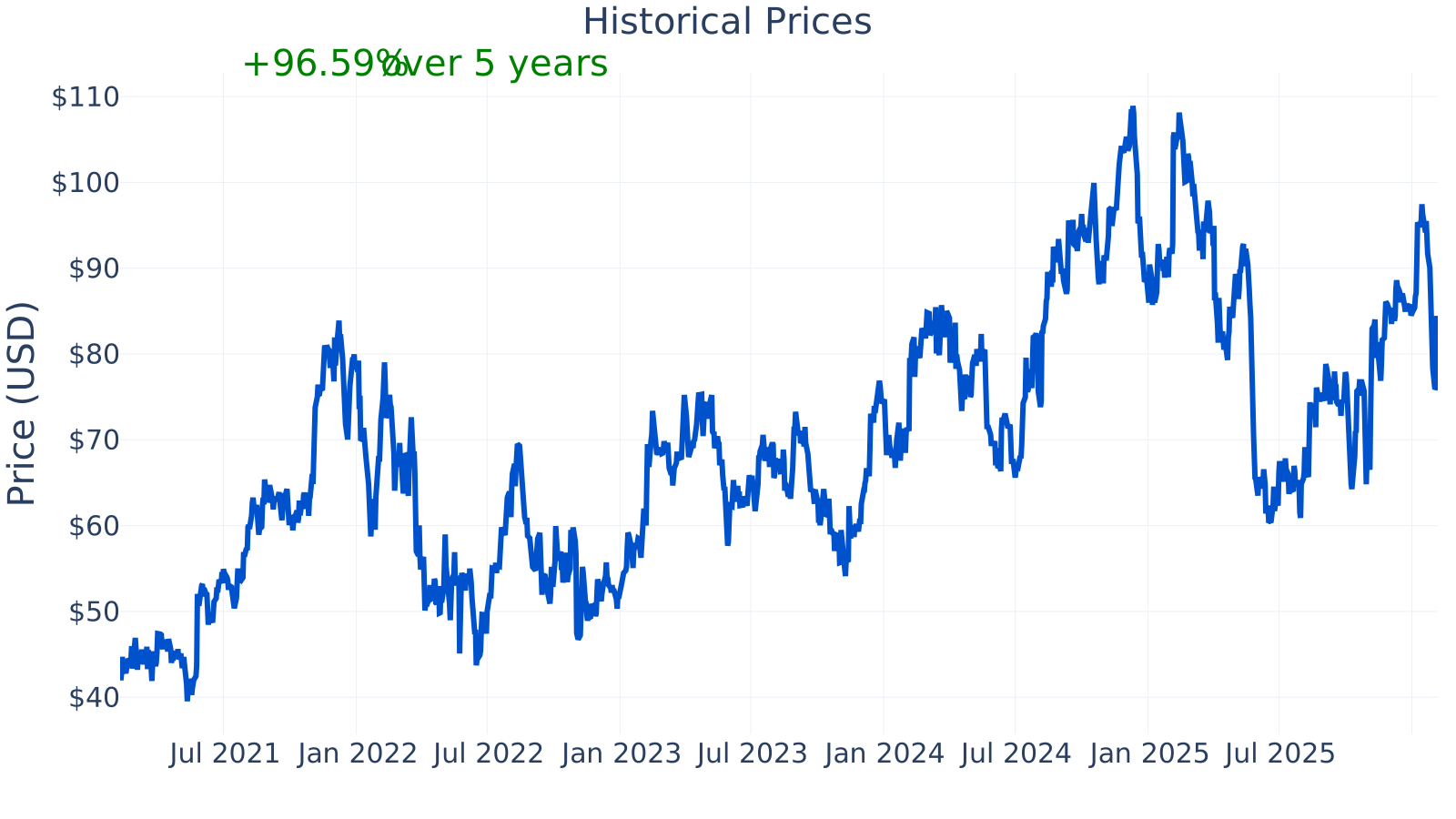
Skyline’s market capitalization is about $4.67B. The stock’s beta (~1.06) suggests price moves have been somewhat similar to the overall market on average (though beta is backward-looking and can change).
On profitability, the latest profit margin is ~8.1%, slightly below the industry median of about 8.5%. Growth is modest in the latest year-over-year reading: about +1.8% versus an industry median of about -4.9%, indicating Skyline is growing a bit faster than the median peer at that snapshot in time.
Balance-sheet leverage appears comparatively low: latest debt-to-equity is ~7.5% versus an industry median of about 34.5%. Free cash flow over the trailing twelve months is about $259.7M, which can matter for flexibility (for example, reinvestment, buybacks, or simply maintaining a financial cushion through down cycles).
Growth (Medium)
Residential construction is a large, essential end market, but it is also highly sensitive to affordability, mortgage rates, and consumer sentiment. That means long-term demand can exist alongside sharp short-term swings. For a company like Skyline, a key question is less “does housing exist?” and more “how stable and scalable is performance across cycles?”
Revenue growth shows pronounced cycle effects. Growth was very strong across several quarters in 2021–2022 (often well above +40% year over year), turned negative through much of 2023 (down to roughly -42% at the low point), and then returned to positive territory during 2024 before cooling to about +1.8% by 2025-12-31. This pattern is consistent with a market where volumes and pricing can normalize after a surge, then recover as conditions improve.
Free cash flow over the trailing twelve months also varies: approximately $145.9M (2021-03-31), $192.5M (2022-03-31), peaking near $364.0M (2023-03-31), then easing to about $169.8M (2024-03-31) and about $190.3M (2025-03-31). For cyclical businesses, sustained positive free cash flow through different conditions is often watched as an indicator of operational resilience, even if the level fluctuates.
Potential long-term catalysts for companies in residential construction typically include improved affordability (for example, lower financing costs), favorable demographic or household formation trends, and product or geographic expansion discussed in company filings. The strength and timing of these drivers can be uneven and are often outside management’s control, which is why balance-sheet flexibility can matter.
Risks (High)
This article is for informational purposes only and does not constitute financial advice. Some content is AI-generated. See Disclaimer