Stock Analysis · Sitime Corporation (SITM)
Overview
SiTime Corporation designs and sells precision timing solutions—small semiconductor devices that keep electronic systems synchronized. In simple terms, these products help devices “keep accurate time” so they can communicate reliably and operate smoothly. SiTime’s offerings are commonly described as silicon-based timing products (such as oscillators and clock solutions) that are used across many end markets, including industrial equipment, communications and networking hardware, automotive systems, consumer devices, and data center infrastructure.
The company is “fabless,” meaning it typically designs its products and relies on specialized manufacturing partners to produce the chips. This model can allow a company to focus resources on engineering and product development while using external foundries and packaging/test partners for production.
In its SEC filings, SiTime generally presents revenue as coming from a single operating segment (timing solutions). Specific revenue splits by product family or end market can vary by year and are not always disclosed as fixed percentages in a simple breakdown.
Main sources of revenue (from largest to lowest, based on how the business is described in filings):
- Product revenue from timing devices (the core business; typically the overwhelming majority of revenue)
- Other/ancillary revenue (generally not a major driver and often not separately material)
Across the years shown, revenue and gross profit move up and down with demand cycles, while operating expenses (especially R&D and selling/general/administrative) remain relatively high. This mix helps explain why the company can show strong revenue rebounds yet still report net losses when expenses outpace gross profit.
Key Figures
| Metric | Value | Industry ⓘ |
|---|---|---|
| Date | Feb 07, 2026 | |
| Context | ||
| Sector | Technology | |
| Industry | Semiconductors | |
| Market Cap ⓘ | $11.01B | |
| Beta ⓘ | 2.54 | |
| Fundamental | ||
| P/E Ratio ⓘ | N/A | 45.89 |
| Profit Margin ⓘ | -13.13% | 9.42% |
| Revenue Growth ⓘ | 66.30% | 13.10% |
| Debt to Equity ⓘ | 0.40% | 25.62% |
| PEG ⓘ | 3.38 | |
| Free Cash Flow ⓘ | $19.60M | |
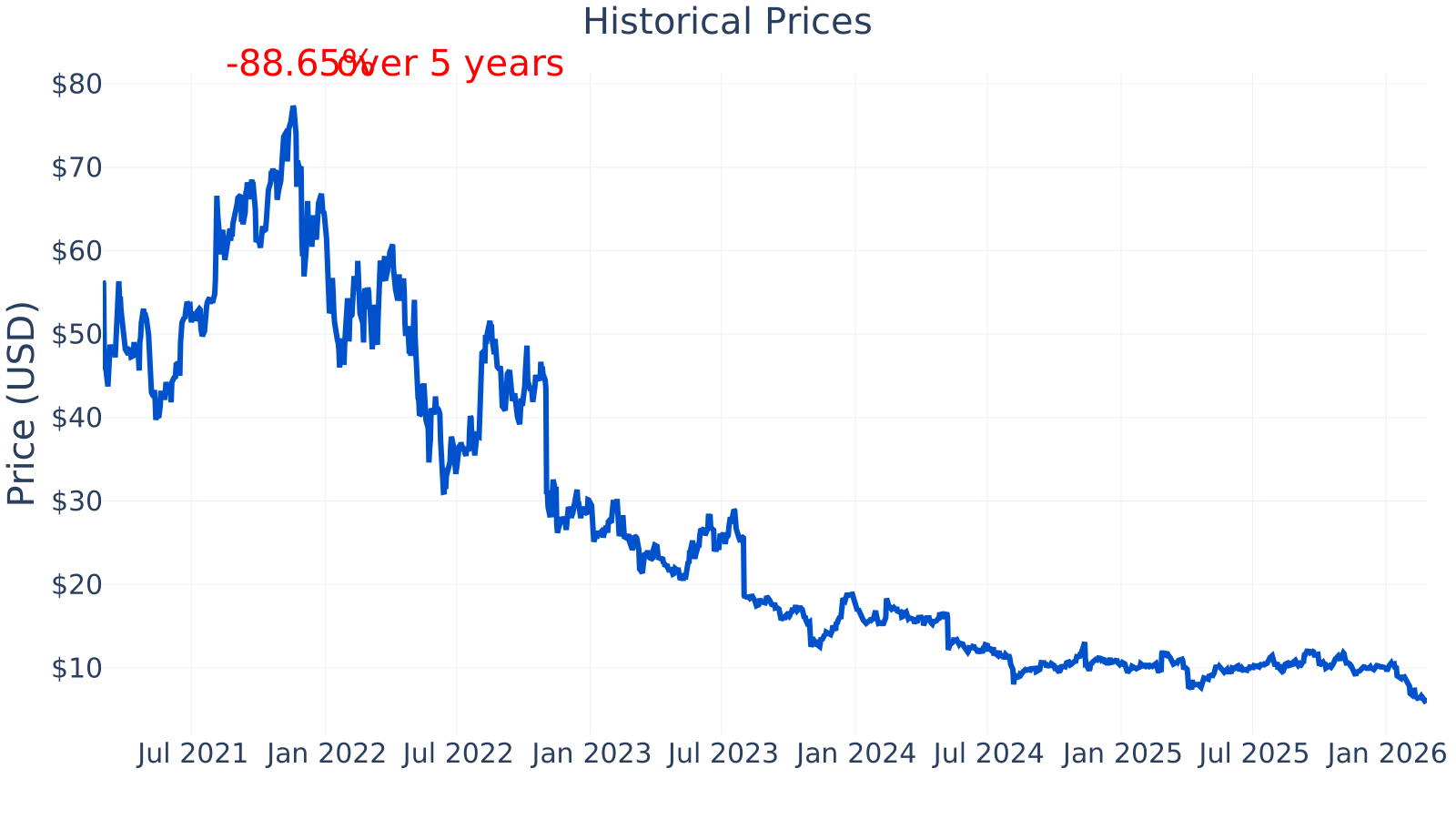
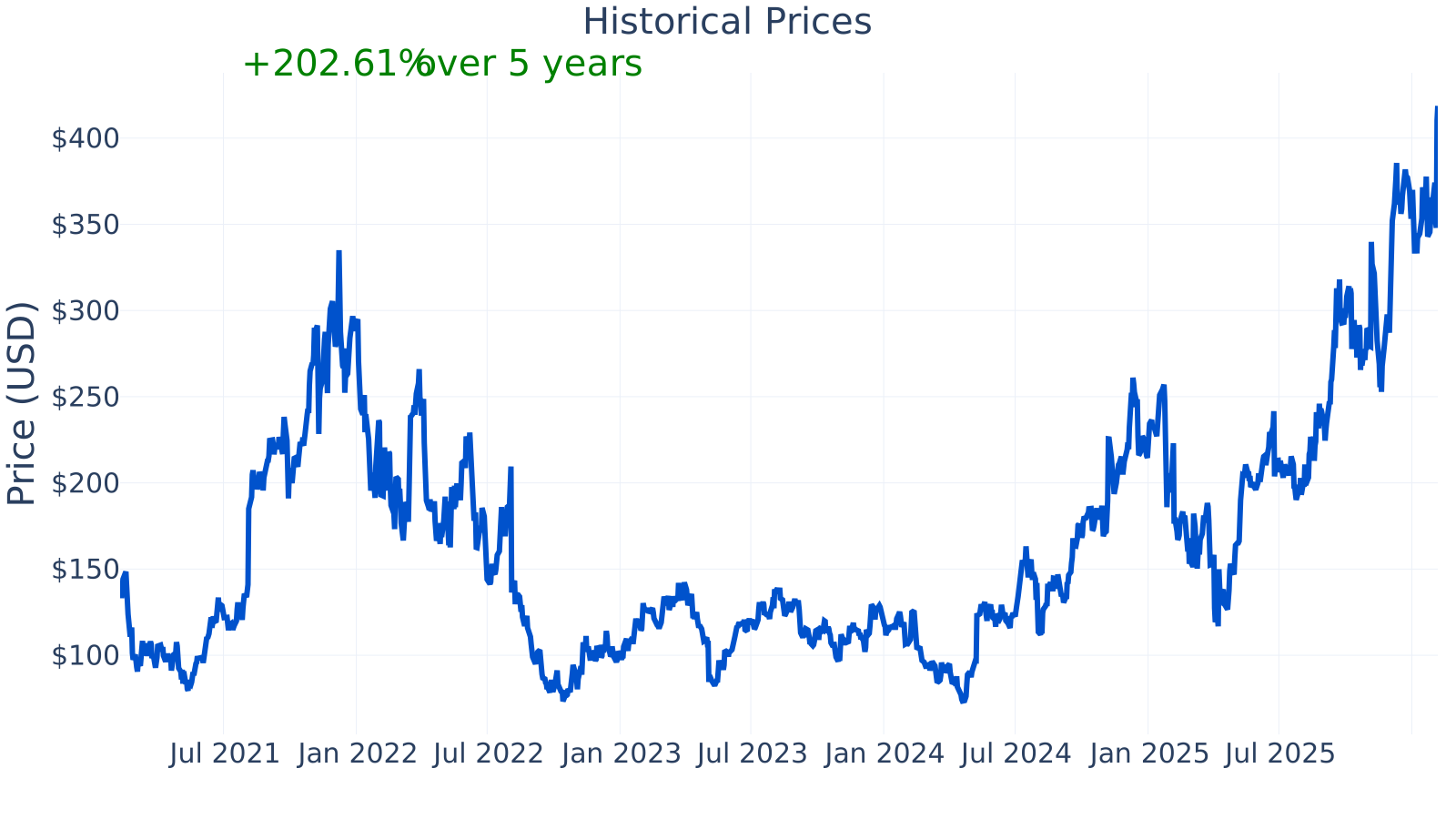
SiTime’s market capitalization is about $11.0B. The stock has historically shown large swings (its beta is ~2.54, which indicates higher volatility than the overall market).
On the profitability side, the company’s latest profit margin is about -13.1%, below the semiconductor industry median shown (~9.4%). Despite that, recent year-over-year revenue growth is about 66.3%, which is higher than the industry median shown (~13.1%).
Capital structure is conservative: debt-to-equity is ~0.4%, far below the industry median shown (~25.6%). Free cash flow over the trailing twelve months is positive at about $19.6M, but this figure has been volatile in recent years.
Growth (Medium)
SiTime participates in the broader semiconductor industry, where demand is influenced by long product cycles, inventory corrections, and end-market shifts. Within semiconductors, precision timing components tend to benefit from long-term trends such as increased connectivity, higher data throughput, more sensors in vehicles and industrial systems, and the continued build-out of network and computing infrastructure. These trends can increase the number of timing devices per system and raise performance requirements, which can support a role for specialized timing suppliers.
Strategically, SiTime emphasizes engineering-intensive product development, which is visible in the company’s operating cost structure: research and development spending is a major component of expenses in the financial statements. For a timing-solution supplier, the logic is straightforward—winning designs in customers’ products can translate into multi-year revenue streams, but it often requires sustained investment to keep pace with performance needs and qualification requirements.
The revenue growth pattern is cyclical: very strong growth in 2021–2022, followed by a sharp contraction through 2023, then a rebound into 2024–2025, including a recent reading around +66% year-over-year. This kind of “downcycle then recovery” is common in semiconductors, but it also means growth can look extremely strong coming off a low base.
Free cash flow has not followed a straight line. It was positive in 2021 and 2022, turned negative during 2023–2025 (as shown), and most recently is positive on a trailing basis in the metrics table. For long-term business durability, sustained positive free cash flow typically matters because it can help fund R&D and operations without relying on external financing; however, the history here suggests cash generation can be uneven through cycles.
Risks (High)
This article is for informational purposes only and does not constitute financial advice. Some content is AI-generated. See Disclaimer