Stock Analysis · Sinclair Broadcast Group Inc (SBGI)
Overview
Sinclair Broadcast Group Inc. is a U.S. media company best known for owning and operating local television stations. Through these stations, Sinclair delivers local news and syndicated programming to audiences in many U.S. markets, and it sells advertising time to businesses that want to reach those viewers. Beyond the traditional TV business, the company also has operations tied to sports and other content distribution, reflecting a broader effort to generate revenue from both viewers and distribution partners.
From the company’s filings, Sinclair generally describes revenue as coming mainly from a mix of advertising and fees paid by cable/satellite/virtual TV providers to carry its local stations (often called distribution or retransmission-related revenue). In addition, it can generate revenue from content-related activities (for example, sports and other programming offerings) and other smaller lines of business. Exact percentages can shift year to year due to political advertising cycles, changes in distribution contracts, and the performance of its other businesses.
Looking across recent years, total revenue declined from about $6.1B (2021) to about $3.9B (2022) and $3.1B (2023), before rising to about $3.5B (2024). Profitability has also swung significantly: net income was negative in 2021 and 2023, very high in 2022, and positive in 2024. These sharp moves suggest results can be heavily influenced by non-recurring items (such as gains/losses, tax items, or large one-time charges), along with the inherently cyclical nature of advertising.
Key Figures
| Metric | Value | Industry ⓘ |
|---|---|---|
| Date | Feb 08, 2026 | |
| Context | ||
| Sector | Communication Services | |
| Industry | Broadcasting | |
| Market Cap ⓘ | $953.97M | |
| Beta ⓘ | 0.95 | |
| Fundamental | ||
| P/E Ratio ⓘ | N/A | |
| Profit Margin ⓘ | -1.35% | |
| Revenue Growth ⓘ | -15.70% | |
| Debt to Equity ⓘ | 1222.80% | |
| PEG ⓘ | 0.89 | |
| Free Cash Flow ⓘ | $211.00M | |
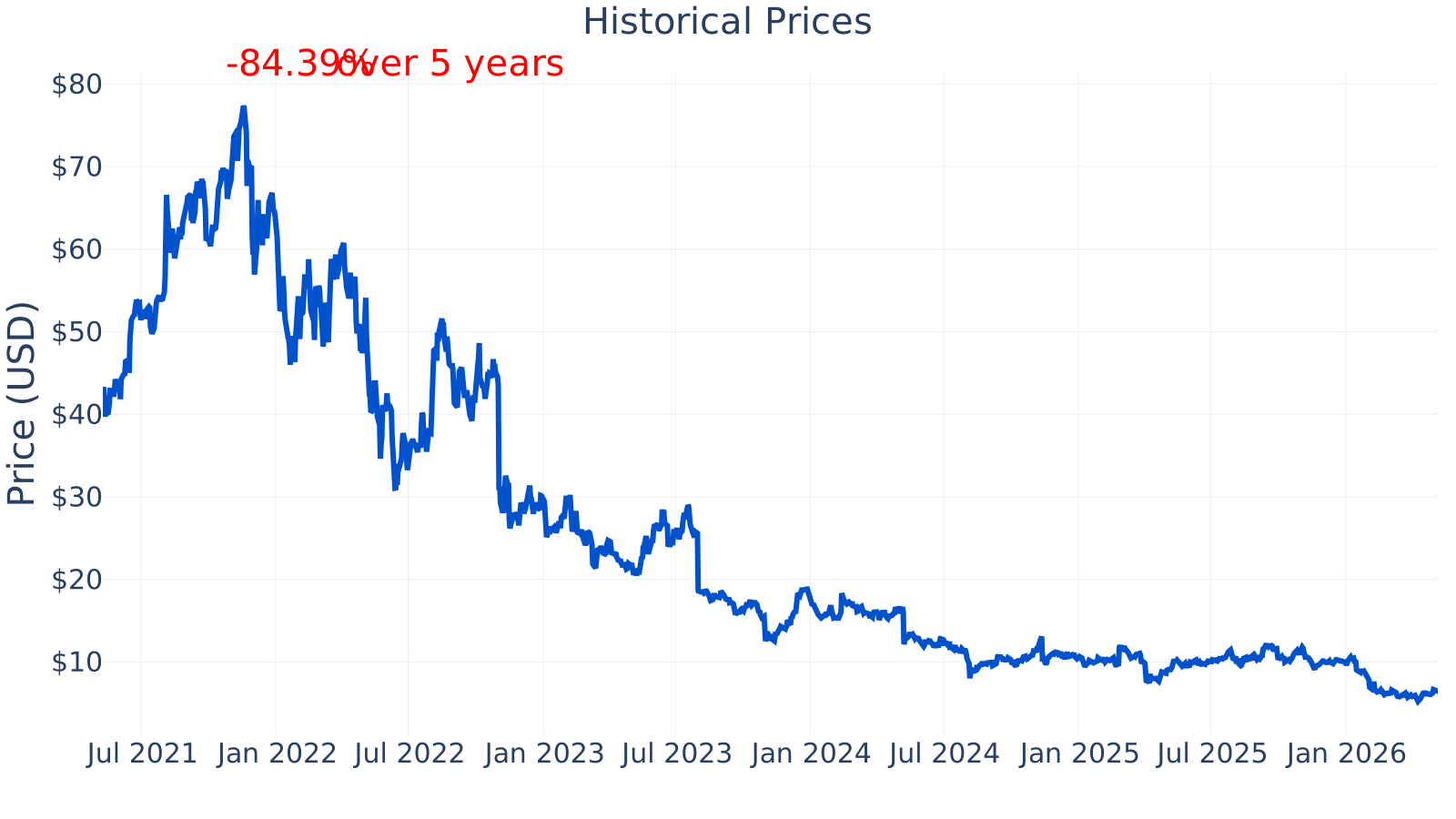
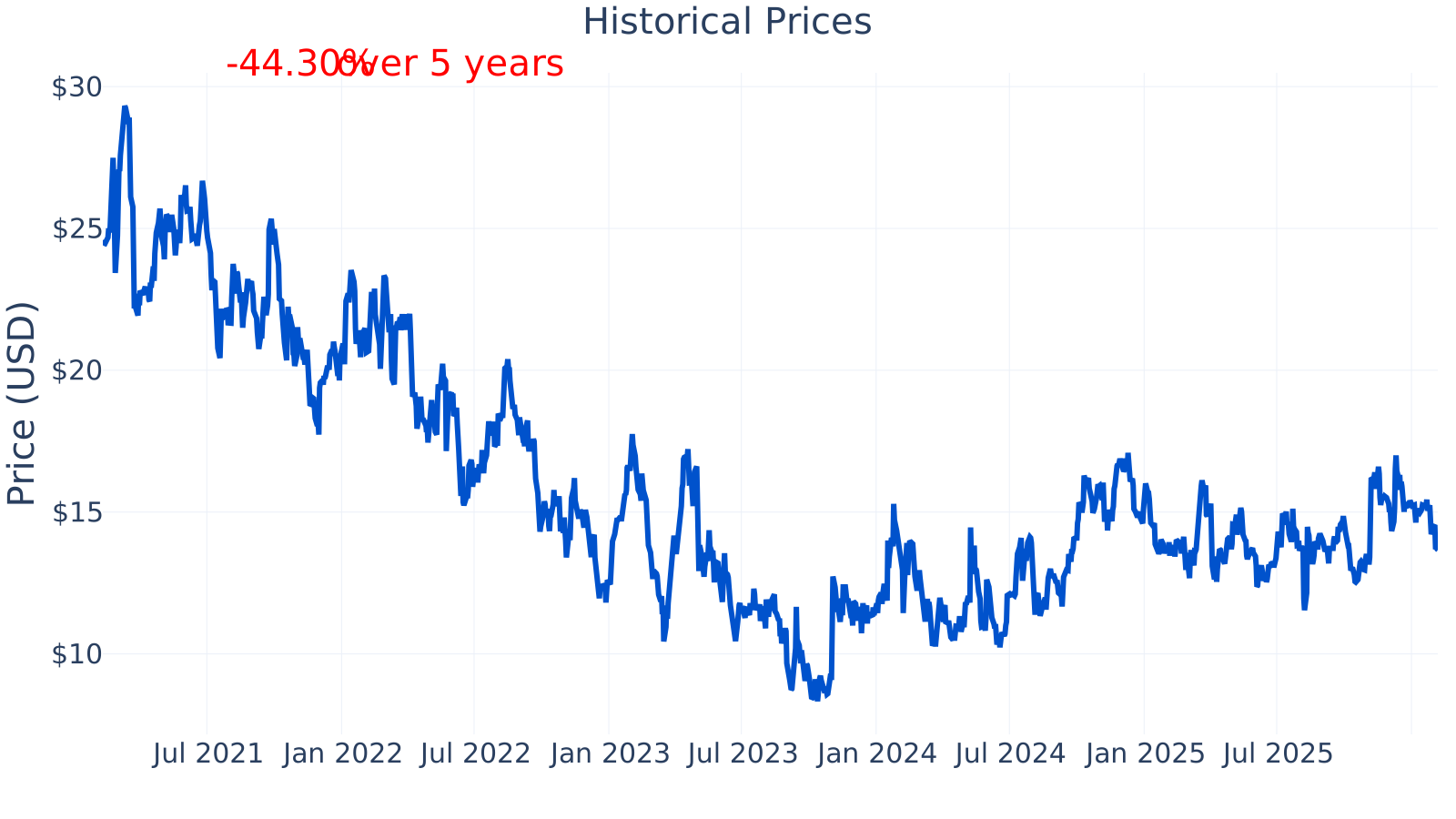
Sinclair’s market capitalization is about $954M, placing it in the smaller end of publicly traded media companies. The beta of 0.95 suggests the stock has historically moved roughly in line with the broader market (though individual periods can still be volatile).
Recent profitability and growth metrics indicate pressure: profit margin is about -1.35% (slightly negative), and year-over-year revenue growth is about -15.70% in the most recent period shown. At the same time, trailing twelve-month free cash flow is about $211M, which indicates the company has recently generated meaningful cash after operating and capital spending—an important factor for a business with significant debt obligations.
One metric stands out as especially important for context: debt-to-equity is about 1,223%, which is very high. In simple terms, this indicates a heavily leveraged balance sheet and suggests that changes in interest rates, refinancing conditions, and operating performance can have an outsized impact on equity holders.
Growth (Low)
Local broadcast television is a mature industry. It can still produce sizable cash flows, but long-term growth is challenged by ongoing shifts in how audiences consume video (more streaming and on-demand viewing) and how advertisers allocate budgets across platforms. That said, local stations can retain relevance because they deliver local news, weather, and community coverage that is harder to replicate nationally, and because live events (including sports) tend to remain valuable for advertisers.
The year-over-year revenue pattern shown is uneven, with deep declines through 2022–2023, a rebound during parts of 2024, and a return to declines in 2025 (down to about -15.70% in the most recent point shown). This profile highlights that Sinclair’s top line can be cyclical and sensitive to the advertising environment, distribution arrangements, and the mix of one-time items.
Free cash flow has also dropped sharply from 2021 levels (about $1.25B) to much lower recent levels (down to about $28M as of 2025-03-31), before the latest table shows $211M on a trailing basis. For long-term business momentum, a key question is whether free cash flow can be sustained at levels that comfortably cover interest costs and any required debt repayment, while still funding necessary investment in content, technology, and station operations.
Potential catalysts in this business model tend to be cyclical rather than purely structural—such as political advertising cycles and renegotiations of distribution-related fees. While these can lift results in certain periods, they do not necessarily change the long-run industry direction.
Risks (Very High)
The most prominent risk signal here is leverage. Debt-to-equity has been extremely elevated (about 1,223% in the latest point shown), and it has also moved around significantly over time. A highly leveraged structure can amplify outcomes: if operating results weaken or refinancing becomes more expensive, interest expense and debt-related constraints may limit flexibility.
Profit margin has been volatile, ranging from strongly positive periods (notably in 2022) to negative stretches (including 2021, parts of 2023–2024, and the latest point at about -1.35%). For a long-term view, this variability matters because it suggests earnings can be influenced by one-time or accounting-driven items in addition to the underlying performance of the station portfolio and other operations.
Competitive pressure is another key risk. Sinclair competes for advertising dollars with other local broadcasters, cable networks, digital platforms, and large online advertising ecosystems. In local broadcasting, the company is one of the larger station operators, but it does not operate in a winner-take-all market: viewership and advertising are fragmented across local stations, networks, and digital alternatives.
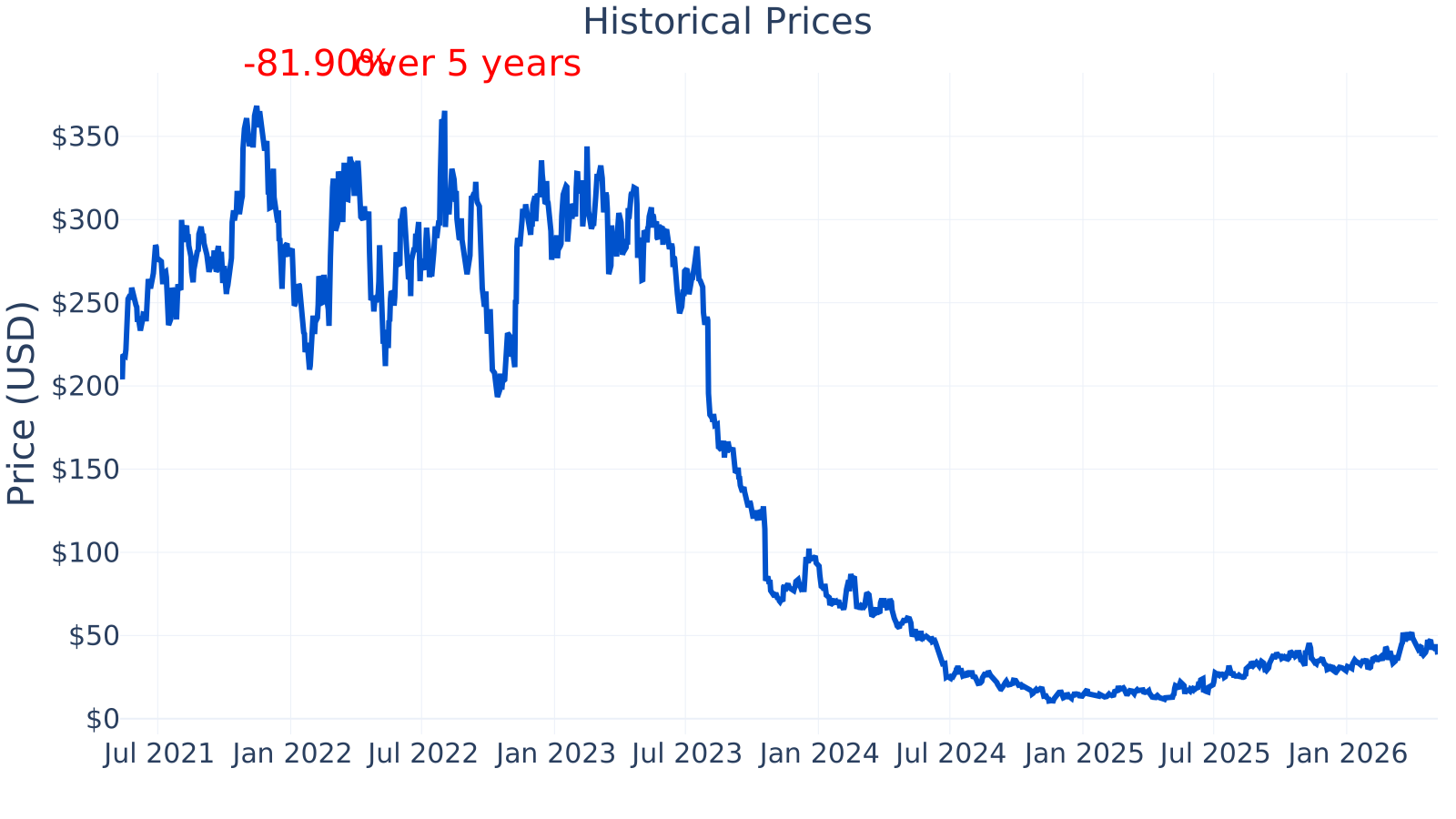
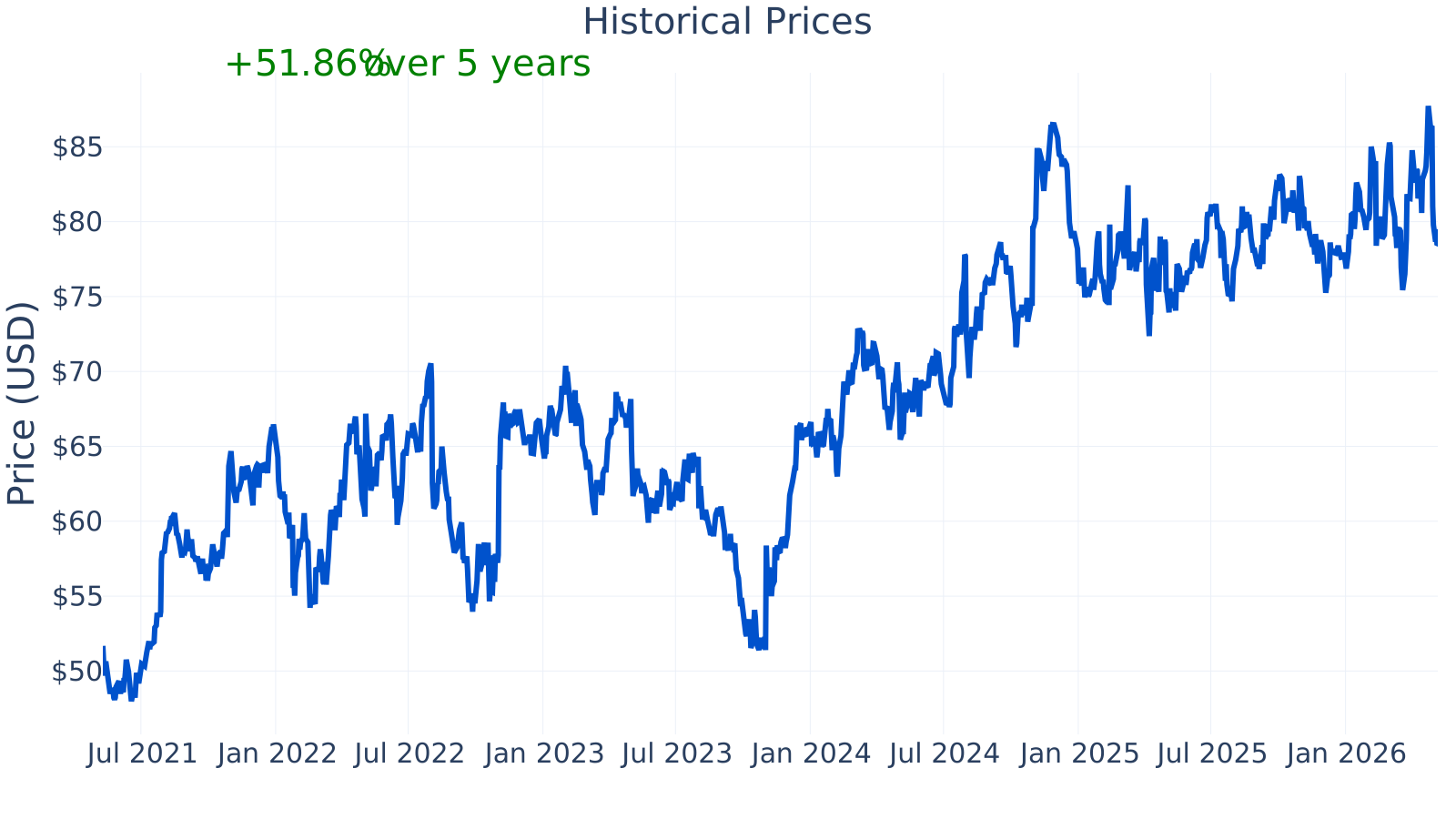
Main public-company competitors in U.S. local broadcasting include Nexstar Media Group and Gray Television, among others. Compared to peers, differentiation typically comes from station scale in attractive markets, negotiating leverage with distributors, local news execution, cost discipline, and balance-sheet resilience. Given Sinclair’s high leverage (as indicated by debt-to-equity), balance-sheet strength and refinancing conditions can be especially important in how it compares to other operators over a full cycle.
Regulatory and contractual factors also matter. Local station ownership and distribution are influenced by U.S. communications rules, network affiliation agreements, and negotiations with cable/satellite/virtual TV providers. Disputes or changes in these arrangements can affect both revenue and audience reach.
Valuation
A price-to-earnings (P/E) ratio can be a useful shortcut for valuation, but it is less reliable when earnings are volatile or temporarily distorted by one-time items. The P/E history shown includes long stretches where the ratio is displayed as 0, which commonly happens when earnings are negative or otherwise not meaningful for the calculation. When the P/E is visible, it varies widely (for example, moving from low single digits to the teens), reinforcing that reported earnings have not been stable.
In this situation, valuation is often discussed using multiple lenses rather than a single ratio—especially emphasizing cash generation and the obligations created by debt. With market capitalization around $954M and trailing free cash flow shown at $211M, the company can appear meaningfully cash-generative at times; however, the sustainability of that cash flow and the cost of servicing/refinancing debt are central to how the market may interpret the stock’s price level.
Conclusion
Sinclair is a large operator of local TV stations with additional content-related operations, operating in a mature industry facing structural changes in viewing and advertising behavior. The company’s recent history shows significant swings in revenue and profitability, and the latest metrics combine slightly negative profit margin with meaningful trailing free cash flow.
The defining fundamental consideration is financial leverage: the latest debt-to-equity level is extremely high, which can make long-term outcomes more sensitive to business cycles and financing conditions than for less-leveraged peers. Any long-term assessment typically rests on whether operating performance and cash generation can remain durable enough—through industry shifts and advertising cycles—to support the balance sheet while maintaining the competitiveness of the station portfolio.
Sources:
- SEC EDGAR — Sinclair Broadcast Group, Inc. filings (Form 10-K, Form 10-Q)
- Sinclair Broadcast Group, Inc. Investor Relations — SEC Filings
- Wikipedia — “Sinclair Broadcast Group” (company background)
This article is for informational purposes only and does not constitute financial advice. Some content is AI-generated. See Disclaimer