Stock Analysis · Silicon Motion Technology (SIMO)
Overview
Silicon Motion Technology (SIMO) is a semiconductor company that designs specialized chips used to manage and control data storage. In simple terms, its products help devices like solid-state drives (SSDs), USB flash drives, memory cards, and embedded storage work efficiently and reliably. The company is considered a “fabless” chip designer, meaning it focuses on designing chips while outsourcing manufacturing to semiconductor foundries.
Its business is closely tied to the broader storage and memory ecosystem. Demand tends to rise when device makers and data centers increase storage shipments, and it can fall when customers reduce inventory or when the memory market slows.
Based on company disclosures, Silicon Motion’s revenue is primarily driven by storage-controller products, commonly described in filings along lines such as SSD controller solutions and other controllers for removable and embedded storage. Exact percentages by product category can change over time and are typically detailed in annual reports.
Main revenue drivers (typical product groupings described in filings):
- SSD controller solutions (controllers used in client and other SSDs)
- eMMC / UFS embedded storage controllers (controllers used in embedded storage inside consumer and industrial devices)
- Removable storage controllers (USB flash drive and memory card controllers)
- Other / licensing and related items (when applicable, depending on reporting)
From an income structure perspective, the company historically spends a meaningful portion of revenue on research and development (R&D), which is common in chip design where new generations of controllers are needed to remain competitive.
Over the 2021–2025 period shown, total revenue moved through a downcycle and then a recovery (about $922M in 2021, down to about $639M in 2023, then up to about $886M in 2025). R&D spending increased in absolute dollars over time (roughly $164M in 2021 to about $263M in 2025), which suggests continued investment in new products even as profitability fluctuated.
Key Figures
| Metric | Value | Industry ⓘ |
|---|---|---|
| Date | Feb 07, 2026 | |
| Context | ||
| Sector | Technology | |
| Industry | Semiconductors | |
| Market Cap ⓘ | $4.35B | |
| Beta ⓘ | 1.03 | |
| Fundamental | ||
| P/E Ratio ⓘ | 35.18 | 45.89 |
| Profit Margin ⓘ | 13.85% | 9.42% |
| Revenue Growth ⓘ | 45.70% | 13.10% |
| Debt to Equity ⓘ | N/A | 25.62% |
| PEG ⓘ | -4.43 | |
| Free Cash Flow ⓘ | $6.38M | |
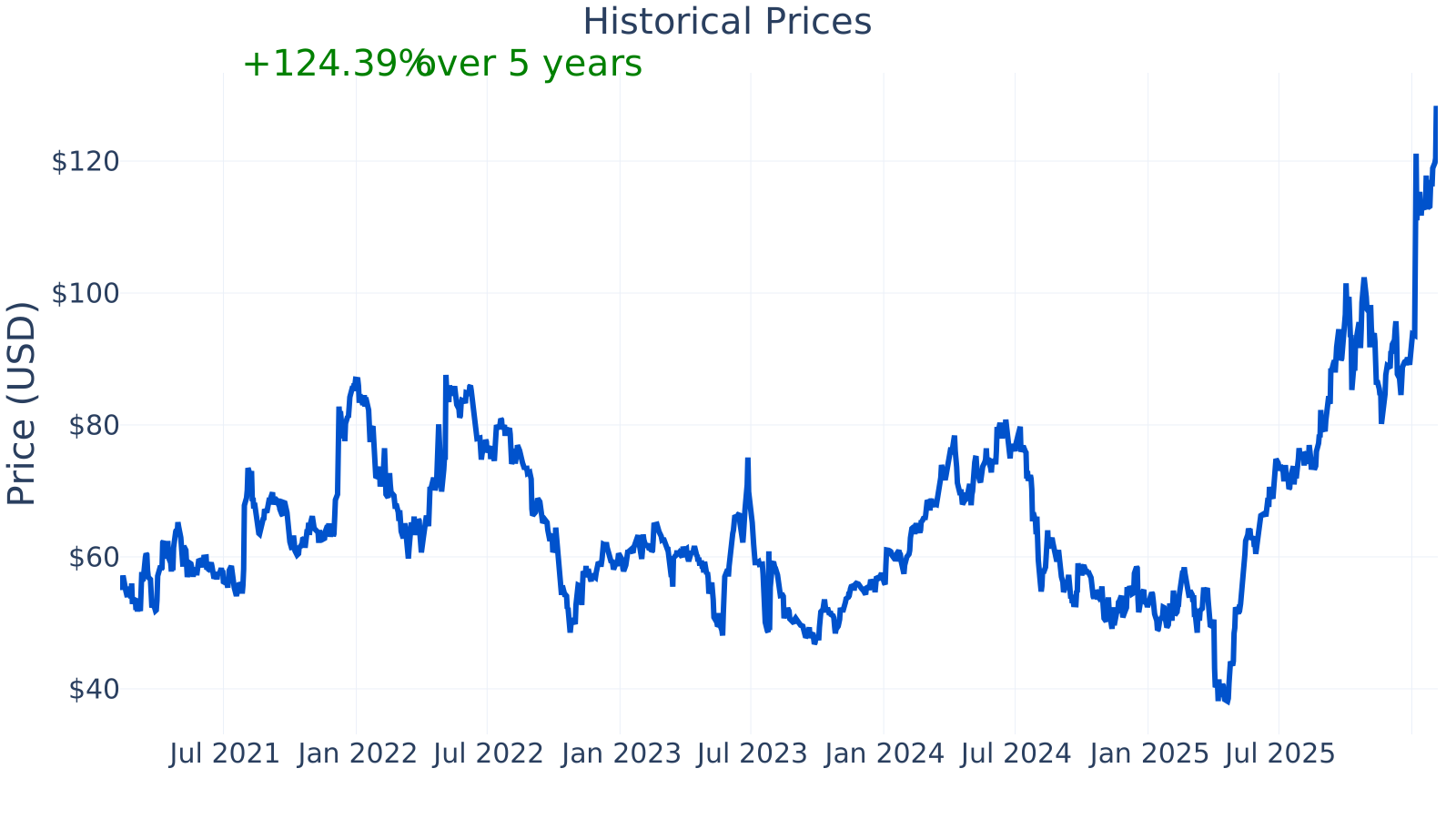
Silicon Motion’s market capitalization is about $4.35B, placing it in the mid-cap range. The stock’s beta of ~1.03 indicates price moves that have been broadly similar to the overall market over time (though individual periods can differ). The latest snapshot shows a P/E ratio of ~35.2, below the provided semiconductor industry median (~45.9). Profitability and growth metrics in the same snapshot show a profit margin of ~13.9% (above the industry median ~9.4%) and year-over-year revenue growth of ~45.7% (above the industry median ~13.1%). Free cash flow over the trailing twelve months is shown as about $6.4M, which is positive but relatively small compared with the company’s size, and may reflect working-capital swings and cycle dynamics common in semiconductors.
Growth (Medium)
Silicon Motion operates in storage-related semiconductors, an area supported by long-term trends such as increasing data creation, higher storage needs in PCs and consumer devices, and ongoing SSD adoption across many categories. Even when unit growth is uneven, storage technology transitions (new interface standards, higher performance requirements, new NAND generations) can create repeated upgrade cycles for controller chips.
In cyclical industries like semiconductors, growth often arrives in waves rather than smoothly. The company’s results over the last few years reflect this pattern, with a notable revenue decline into 2023 and a subsequent rebound.
The year-over-year revenue growth line shows sharp swings: very strong growth in 2021, contraction through much of 2022–2023, then a strong recovery during parts of 2024 and into 2025 (ending around +45.7%). This pattern is consistent with inventory corrections and recoveries that occur in storage and memory-adjacent markets.
Free cash flow (TTM) has been positive across the periods shown but not steady (roughly $78M in 2021, up to about $122M in 2022, then down and later around $74M in 2025). This variability matters for long-term planning because chip companies can see cash generation change meaningfully with revenue levels, pricing, and customer purchasing cycles.
Potential catalysts generally come from successful product transitions (new SSD controller generations and qualifications at major customers), broader SSD demand recovery, and expanding adoption of higher-performance storage standards. Management’s continued R&D investment (visible in the cost structure over time) aligns with the need to keep launching competitive controllers as standards evolve.
Risks (High)
This article is for informational purposes only and does not constitute financial advice. Some content is AI-generated. See Disclaimer