Stock Analysis · Silgan Holdings Inc (SLGN)
Overview
Silgan Holdings Inc (SLGN) is a packaging company that makes containers and closures used mainly for everyday consumer products. Its products are designed to protect and preserve food and beverages, and it also supplies packaging for a range of household and personal care items. In practice, Silgan operates as a large-scale manufacturer with long customer relationships, where performance tends to be driven by production volumes, input costs (like metal and resin), and how effectively the company passes cost changes through to customers.
Based on its public filings, Silgan organizes its business around packaging categories that are generally tied to consumer staples demand (items people keep buying across economic cycles) and certain discretionary categories (which can be more cyclical). Revenue typically comes from a mix of containers, closures, and plastic packaging solutions sold to brand owners and food processors.
Main revenue sources (ordered from largest to smallest, as described in company reporting):
- Dispensing and Specialty Closures (closures, dispensing systems for food, beverage, personal care, and home care)
- Metal Containers (steel and aluminum containers, often for packaged foods)
- Custom Containers (plastic containers for food and household/personal care applications)
The company’s results show the typical profile of a packaging manufacturer: a large share of revenue goes to production inputs (cost of revenue), with profitability influenced by scale, manufacturing efficiency, and interest costs. Over the years shown, revenue moves within a relatively steady band (roughly the mid-$5B to mid-$6B range), while interest expense is a meaningful line item, highlighting the importance of financing costs.
Key Figures
| Metric | Value | Industry ⓘ |
|---|---|---|
| Date | Feb 08, 2026 | |
| Context | ||
| Sector | Consumer Cyclical | |
| Industry | Packaging & Containers | |
| Market Cap ⓘ | $5.23B | |
| Beta ⓘ | 0.72 | |
| Fundamental | ||
| P/E Ratio ⓘ | 18.11 | 21.79 |
| Profit Margin ⓘ | 4.45% | 5.56% |
| Revenue Growth ⓘ | 4.10% | 6.00% |
| Debt to Equity ⓘ | 191.13% | 137.29% |
| PEG ⓘ | 0.84 | |
| Free Cash Flow ⓘ | $977.71M | |
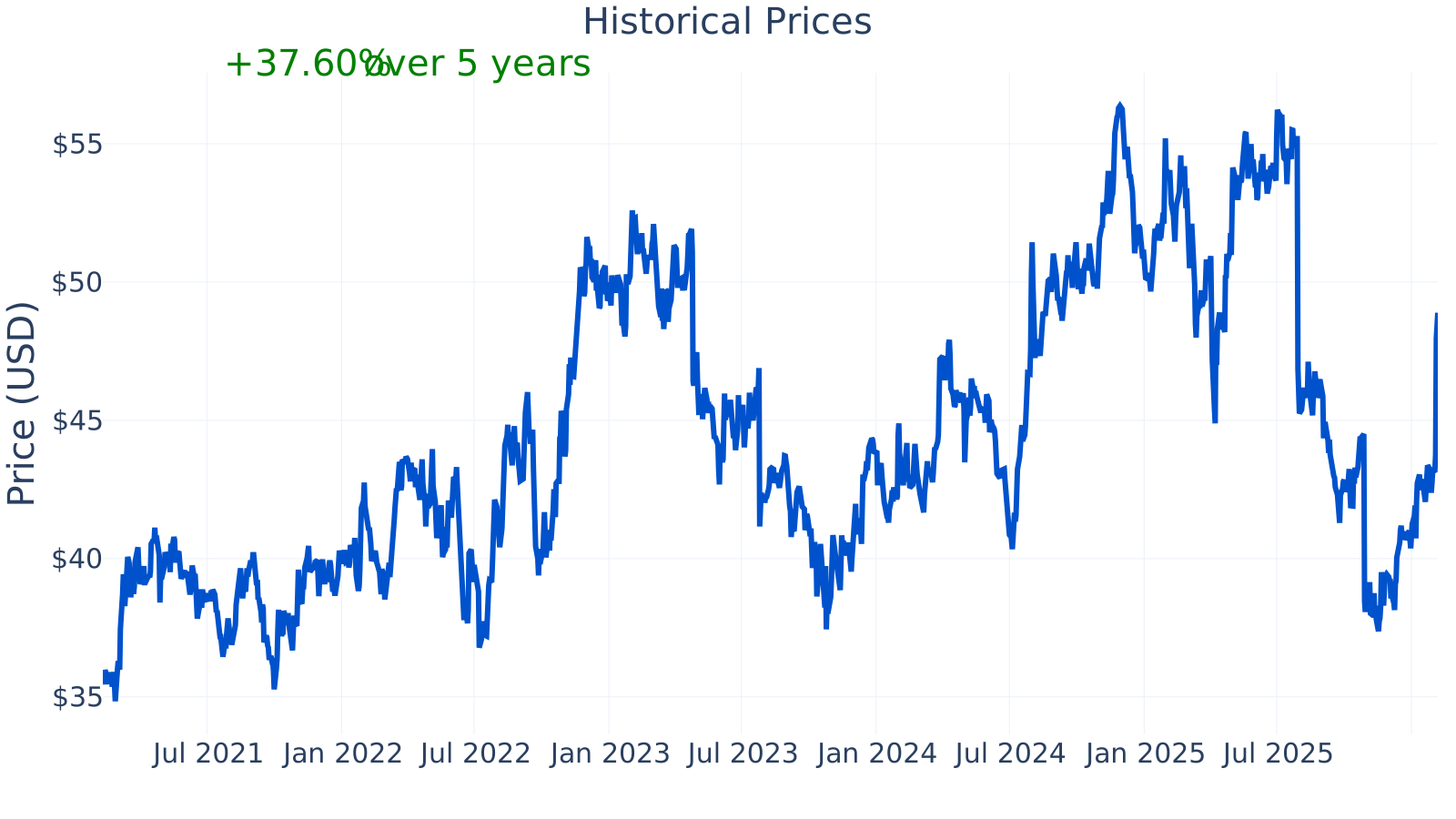
Silgan’s market capitalization is about $5.23B, and its beta of ~0.72 suggests the stock has historically been less volatile than the overall market. The latest P/E ratio is ~18.1 versus an industry median of ~21.8. Profitability is modest for the sector: latest profit margin is ~4.45% compared with an industry median of ~5.56%. Recent year-over-year revenue growth is ~4.1% versus an industry median of ~6.0%. Leverage stands out: debt-to-equity is ~191%, higher than the industry median of ~137%. The company reports trailing twelve-month free cash flow of about $978M, and a PEG ratio of ~0.84 (a metric that relates valuation to growth expectations).
Growth (Medium)
Packaging is generally a mature industry, and growth often comes from a combination of steady end-market demand (especially food-related categories), pricing/pass-through mechanisms tied to raw materials, mix improvements (selling more specialized products), and acquisitions. Silgan’s business mix includes categories that can be relatively resilient—such as packaged foods and everyday consumer goods—yet volumes can still move with consumer demand, customer inventory cycles, and broader economic conditions.
From the revenue growth trend, performance has been uneven over time. The company experienced strong positive growth in parts of 2021–2022, then a period of declines through much of 2023 and most of 2024, followed by a return to positive growth in late 2024 and 2025 (including one notably high quarter). This pattern is consistent with a business where short-term results can swing due to customer ordering patterns, pricing effects, and category-specific demand rather than purely long-run market expansion.
Cash generation is an important part of the long-term story for a packaging manufacturer because it supports investment in plants and equipment, debt repayment, and shareholder returns. Silgan’s free cash flow trend shows variability across the years shown, with a low point around 2023 and higher levels in 2024–2025. Sustaining stronger cash generation over multiple years can matter more than any single-year spike, particularly for a company with meaningful debt.
Potential catalysts that can influence longer-term growth (without relying on any single event) include: (1) improving product mix toward higher-value closures and dispensing systems, (2) operational efficiency initiatives that lift margins, and (3) disciplined acquisitions that expand capabilities or customer relationships while maintaining balance-sheet flexibility.
Risks (Medium)
This article is for informational purposes only and does not constitute financial advice. Some content is AI-generated. See Disclaimer