Stock Analysis · Silicon Laboratories Inc (SLAB)
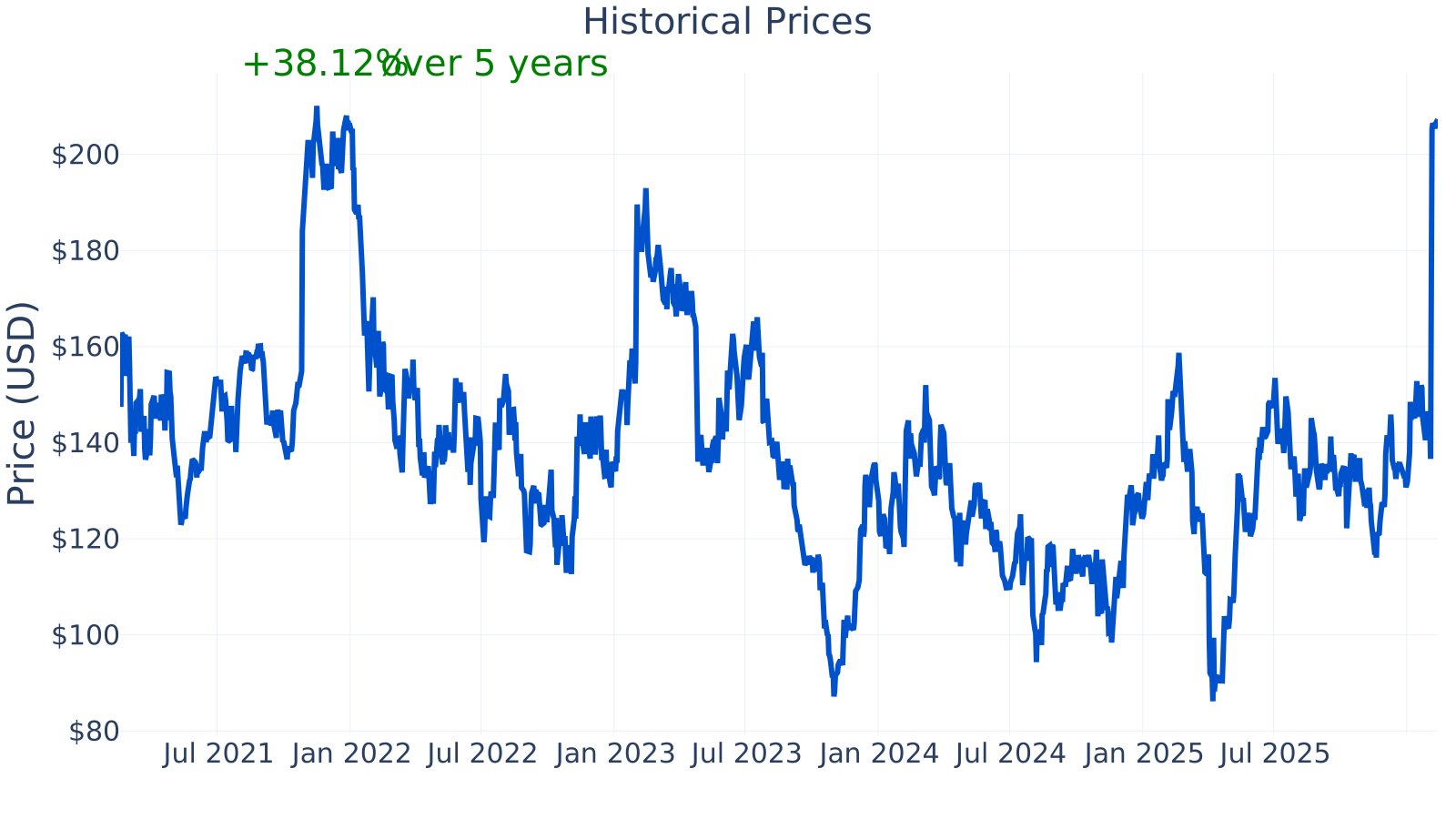
Overview
Silicon Laboratories Inc. (Silicon Labs) is a semiconductor company focused on chips and software used to connect devices wirelessly. In simple terms, it helps everyday products communicate—often without cables—using technologies such as Wi‑Fi, Bluetooth, and other low-power wireless standards. Its products are commonly used in areas like smart homes, industrial automation, and other “connected device” (IoT) applications.
In recent years, Silicon Labs has been positioned as a more specialized company compared with broad “all-purpose” chipmakers, emphasizing wireless connectivity solutions (hardware plus software tools) that device manufacturers can integrate into their products.
Based on company reporting, revenue is primarily generated from its connectivity products shipped to electronics manufacturers and their suppliers. For many semiconductor companies in this category, revenue is typically driven by a mix of end markets rather than a few subscription-like lines.
Main sources of revenue (high-level)
- Wireless connectivity semiconductors (core business; includes chips and related software/solutions used in connected devices)
- Associated development tools and software components (generally tied to enabling and supporting silicon adoption)
Because the product set is closely integrated (chips + software tools), Silicon Labs’ revenue is often best understood through its key end markets (such as industrial and consumer IoT) rather than through many separate “product lines.” Exact percentages can vary by year and are typically detailed in annual filings.
The multi-year income flow highlights that research and development spending remains a large, recurring cost item (hundreds of millions annually), consistent with a company competing on ongoing innovation. It also shows that profitability has fluctuated materially over time, including periods of losses, which is important context for long-term business durability.
Key Figures
| Metric | Value | Industry ⓘ |
|---|---|---|
| Date | Feb 16, 2026 | |
| Context | ||
| Sector | Technology | |
| Industry | Semiconductors | |
| Market Cap ⓘ | $6.83B | |
| Beta ⓘ | 1.54 | |
| Fundamental | ||
| P/E Ratio ⓘ | N/A | 45.38 |
| Profit Margin ⓘ | -8.27% | 10.84% |
| Revenue Growth ⓘ | 25.20% | 15.50% |
| Debt to Equity ⓘ | N/A | 25.62% |
| PEG ⓘ | 3.03 | |
| Free Cash Flow ⓘ | $65.79M | |
Silicon Labs’ market capitalization is about $6.8B, placing it in the mid-cap range. The stock’s beta of ~1.54 suggests it has historically moved more than the overall market (higher volatility). The company’s latest profit margin is about -8.3%, below the semiconductor industry median (about 10.8%), indicating the company has recently been unprofitable on a net basis. On the growth side, year-over-year revenue growth is about 25.2%, above the industry median (about 15.5%), implying a stronger recent top-line rebound relative to many peers. Trailing twelve-month free cash flow is about $65.8M, and the PEG ratio is ~3.03, a level that commonly corresponds to higher expectations for future growth relative to current earnings.
Growth (Medium)
Silicon Labs operates in markets tied to the long-term expansion of connected devices: smart home products, connected industrial equipment, and embedded wireless networking. These categories can benefit from structural trends such as automation, energy management, and the increasing expectation that devices can be monitored or controlled remotely.
Strategically, focusing on wireless connectivity can make sense because connectivity is often a “must-have” feature across many device categories, and the same core wireless building blocks can be reused across multiple end products. If a company builds a strong ecosystem—reliable chips, solid software, and developer support—it can become easier for customers to reuse the same platform in future product generations.
The revenue growth pattern has been volatile, including a sharp contraction in 2023–2024 followed by a strong rebound into late 2024 and through 2025 (most recently around 25% year-over-year). For long-term analysis, this suggests demand can recover meaningfully, but also that end-market cycles (and customer inventory corrections) can heavily influence reported sales.
Free cash flow has also swung from positive to negative and back to positive. The latest trailing twelve-month figure is positive (~$65.8M), after prior periods of negative cash generation. For a semiconductor company, these shifts can reflect both profitability changes and working-capital swings (for example, inventory and customer ordering patterns) as conditions normalize after downturns.
Potential catalysts over a multi-year horizon typically relate to broader adoption of connected standards, product refresh cycles among customers, and gaining share in industrial or smart home platforms. The strength of those catalysts depends on execution (product competitiveness, customer design wins, and the pace of market recovery).
Risks (High)
Semiconductors are cyclical, and Silicon Labs’ recent history shows pronounced swings in revenue growth, margins, and cash flow. That cyclicality can come from customers adjusting inventories, changes in consumer demand, and shifting industrial spending. This can make short- and medium-term results hard to predict, even if the long-term theme (connected devices) remains intact.
Competition is another key risk. Wireless connectivity is a large and active field with well-resourced semiconductor vendors. Competitive pressure can show up as pricing pressure, faster product cycles, or customers selecting alternative platforms. Switching costs exist (re-qualifying chips and reworking software), but they vary by application: some customers can change suppliers more easily than others.
Debt levels appear relatively low in the most recent period shown: the latest debt-to-equity is about 1.4%, below the semiconductor industry median (about 20.1%). This can reduce financial risk from interest costs and refinancing needs, though it does not remove the operational risks tied to demand and profitability.
Profitability has weakened versus the broader industry. After periods of positive net margins earlier in the timeline (and some quarters showing unusually high net margins, often influenced by non-recurring items), margins turned negative and remain below the industry median. The latest net profit margin is about -8.3%, while the industry median is about 10.8%. Sustained negative margins can limit flexibility, especially given the ongoing need for high R&D investment.
Competitive positioning is best described as specialized rather than “largest overall.” Silicon Labs is not the biggest semiconductor company, but it aims to differentiate through a focused portfolio in low-power wireless connectivity and the supporting software ecosystem. Major competitors in connectivity and embedded wireless can include large diversified chipmakers and connectivity-focused suppliers (for example, companies with broad microcontroller + wireless portfolios). In this environment, maintaining design wins depends on performance, power efficiency, software quality, supply reliability, and total cost.
Valuation
P/E ratios can be difficult to interpret when earnings are depressed or negative. In the timeline shown, Silicon Labs’ P/E is visible in some periods and not meaningful (shown as 0) in others, which is consistent with earnings volatility. When visible, the company’s P/E has at times been far above the semiconductor industry median, and at other times much lower—signaling that valuation has been heavily influenced by shifting profitability and market expectations.
For context today, the industry median P/E shown in the latest metrics is about 45.4. Because Silicon Labs’ recent net margin is negative, valuation discussions often shift toward other anchors (such as revenue growth, gross margin trajectory, operating expense discipline, and free cash flow consistency) rather than relying on earnings multiples alone. The presence of positive trailing free cash flow can be constructive, but the persistence of net losses highlights that the business is still in a phase where operating results need to stabilize for traditional valuation measures to be more comparable across peers.
Conclusion
Silicon Labs is a connectivity-focused semiconductor company aligned with long-term trends in connected devices across consumer and industrial markets. The business profile suggests a meaningful opportunity set if wireless adoption continues to expand and the company sustains platform wins with customers.
At the same time, recent results show substantial volatility: revenue growth swung sharply, profit margins turned negative and remain below industry norms, and free cash flow has alternated between negative and positive. Balance-sheet leverage appears modest based on debt-to-equity, which can reduce financing-related risk, but it does not eliminate the central uncertainties tied to competition, pricing, and the timing of end-market recoveries.
Overall, the long-term story is closely tied to whether Silicon Labs can translate above-median revenue growth into more consistent profitability and cash generation while defending its position in a competitive connectivity landscape.
Sources:
- SEC EDGAR — Silicon Laboratories Inc. Form 10-K (Annual Report) (business overview, risk factors, segment/end-market discussion)
- SEC EDGAR — Silicon Laboratories Inc. Form 10-Q (Quarterly Reports) (updates on operations, margins, and risks)
- Silicon Laboratories — Investor Relations materials and press releases (company strategy and product focus)
- Wikipedia — “Silicon Laboratories” (basic company background)
This article is for informational purposes only and does not constitute financial advice. Some content is AI-generated. See Disclaimer


