Stock Analysis · Shoals Technologies Group Inc (SHLS)
Overview
Shoals Technologies Group Inc designs and sells electrical balance-of-system (EBOS) equipment used in solar energy projects, especially in large, utility-scale solar farms. In simple terms, Shoals’ products help connect solar panels together and route the electricity safely and efficiently across a site. The company’s approach focuses on assembly-friendly components that can reduce on-site labor and complexity for installers.
Revenue mainly comes from selling solar EBOS hardware and related components to solar engineering, procurement, and construction (EPC) firms and project developers. In its SEC filings, Shoals describes its revenue as coming primarily from solar EBOS solutions; the company also discusses additional offerings (such as product enhancements and services) as supporting elements, but the business is largely tied to solar project equipment demand.
In recent years, the income profile has shown that revenue can move meaningfully year to year, while operating costs (including selling, general, and administrative expenses) remain a significant ongoing spend. From 2021 to 2025, total revenue rose overall (with a notable dip in 2024), and profitability also fluctuated, reflecting a business that is sensitive to project timing, pricing, and cost structure.
From 2021 to 2025, total revenue increased from about $213M to about $475M, with a decline in 2024 before recovering in 2025. Over the same period, selling, general, and administrative expenses increased in dollar terms (roughly $38M in 2021 to about $102M in 2025), which can matter for how much of each revenue dollar ultimately reaches operating income and net income.
Key Figures
| Metric | Value | Industry ⓘ |
|---|---|---|
| Date | Mar 09, 2026 | |
| Context | ||
| Sector | Technology | |
| Industry | Solar | |
| Market Cap ⓘ | $956.14M | |
| Beta ⓘ | 1.76 | |
| Fundamental | ||
| P/E Ratio ⓘ | 28.55 | 26.41 |
| Profit Margin ⓘ | 7.06% | 7.06% |
| Revenue Growth ⓘ | 38.60% | 11.10% |
| Debt to Equity ⓘ | 29.24% | 104.92% |
| PEG ⓘ | 0.53 | |
| Free Cash Flow ⓘ | -$15.98M | |
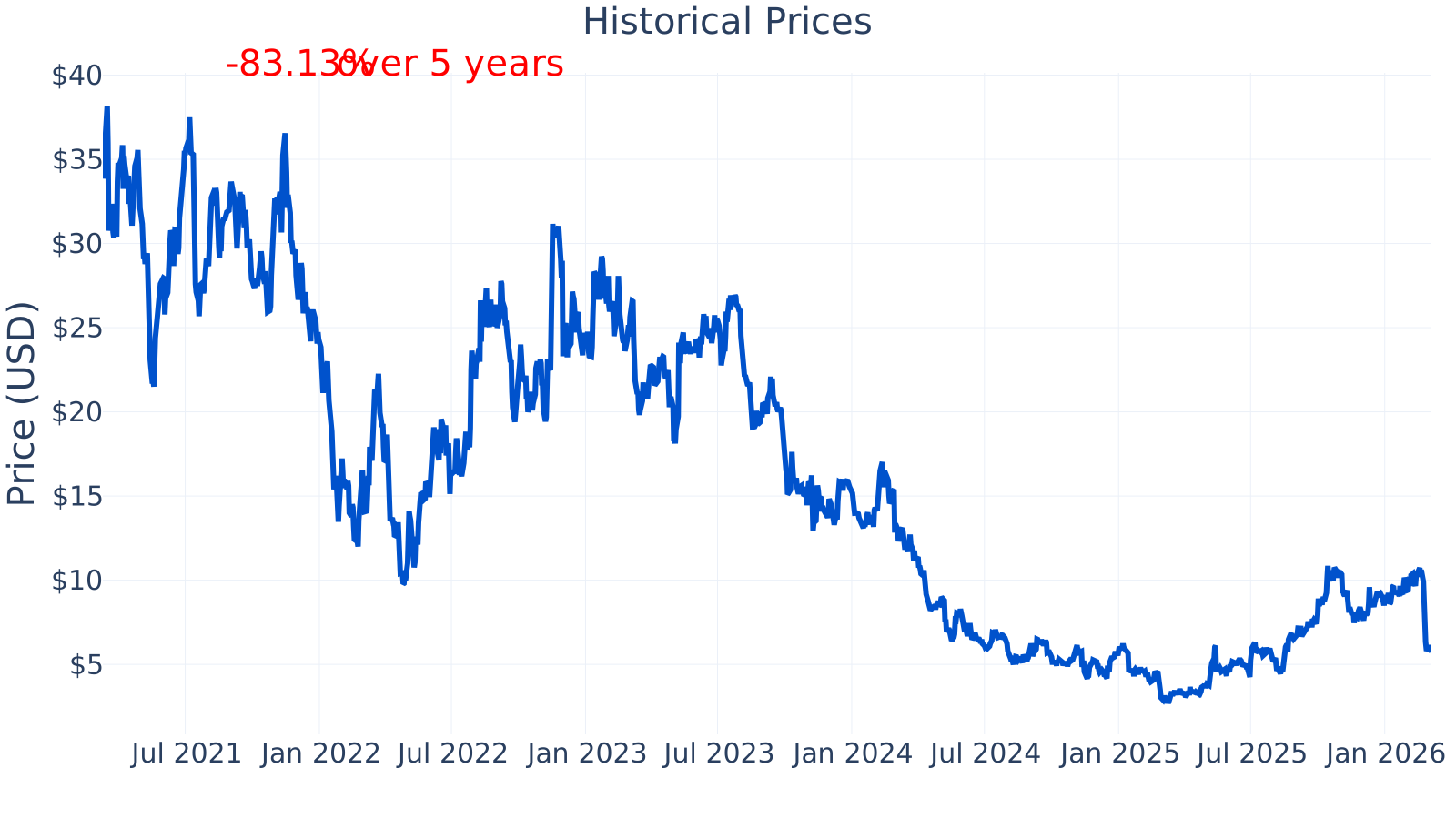
Shoals’ market capitalization is about $956M, placing it in the small-to-mid cap range. The stock’s beta of about 1.77 indicates the share price has historically been more volatile than the overall market. The latest P/E ratio is about 28.6 versus an industry median near 26.4, while the latest profit margin is about 7.1%, in line with the industry median shown. Year-over-year revenue growth is about 38.6% versus an industry median near 11.1%, and debt-to-equity is about 29% versus an industry median above 100%, suggesting lower leverage than many peers in the same comparison set. Free cash flow over the trailing twelve months is negative (about -$16.0M), which is important context alongside reported profitability.
Growth (Medium)
Shoals operates in the solar industry, which is supported by long-term electrification trends and ongoing buildout of renewable generation. Demand for utility-scale solar equipment is typically driven by the pace of new project development and construction, which can come in waves rather than a straight line. That dynamic can make growth look strong in some periods and weak in others, even if the long-term direction of solar deployment remains upward.
The company’s strategy—selling standardized components that aim to simplify field installation—fits an industry that constantly tries to reduce total installed cost and shorten construction timelines. If solar developers and EPCs prioritize labor savings and faster commissioning, product choices that reduce complexity can be a practical advantage.
The year-over-year revenue growth pattern shows a sharp acceleration through 2022 and 2023, followed by contraction across much of 2024, and then a return to positive growth in 2025 (reaching about 38.6% by the end of 2025). This type of swing is consistent with project timing effects and changing order patterns.
Free cash flow has also varied meaningfully: it was negative in 2022, turned strongly positive in 2023 and 2024, remained positive into early 2025, and the latest trailing-twelve-month figure shown is negative (about -$16.0M). For a hardware-focused business, swings can come from changes in working capital (inventory, receivables, payables) as orders rise or fall.
Risks (High)
A central risk is cyclicality and project timing in utility-scale solar. Orders and shipments can be affected by developer schedules, permitting and interconnection timelines, financing conditions, and policy incentives. Even when long-term demand exists, short-term volume can move sharply, which can pressure factory utilization, margins, and cash generation.
Competition is another key consideration. Shoals participates in the solar electrical components and EBOS ecosystem where multiple suppliers can offer alternative designs or pricing. Competition can occur on installed cost, lead times, product reliability, and the ability to support large projects consistently. Compared with much larger solar equipment providers and electrical component manufacturers, Shoals is more specialized; that specialization can help focus execution, but it can also leave the company more exposed to a narrower end-market.
Competitive positioning also depends on whether Shoals’ solutions continue to deliver measurable installation benefits as solar designs evolve (for example, site layouts, module formats, and inverter architectures). If customers shift to different system designs or prefer integrated solutions from other vendors, Shoals may need continued product investment to stay aligned with customer preferences.
Financial and operating risks include margin variability and cash flow volatility. Reported profit margins have moved substantially over time, and recent trailing free cash flow is negative, which can limit flexibility if sustained.
Debt-to-equity is about 29% most recently, and it has trended down markedly since earlier periods, remaining below the industry median shown in the comparison. Lower leverage can reduce financial strain during weak demand periods, although it does not remove the underlying volume and pricing risks.
Profit margin has been volatile across the period shown, with unusually high levels in 2022–2023 and a much lower, more typical range later. The most recent value is about 7.1%, matching the industry median shown, which suggests profitability is currently closer to peer norms than the elevated levels seen earlier.
Valuation
The latest P/E ratio is about 28.6, slightly above the industry median near 26.4 in the table. Over time, the P/E shown has moved widely, including periods where it was far above the industry median and other periods closer to (or below) the peer midpoint. For long-term context, that variability often reflects both changing earnings levels and shifting market expectations about future growth and stability.
Two factors are especially relevant when interpreting valuation for Shoals. First, revenue growth has recently re-accelerated (ending 2025 near 38.6% year over year), which can support higher valuation multiples if it proves durable. Second, cash generation has been inconsistent, with the latest trailing free cash flow negative; if negative free cash flow persists, it can make earnings-based valuation metrics less reassuring because cash is ultimately what funds operations, investment, and financial obligations.
Conclusion
Shoals Technologies is a specialized supplier to utility-scale solar, selling equipment that supports the buildout of solar projects and aims to reduce on-site installation complexity. The company’s results show meaningful long-term revenue expansion from 2021 to 2025, but also clear volatility: a revenue decline in 2024, swings in free cash flow, and profit margins that have moved from unusually high levels to a more typical range.
The main long-term question centers on how consistently Shoals can convert solar industry growth into stable orders, resilient margins, and dependable cash generation. The balance sheet leverage appears lower than the industry median shown, which can help resilience, but business performance still depends heavily on solar project cycles and competitive dynamics within solar electrical components.
Sources:
- SEC EDGAR — Shoals Technologies Group, Inc. Form 10-K (Annual Report)
- SEC EDGAR — Shoals Technologies Group, Inc. Form 10-Q (Quarterly Report)
- Shoals Technologies Group, Inc. Investor Relations — SEC Filings repository
- Wikipedia — “Shoals Technologies Group” (company overview and basic history)
This article is for informational purposes only and does not constitute financial advice. Some content is AI-generated. See Disclaimer