Stock Analysis · Shoals Technologies Group Inc (SHLS)
Overview
Shoals Technologies Group Inc designs and sells electrical balance-of-system (EBOS) products used to build and connect solar energy projects. In simple terms, its products help move the electricity generated by solar panels through wiring, combiner boxes, and related components so the power can be collected, protected, and delivered to the next step of the system. The company primarily serves large-scale (“utility-scale”) and other commercial solar installations, where small improvements in installation time, material usage, and reliability can matter at the project level.
In its SEC filings, Shoals describes its offerings as a set of components and system solutions (including cabling and other EBOS hardware) sold into solar projects, with revenue largely tied to shipments for customer projects and related services. Public filings typically emphasize that the business is mainly product-driven, with additional revenue from services and other items; however, exact percentages by product line can vary by period and are not always disclosed as a fixed mix.
Main sources of revenue (high-level):
- EBOS products and system solutions for solar projects (the core of revenue in company filings)
- Services and other revenue (a smaller portion, depending on the period)
Across the years shown, revenue expanded from 2021 to 2023, then declined in 2024. Over the same span, gross profit remained meaningful relative to revenue, while operating income and net income were more volatile, highlighting how changes in volume and operating costs can affect bottom-line results.
Key Figures
| Metric | Value | Industry ⓘ |
|---|---|---|
| Date | Feb 08, 2026 | |
| Context | ||
| Sector | Technology | |
| Industry | Solar | |
| Market Cap ⓘ | $1.72B | |
| Beta ⓘ | 1.71 | |
| Fundamental | ||
| P/E Ratio ⓘ | 54.16 | |
| Profit Margin ⓘ | 7.67% | 0.27% |
| Revenue Growth ⓘ | 32.90% | 33.90% |
| Debt to Equity ⓘ | 28.19% | 139.55% |
| PEG ⓘ | 0.58 | |
| Free Cash Flow ⓘ | $7.73M | |
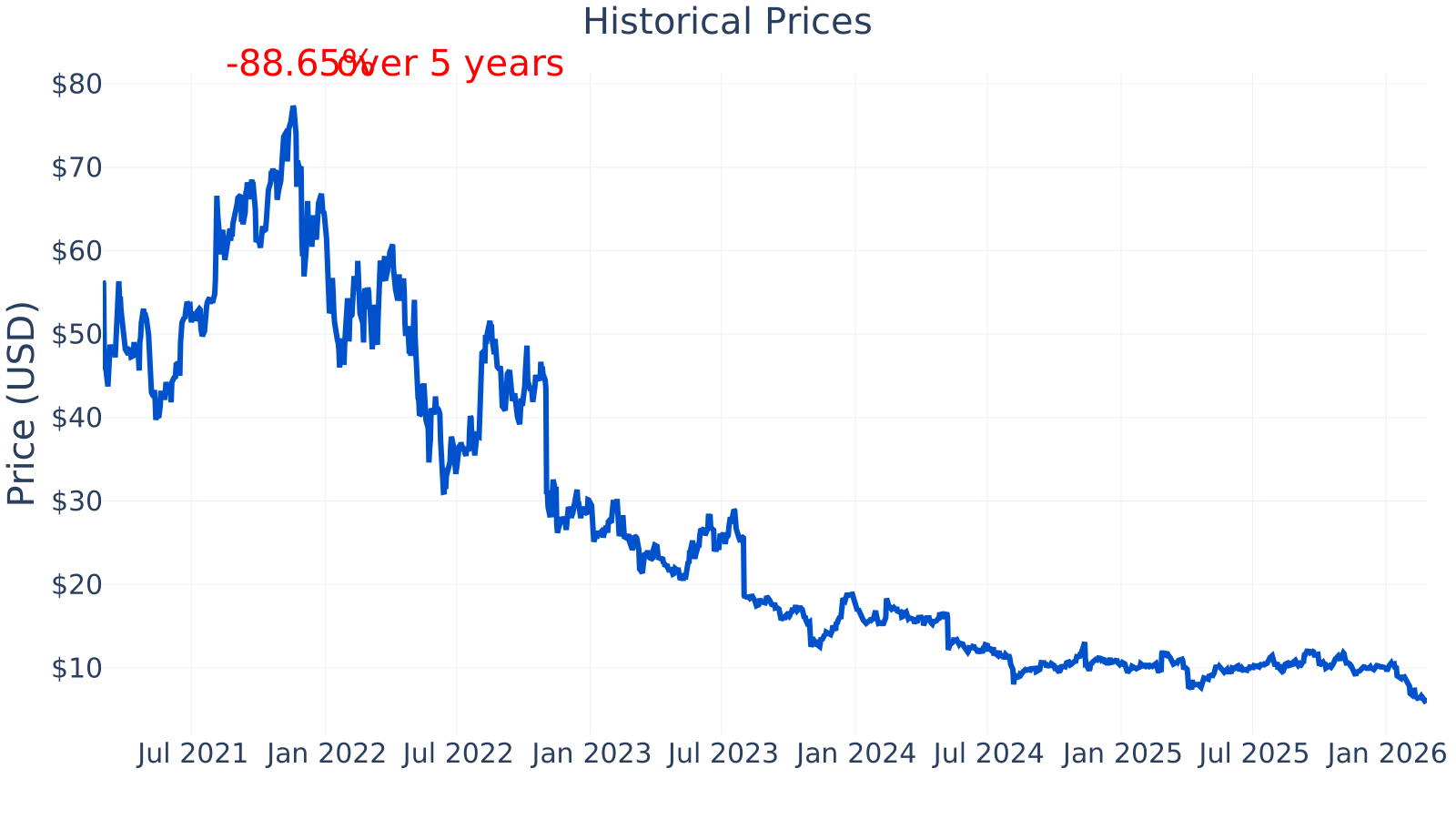
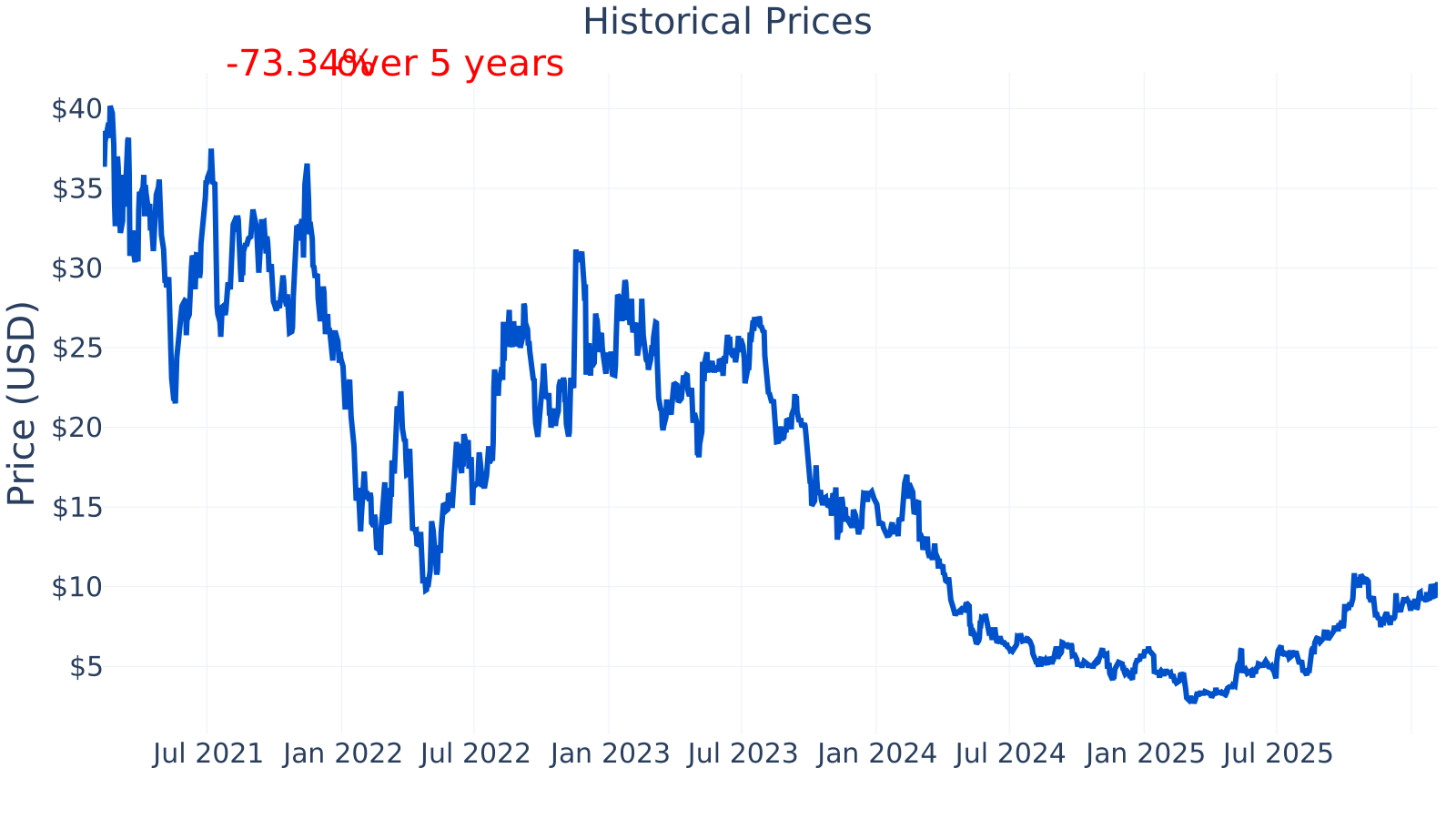
Shoals’ market capitalization is about $1.72B. The stock’s beta of about 1.71 indicates the share price has historically moved more than the broader market (higher volatility). The P/E ratio is about 54.2, which is typically associated with expectations for continued growth and/or improving profitability. Profit margin is about 7.67%, which is above the industry median shown (about 0.27%). Revenue growth year-over-year is about 32.9%, close to the industry median shown (about 33.9%). Debt-to-equity is about 28.2%, well below the industry median shown (about 139.6%), suggesting less reliance on debt than many peers in the comparison set. Free cash flow (TTM) is about $7.7M, indicating modest cash generation over the trailing twelve months.
Growth (Medium)
Shoals operates in the solar industry, which is tied to long-term trends such as increasing electricity demand, grid modernization, and the ongoing buildout of renewable generation. For an EBOS supplier, growth is influenced by how many solar projects are financed and constructed, as well as how developers and engineering-procurement-construction (EPC) firms choose suppliers for standard components and pre-engineered solutions.
The company’s strategy—focusing on products intended to simplify installation, reduce field labor, and improve reliability—fits with a market where project schedules and labor costs can be major constraints. If solar build activity accelerates, suppliers that reduce complexity or speed up installation may benefit through higher volumes and repeat customer adoption. Potential catalysts discussed in filings for companies in this position commonly include expanding solar project pipelines, new product introductions, and broader adoption of standardized electrical solutions (rather than custom field-built configurations).
The year-over-year revenue growth rate has been uneven. It was strongly positive through much of 2022 and 2023, turned negative across multiple quarters in 2024, and then returned to positive territory in 2025 (reaching about 32.9% in the most recent point shown). This pattern suggests the business can be sensitive to project timing and customer ordering patterns, even within a generally growing end market.
Free cash flow has also fluctuated over time: negative in 2022, then strongly positive in 2023 and 2024, and lower (but still positive) at about $7.7M on a trailing-twelve-month basis in the latest figure shown. For long-term business durability, sustained positive free cash flow can matter because it supports reinvestment and resilience during slower demand periods.
Risks (High)
This article is for informational purposes only and does not constitute financial advice. Some content is AI-generated. See Disclaimer