Stock Analysis · Shift4 Payments Inc (FOUR)
Overview
Shift4 Payments Inc. (FOUR) provides payment technology that helps merchants accept and process card and digital payments across many channels (in-store, online, and mobile). In simple terms, it sits between a business and the banking networks so a transaction can be authorized, completed, and recorded. The company also offers related software, integrations, and services that are particularly common in complex environments like restaurants, hotels, and entertainment venues.
Shift4’s revenue is primarily tied to payment activity on its platform (more transactions and higher payment volume generally mean more revenue). Based on how payment companies typically present their business in SEC filings, major revenue sources generally include:
- Payment processing and transaction-based fees (often the largest component; fees per transaction and/or based on payment volume)
- Subscriptions and software-related fees (platform access, value-added tools, integrations)
- Hardware and installation/services (e.g., terminals and related deployment work; usually smaller and more variable)
The simplified income flow below shows that revenue has risen meaningfully over time, while the cost to deliver payment services remains a large portion of revenue (common in payments), leaving gross profit to cover operating expenses and financing costs.
From 2021 to 2024, total revenue increased from about $1.37B to about $3.33B, and gross profit rose from about $278M to about $973M. Net income also moved from a loss in 2021 (about -$49M) to a profit in 2024 (about $230M). Operating income, however, has been more uneven over time, highlighting that profitability can be influenced by operating costs, transaction economics, and financing/tax effects.
Key Figures
| Metric | Value | Industry ⓘ |
|---|---|---|
| Date | Feb 08, 2026 | |
| Context | ||
| Sector | Technology | |
| Industry | Software - Infrastructure | |
| Market Cap ⓘ | $5.25B | |
| Beta ⓘ | 1.61 | |
| Fundamental | ||
| P/E Ratio ⓘ | 27.70 | 25.66 |
| Profit Margin ⓘ | 5.02% | 6.68% |
| Revenue Growth ⓘ | 29.40% | 15.20% |
| Debt to Equity ⓘ | 286.78% | 19.82% |
| PEG ⓘ | 0.29 | |
| Free Cash Flow ⓘ | $499.40M | |
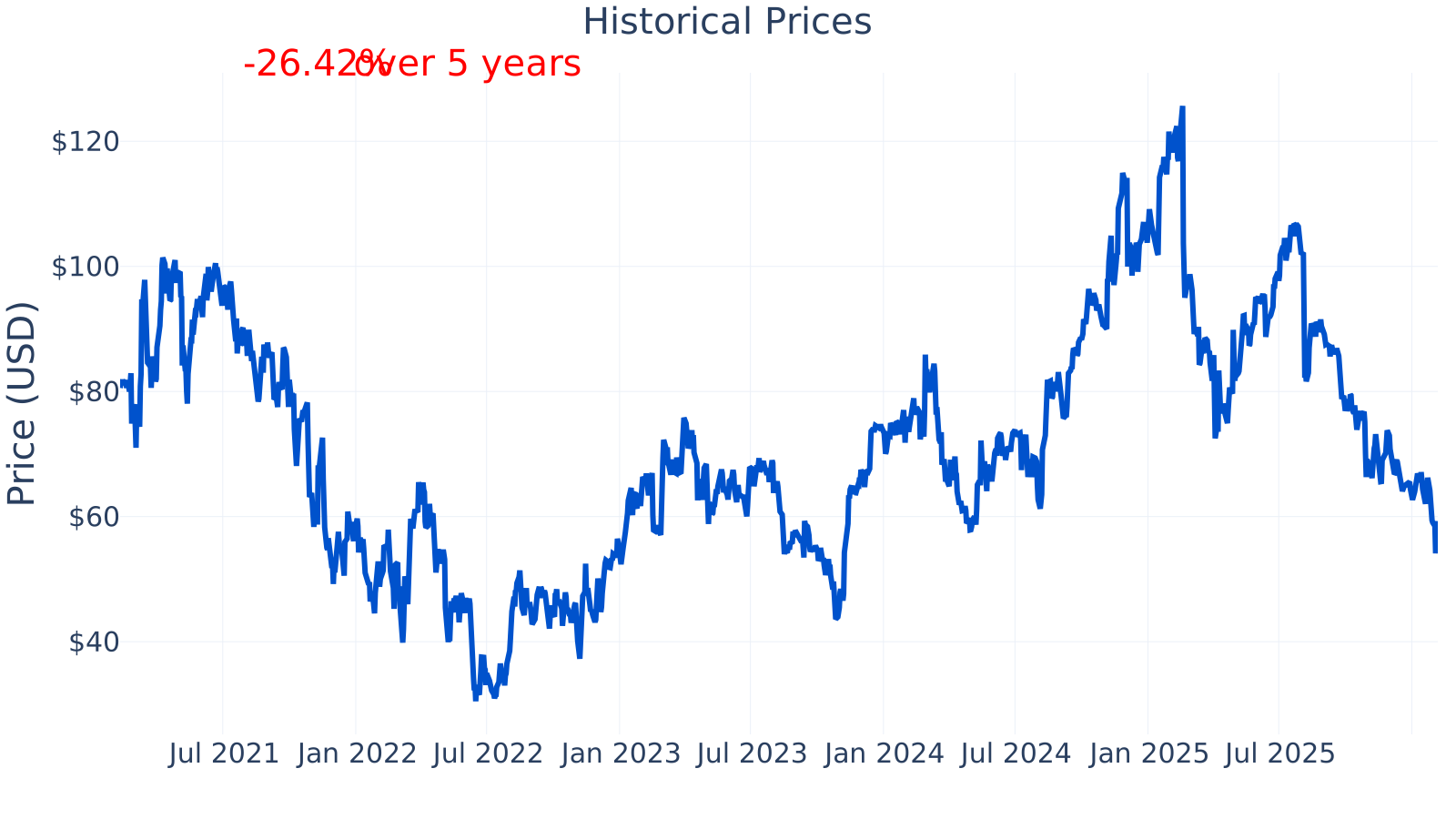
Shift4’s market capitalization is about $5.25B, and the stock’s beta of ~1.61 indicates the share price has historically moved more than the broader market. The company shows stronger year-over-year revenue growth (~29%) than the industry median (~15%), while its profit margin (~5.0%) is below the industry median (~6.7%). One of the most noticeable differences is leverage: debt-to-equity is ~287% versus an industry median near 20%, which can increase sensitivity to interest costs and refinancing conditions. Free cash flow over the trailing twelve months is about $499M, which matters because it reflects cash generated after operating needs and capital spending.
Growth (Medium)
Digital payments remain a long-term structural trend: more commerce shifts to card-present and online electronic payments, and businesses increasingly prefer integrated systems that combine payments with software and reporting. In that context, Shift4 operates in an industry that can expand alongside consumer spending, the ongoing shift away from cash, and the growing complexity of omnichannel commerce.
Shift4’s strategy centers on being a full payments platform with deep integrations in specific verticals (for example, hospitality and restaurant workflows). Vertical focus can support growth because once payments are embedded into day-to-day operations (checkout flows, reservations, point-of-sale, reconciliation), switching providers can become disruptive—potentially improving retention and enabling cross-selling of additional services.
The revenue growth pattern shown above indicates that growth has remained positive and often strong. More recently, year-over-year growth has been in the mid-to-high teens to around 30% range in several quarters, including about 29% in the most recent point shown, which is above the industry median in the table.
Cash generation has improved notably over time. The chart shows trailing twelve-month free cash flow shifting from negative levels in earlier periods to meaningfully positive more recently (about $472M as of 2025-03-31 in the series, and about $499M in the latest table). For a payments platform, sustained positive free cash flow can support reinvestment, debt reduction, or flexibility during weaker economic periods.
Risks (High)
This article is for informational purposes only and does not constitute financial advice. Some content is AI-generated. See Disclaimer