Stock Analysis · Shake Shack Inc (SHAK)
Overview
Shake Shack Inc. is a restaurant company best known for its fast-casual “Shack” locations that sell burgers, chicken, fries, shakes, and related beverages. The business is built around operating company-run restaurants while also expanding through licensed locations (often used for international markets and certain venues). In practice, this creates a mix of revenue that comes from direct restaurant sales plus more asset-light income streams (such as license fees and royalties) tied to licensed partners.
In its financial reporting, Shake Shack generally groups revenue into a few broad buckets. While exact percentages can change year to year, the typical order from largest to smallest is:
- Shack sales (sales from company-operated restaurants)
- License revenue (royalties/fees from licensed Shacks operated by partners)
- Other revenue (smaller items such as certain venue-related revenue, when applicable)
The company’s long-term operating logic is straightforward: open more restaurants, drive repeat visits through brand and menu appeal, and improve profitability by increasing sales per location while managing food, labor, and occupancy costs.
From 2021 to 2025, total revenue increased materially (from about $740M to about $1.45B), while profitability also improved over time (moving from a net loss in 2021–2022 to positive net income by 2023 and higher net income in 2025). At the same time, costs remain the largest use of revenue, which is typical for restaurants where food, labor, and operating expenses can quickly pressure margins.
Key Figures
| Metric | Value | Industry ⓘ |
|---|---|---|
| Date | May 04, 2026 | |
| Context | ||
| Sector | Consumer Cyclical | |
| Industry | Restaurants | |
| Market Cap ⓘ | $4.21B | |
| Beta ⓘ | 1.78 | |
| Fundamental | ||
| P/E Ratio ⓘ | 90.24 | 25.79 |
| Profit Margin ⓘ | 3.16% | 7.24% |
| Revenue Growth ⓘ | 21.90% | 8.10% |
| Debt to Equity ⓘ | 171.73% | 93.31% |
| PEG ⓘ | 2.55 | |
| Free Cash Flow ⓘ | $56.51M | |
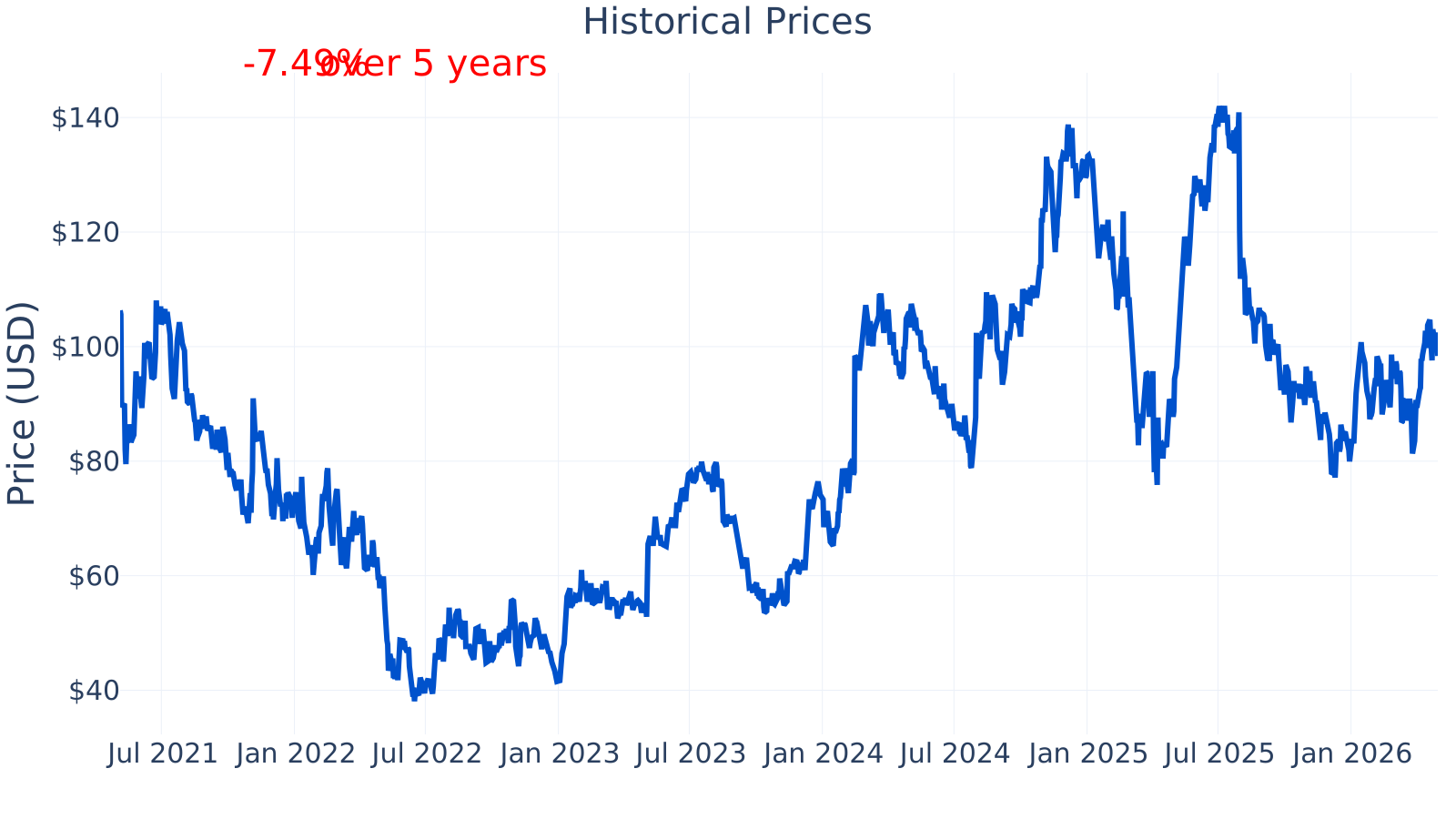
Shake Shack’s market capitalization is about $4.2B. The stock’s beta of ~1.78 suggests it has historically moved more than the broader market (higher volatility). Profitability is positive but modest: the latest profit margin is ~3.2%, below the industry median of about 7.2%. Growth is currently a relative strength: year-over-year revenue growth is ~21.9%, well above the industry median of about 8.1%. Leverage is notable: debt-to-equity is ~172%, higher than the industry median of about 93%. On valuation, the latest P/E ratio is ~90 versus an industry median near 26, implying the market is pricing in substantially higher future earnings than a typical restaurant peer.
Growth (Medium)
Shake Shack operates in the restaurant industry, which is mature overall, but the company is positioned in the “fast-casual” segment where brands can still grow by expanding store counts, increasing digital/off-premise sales, and building presence in new geographies. Growth here tends to come less from the industry expanding rapidly and more from share gains, brand strength, unit expansion, and execution improvements.
A core part of Shake Shack’s growth strategy has historically included opening new company-operated Shacks (which can drive revenue growth but requires capital and strong site execution) while using licensing to expand with less direct investment. For long-term business expansion, the main catalysts typically include sustained new unit openings, improving restaurant-level economics, and more efficient operations (for example, better labor deployment, supply chain optimization, and throughput improvements during peak hours).
Revenue growth has remained positive across the periods shown and is currently elevated (around 21.9% year over year). That level is above the industry median in the same timeframe, which indicates the company has recently been growing faster than many restaurant peers. The pattern also shows that growth rates can fluctuate meaningfully, which is common for restaurant companies as comparisons, pricing actions, and new store openings vary by quarter.
Free cash flow (cash left after operating needs and capital spending) has recently improved: it was negative in prior periods shown and turned positive most recently (about $56.5M on a trailing basis). For a growing restaurant chain, this can matter because opening and upgrading restaurants requires ongoing investment; sustained positive free cash flow can provide more flexibility over time.
Risks (High)
Restaurants are cost-sensitive businesses. Shake Shack’s results can be pressured by changes in key inputs such as food commodities, wages, and occupancy costs. Demand is also economically sensitive: when consumers cut discretionary spending, traffic can soften or customers may trade down to cheaper options. Because Shake Shack’s positioning is often viewed as “premium” within burgers/fast-casual, the brand may face sharper scrutiny in tougher consumer environments.
Competitive intensity is structurally high. Shake Shack competes with large quick-service brands (such as McDonald’s and Wendy’s), other fast-casual concepts (for example, Five Guys and similar regional players), and “better burger” alternatives offered by many chains. In many markets, competitors have larger scale, broader advertising budgets, and more purchasing power. Shake Shack’s competitive advantages are mainly qualitative: brand recognition, a curated menu, and customer experience. However, it is not the category leader by size; several competitors operate far more locations globally. This means Shake Shack’s outcomes depend heavily on execution—site selection, store-level operations, and maintaining brand relevance.
Leverage is another key risk factor. The company’s debt-to-equity has been consistently above the industry median across the periods shown, and the latest level is about 172% versus an industry median near 118%. Higher leverage can reduce flexibility during downturns because interest obligations and refinancing needs can become more consequential if sales slow or costs rise.
Profitability has improved from negative levels in earlier periods shown to positive margins more recently, reaching about 3.2% in the latest period. Even so, this remains below the industry median (roughly 6.9%), which highlights that Shake Shack’s current profitability leaves less cushion if costs rise or sales weaken. For long-term outcomes, a central question is whether margins can expand sustainably as the store base grows and operations scale.
Valuation
For many restaurant companies, valuation often depends on a mix of current profitability and confidence in future earnings growth. Shake Shack’s latest P/E ratio is elevated relative to the industry median, which means the market is assigning a higher value per dollar of current earnings than it does for a typical peer. This can be consistent with a company that is expected to grow faster or improve profitability more meaningfully over time—but it also increases sensitivity to setbacks.
The P/E ratio shown is high in the most recent periods displayed (with the latest around 88–90), compared with an industry median around the low 30s in the same timeframe. A valuation gap like this generally implies that future execution (growth and margin expansion) needs to remain strong to keep results aligned with the expectations embedded in the price. If growth slows toward industry levels or margins do not expand, the valuation can look harder to justify versus peers that already operate with higher margins.
Conclusion
Shake Shack is a recognizable fast-casual restaurant brand that has grown revenue substantially in recent years and has improved profitability from losses to positive net income. Recent revenue growth has been notably above the restaurant industry median, and free cash flow has turned positive in the latest period shown, both of which point to improving operating momentum.
At the same time, the business operates in a highly competitive, cost-pressured industry where small changes in traffic, labor, food costs, or rent can materially affect results. The company also shows higher leverage than the industry median and currently has lower profit margins than many peers. On valuation, the stock trades at a much higher earnings multiple than the industry median, indicating that the current price reflects substantial expectations for continued growth and improved profitability over time.
Sources:
- SEC EDGAR — Shake Shack Inc. Form 10-K (Annual Report)
- SEC EDGAR — Shake Shack Inc. Form 10-Q (Quarterly Report)
- Shake Shack Investor Relations — SEC Filings
- Shake Shack Investor Relations — Earnings materials and shareholder communications (company-hosted)
- Wikipedia — “Shake Shack” (basic company background)
This article is for informational purposes only and does not constitute financial advice. Some content is AI-generated. See Disclaimer