Stock Analysis · Shake Shack Inc (SHAK)
Overview
Shake Shack Inc. (NYSE: SHAK) is a restaurant company best known for its “fine-casual” hamburger restaurants (“Shacks”). It sells a focused menu built around burgers, chicken, fries, shakes, beer, wine, and other beverages. The company operates a mix of company-owned locations and licensed locations, and it also sells branded packaged products through grocery channels in partnership with other companies (as described in its filings).
At a high level, Shake Shack’s business model combines: (1) running restaurants directly (where the company records the full sale and pays the expenses) and (2) collecting fees from licensed partners (where partners operate the restaurants and Shake Shack earns licensing and royalty-type revenue). This blend can support expansion, but it also means results depend heavily on restaurant-level costs such as labor, food inputs, and occupancy.
Main sources of revenue (largest to smallest, per company reporting categories):
- Shack sales (company-operated restaurants) — revenue from food and beverage sales inside company-owned Shacks (typically the largest line item).
- License revenue — fees and ongoing revenue tied to licensed Shacks operated by partners.
- Other revenue — may include items such as partnerships and other smaller revenue streams as defined in filings.
Over the last few years, total revenue increased meaningfully, moving from about $739.9M (2021) to $1.2526B (2024). Over the same period, operating income and net income moved from losses to positive territory in 2023 and remained positive in 2024, though profits remained relatively modest compared with revenue.
From 2021 to 2024, revenue rose from about $739.9M to $1.2526B, while costs and operating expenses also increased. Gross profit expanded (about $306.5M in 2021 to $573.9M in 2024), but the company’s operating income and net income stayed comparatively small, highlighting how sensitive results can be to labor, food, and operating cost levels.
Key Figures
| Metric | Value | Industry ⓘ |
|---|---|---|
| Date | Feb 16, 2026 | |
| Context | ||
| Sector | Consumer Cyclical | |
| Industry | Restaurants | |
| Market Cap ⓘ | $3.76B | |
| Beta ⓘ | 1.75 | |
| Fundamental | ||
| P/E Ratio ⓘ | 86.42 | 27.62 |
| Profit Margin ⓘ | 3.10% | 7.98% |
| Revenue Growth ⓘ | 15.90% | 7.40% |
| Debt to Equity ⓘ | 167.77% | 59.83% |
| PEG ⓘ | 2.55 | |
| Free Cash Flow ⓘ | $62.91M | |
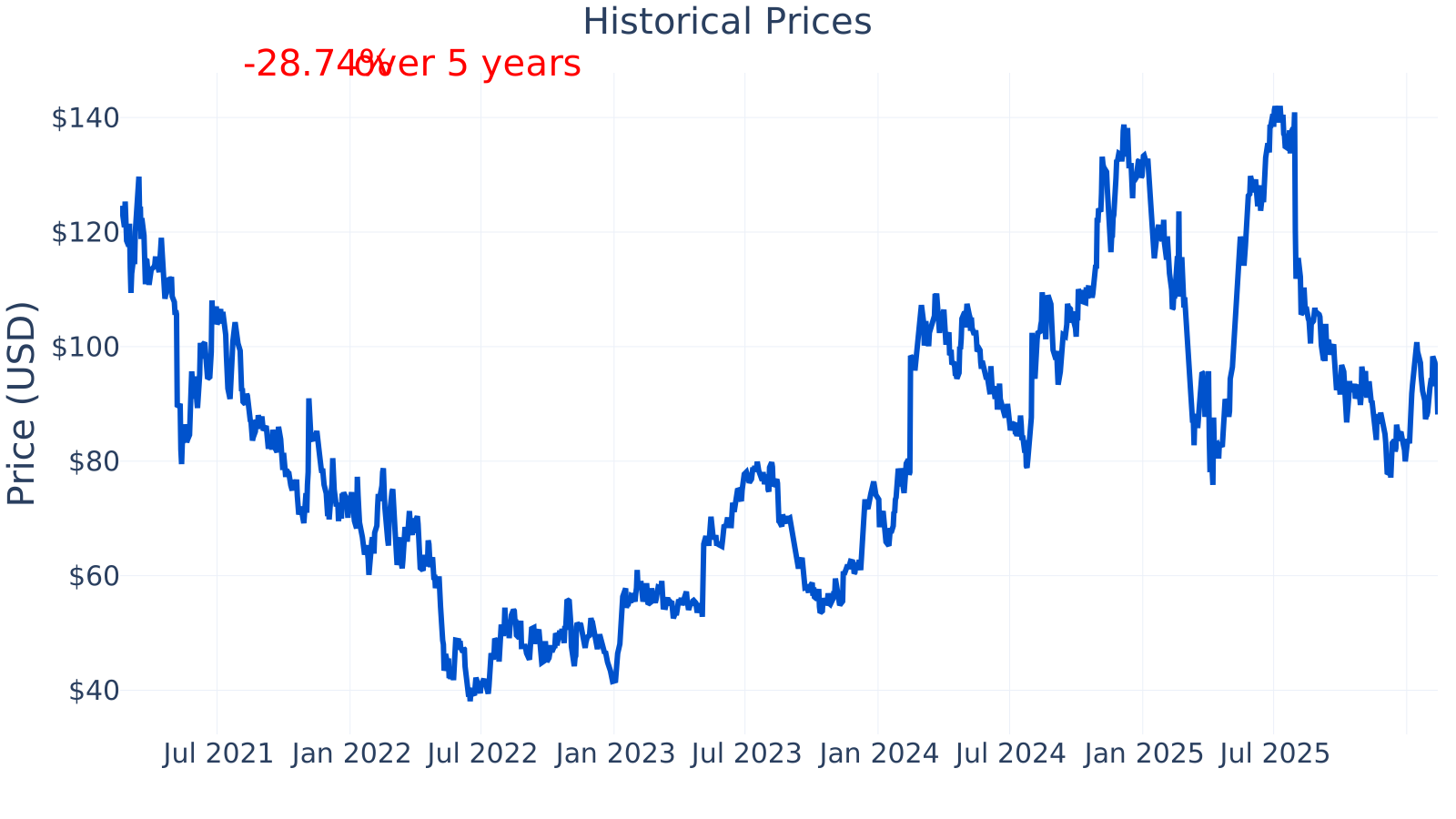
Shake Shack’s market capitalization is about $3.76B, and the stock has shown relatively high volatility (beta ~1.75, a measure of how much the stock tends to move versus the broader market). Profitability is currently positive but still thin: profit margin ~3.1% versus an industry median ~8.0%. Growth has recently been faster than many peers: year-over-year revenue growth ~15.9% versus an industry median ~7.4%. Leverage is higher than typical for the peer group: debt-to-equity ~168% versus an industry median ~60%. The company also shows positive recent cash generation with free cash flow (TTM) ~$62.9M.
Growth (Medium)
Shake Shack operates in the restaurant industry, a large but mature category where long-term expansion tends to come from opening new locations, improving same-store sales (more transactions and/or pricing), and growing higher-margin revenue streams (for example, licensing). Demand can be resilient over time, but results often fluctuate with consumer spending, competition, and input costs.
Shake Shack’s strategy described in its filings has been centered on expanding its footprint while continuing to invest in the brand, menu innovation, digital ordering, and operational execution. The licensed model can support growth with lower direct capital requirements than company-owned expansion, while company-owned Shacks can keep more revenue in-house but also carry more operating cost exposure.
Recent revenue growth has remained positive and generally in the double digits in the most recent periods shown, ending around 15.9% year-over-year. That pace is above the industry median shown in the table, suggesting Shake Shack has recently been gaining scale faster than many restaurant peers, even as growth rates vary over time.
Free cash flow has improved notably across the periods shown, moving from negative levels (for example, around -$60.3M in 2023) to roughly breakeven in 2024 and then positive (around $39.9M in 2025 and $62.9M on a trailing twelve-month basis in the latest metrics). For restaurants, sustained positive free cash flow can matter because it helps fund new restaurant openings, reinvestment, and balance sheet flexibility without relying as much on additional borrowing.
Risks (High)
This article is for informational purposes only and does not constitute financial advice. Some content is AI-generated. See Disclaimer


