Stock Analysis · ServiceNow Inc (NOW)
Overview
ServiceNow Inc. is a software company that provides a cloud-based platform used by organizations to manage and automate internal work. In simple terms, it helps large companies run “workflows” (repeatable processes) across departments—such as IT support tickets, employee onboarding, customer service requests, security incident response, and other business operations—so work moves faster and is easier to track.
The business model is largely subscription-based. Customers typically sign multi-year contracts and pay recurring fees to use ServiceNow’s platform and specific product modules. This structure can make revenue more predictable than one-time software sales, although results still depend on renewals, expansion within existing accounts, and new customer wins.
Based on the company’s reporting in its annual filings, the main revenue sources are typically organized as:
- Subscription revenues (generally the large majority): recurring fees for platform access and cloud modules
- Professional services and other revenues (smaller share): implementation, training, and related services
From the income statement trend over recent years, total revenue has risen steadily (from about $5.9B in 2021 to about $13.3B in 2025), while cost of revenue and operating expenses have also increased to support growth (notably research and development and sales-related spending).
Over 2021–2025, revenue increased from about $5.9B to about $13.3B, while gross profit increased from about $4.5B to about $10.3B. The company also continued to spend heavily on product development (research and development rising from about $1.4B to about $3.0B), which is common for large enterprise software platforms competing on features and scale.
Key Figures
| Metric | Value | Industry ⓘ |
|---|---|---|
| Date | Apr 27, 2026 | |
| Context | ||
| Sector | Technology | |
| Industry | Software - Application | |
| Market Cap ⓘ | $92.99B | |
| Beta ⓘ | 1.00 | |
| Fundamental | ||
| P/E Ratio ⓘ | 53.67 | 25.81 |
| Profit Margin ⓘ | 12.59% | 7.87% |
| Revenue Growth ⓘ | 22.10% | 16.05% |
| Debt to Equity ⓘ | 20.73% | 25.08% |
| PEG ⓘ | 0.87 | |
| Free Cash Flow ⓘ | $4.63B | |
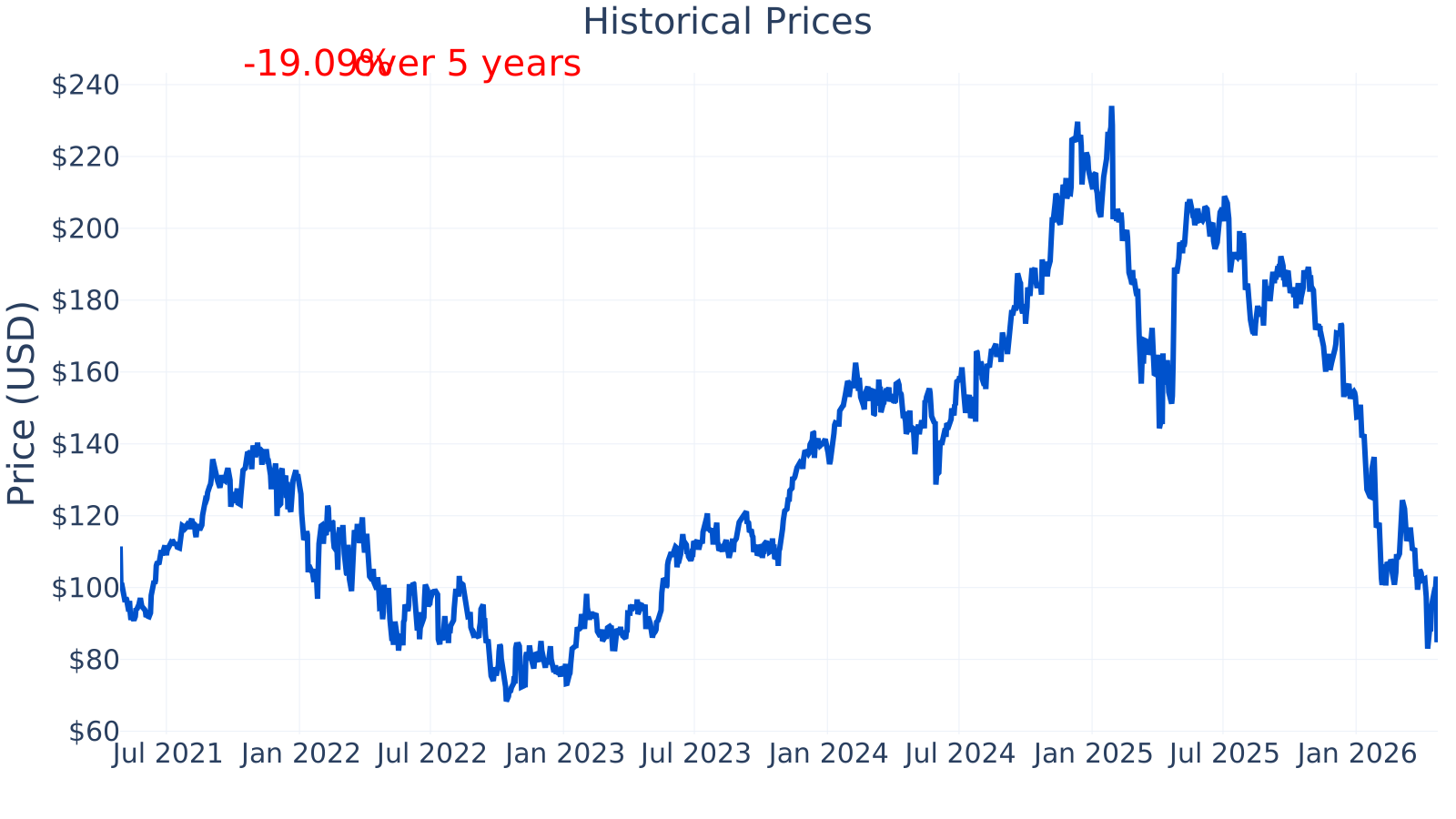
ServiceNow’s latest snapshot shows a market capitalization of about $93.0B and a beta near 1.0, which indicates price movements that have been roughly in line with the broader market in the period measured. Profit margin is about 12.6%, higher than the listed industry median (about 7.9%). Revenue growth year over year is about 22.1%, also above the industry median (about 16.1%). Debt-to-equity is about 20.7%, below the industry median (about 25.1%), and trailing twelve-month free cash flow is about $4.63B.
Growth (medium)
ServiceNow operates in enterprise cloud software, a part of technology focused on shifting business processes from manual steps and older on‑premises tools to integrated cloud platforms. The long-term demand drivers are tied to large organizations continuing to modernize operations, standardize processes across departments, and improve employee productivity. Because many customers are large enterprises, expansions can come not only from winning new accounts, but also from selling additional modules to existing customers as they broaden usage across the organization.
A key part of the strategy is building a single platform that can support many workflows (IT, HR, customer service, security, and more). If successful, this “land and expand” approach can support longer customer relationships and deeper adoption, since switching a central platform can be disruptive once many teams rely on it.
The year-over-year revenue growth shown has generally remained in the high-teens to mid‑20% range across the period displayed, ending around 22.1% most recently. While growth has fluctuated, it has remained relatively strong versus the median for the broader application software peer set shown.
Free cash flow (trailing twelve months) increased from about $1.94B (2022) to about $4.63B (2026 period shown). For a subscription software company, rising free cash flow can be an important sign that the business is scaling and converting sales into cash, although it should still be interpreted alongside items like stock-based compensation, customer billing patterns, and investment needs described in filings.
Risks (medium)
ServiceNow sells mission-critical software to large organizations, which creates both strengths and risks. On one hand, customers may be reluctant to switch once workflows are embedded across departments. On the other hand, large deals can take time to close, and customer budget cycles can slow expansion or renewals during weaker economic periods. In addition, enterprise customers may negotiate pricing aggressively, especially when multiple vendors can cover similar workflow needs.
Competition is a persistent risk. ServiceNow participates in markets where large software companies and specialized vendors overlap. Depending on the module and customer use case, competitors can include:
- Microsoft (broad enterprise software platform ecosystem)
- Salesforce (customer-facing workflows and platform tools)
- Atlassian (IT and service management-related collaboration tools)
- SAP and Oracle (enterprise platforms with process automation and IT/service capabilities)
- BMC and other IT service management providers (in IT-focused segments)
ServiceNow is widely positioned as a leading vendor in IT service management and has broadened into a multi-department workflow platform, but leadership can vary by product area and customer segment. Competitive pressure can show up through slower customer additions, smaller expansions, pricing concessions, or higher sales and marketing costs.
The debt-to-equity ratio trends downward over time, reaching about 20.7% most recently, below the industry median shown (about 27.7%). A lower leverage profile can reduce financial risk compared with more debt-dependent peers, though it does not remove execution, competitive, or technology-change risks.
Profit margin improved materially from low single digits earlier in the period to low double digits more recently, with the latest around 12.6%. The chart also shows margins generally above the industry median. Still, margins can move due to hiring and compensation costs, cloud infrastructure expenses, changes in sales efficiency, and accounting items that may affect reported net income in particular periods.
Valuation
ServiceNow’s valuation is often discussed using earnings multiples, because it is a profitable, scaled software company. The latest P/E ratio shown is about 53.7, compared with an industry median around 25.8 in the table. This indicates the stock is priced at a higher earnings multiple than the median of the peer group provided, which typically implies the market is assigning a premium for factors such as growth durability, competitive positioning, cash generation, or expectations of future margin expansion.
The historical P/E ratio displayed shows periods where the multiple was much higher than today (including very elevated levels in 2022–2024 on the chart) and then declined to the most recent level. Even after this decline, the multiple remains above the industry median shown on the same time series (for dates where the industry median is provided). From a fundamentals perspective, a premium multiple tends to require sustained execution—continued revenue growth, healthy renewals/expansion, and steady profitability—because valuation can be sensitive to changes in growth expectations.
Conclusion
ServiceNow is a large enterprise software company built around recurring subscriptions for a workflow automation platform used across multiple corporate functions. Over the years shown, the company increased revenue substantially and generated rising free cash flow, while maintaining profit margins that appear higher than the peer median provided. Leverage also appears moderate relative to the industry median in the chart.
The long-term business narrative depends on ServiceNow continuing to expand beyond its historical strengths, growing within large customers, and defending its position against major software platforms and specialized vendors. The primary trade-off visible in the metrics is that the stock’s earnings multiple remains above the peer median, suggesting the market continues to price in stronger-than-average fundamentals. How well that premium holds over time depends mainly on execution, competitive dynamics, and the stability of enterprise software spending cycles.
Sources:
- SEC EDGAR — ServiceNow, Inc. Form 10-K (Annual Report)
- SEC EDGAR — ServiceNow, Inc. Form 10-Q (Quarterly Report)
- ServiceNow Investor Relations — Annual Report materials and shareholder communications (company-hosted)
- Wikipedia — “ServiceNow” (basic company background)
This article is for informational purposes only and does not constitute financial advice. Some content is AI-generated. See Disclaimer


