Stock Analysis · Service Corporation International (SCI)
Overview
Service Corporation International (SCI) is a North American deathcare company. It operates a large network of funeral service locations and cemeteries, and it also sells “pre-need” plans—arrangements that customers purchase in advance for future funeral and cemetery services. In practice, the business combines service operations (planning and conducting funeral services) with real estate-like assets (cemetery properties) and long-lived customer relationships built around preplanning.
SCI’s revenue is primarily generated from two operating segments disclosed in company filings:
- Funeral: services and merchandise related to funeral operations (such as services, caskets, and other related items)
- Cemetery: sales of cemetery property (interment rights) and related merchandise and services (such as markers, interment services, and cemetery-related offerings)
Across both segments, SCI also earns revenue tied to pre-need sales (contracts sold in advance) and at-need sales (at the time of need). Pre-need activity can support longer-term volume visibility, but it also introduces balance-sheet and trust-related complexities (because certain funds are typically set aside or managed under applicable rules and accounting policies described in filings).
Over the years shown, total revenue is relatively steady around the low $4 billion range, while costs rise modestly. Operating income remains close to $1 billion, but net income is notably lower partly due to interest expense, which increases from about $151 million (2021) to the mid-$250 million range (2024–2025).
Key Figures
| Metric | Value | Industry ⓘ |
|---|---|---|
| Date | Feb 20, 2026 | |
| Context | ||
| Sector | Consumer Cyclical | |
| Industry | Personal Services | |
| Market Cap ⓘ | $11.31B | |
| Beta ⓘ | 1.01 | |
| Fundamental | ||
| P/E Ratio ⓘ | 21.24 | 19.91 |
| Profit Margin ⓘ | 12.59% | 12.83% |
| Revenue Growth ⓘ | 1.70% | 9.70% |
| Debt to Equity ⓘ | 313.73% | 183.91% |
| PEG ⓘ | 1.65 | |
| Free Cash Flow ⓘ | $599.19M | |
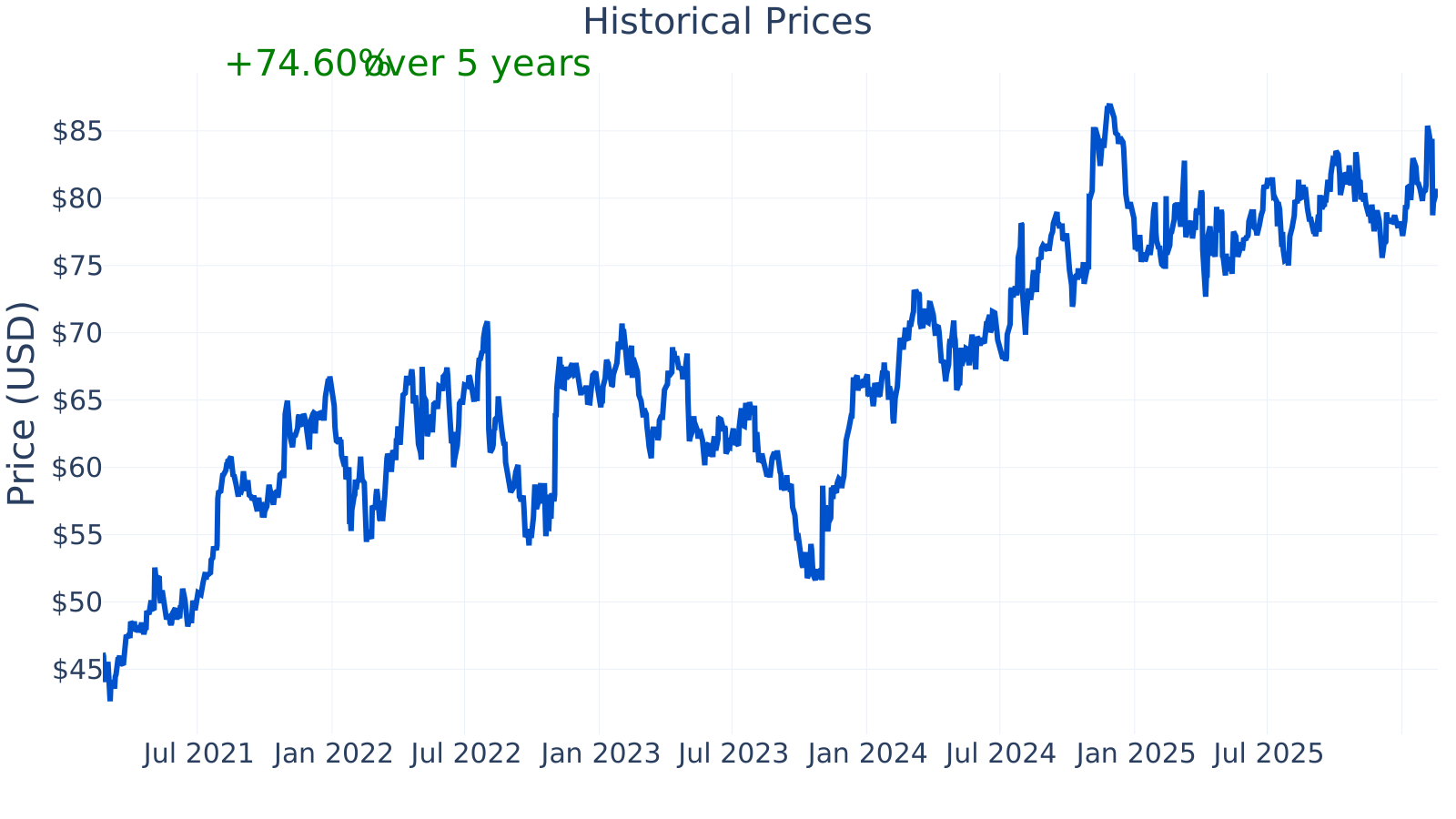
SCI’s market capitalization is about $11.3 billion and its beta is about 1.01, which is close to the overall market’s typical day-to-day movement. The company’s P/E ratio (~21.2) is slightly above the industry median (~19.9). Profit margin is about 12.6%, close to the industry median (~12.8%). Year-over-year revenue growth is about 1.7%, which is below the industry median shown (~9.7%). Debt-to-equity is about 314%, higher than the industry median (~184%), indicating heavier use of debt financing than many peers.
Growth (Low to Medium)
Deathcare demand is often described as relatively steady over time because it is linked to demographics rather than discretionary spending cycles. That said, the industry’s underlying unit volumes tend to move gradually, and near-term results can be affected by year-to-year changes in mortality rates and by customer preferences (for example, the mix between burial and cremation and the level of spending per service).
For SCI, future growth is typically tied to a combination of:
- Pricing and mix: changes in average revenue per service and the share of higher- or lower-priced offerings
- Pre-need sales: building a pipeline of future contracted services and cemetery property sales
- Acquisitions and location network optimization: purchasing independent operators or assets and improving operating efficiency
- Cost control: protecting profitability in a labor- and facility-intensive business
Revenue growth spikes in 2021 (well above 10% in several quarters), then cools significantly. From 2022 into 2023, growth turns slightly negative in some periods before returning to low single-digit positive growth through 2024–2025. This pattern is consistent with a mature industry where growth often depends more on execution and mix than on rapidly expanding overall demand.
Trailing twelve-month free cash flow is shown at roughly $599 million most recently, after moving from about $710 million (2021) down to $322 million (2023) and then recovering in 2024–2025. For long-term business resilience, free cash flow matters because it is a key internal funding source for debt service, acquisitions, and shareholder returns (as described in company filings).
Risks (Medium)
This article is for informational purposes only and does not constitute financial advice. Some content is AI-generated. See Disclaimer