Stock Analysis · SentinelOne Inc (S)
Overview
SentinelOne Inc is a cybersecurity company focused on protecting organizations from digital threats such as malware, ransomware, and unauthorized access. Its products are designed to help detect attacks, stop them automatically, and support investigation after an incident. The company sells primarily to businesses and organizations that need to secure laptops, servers, and cloud workloads in a world where employees, data, and applications are increasingly distributed.
SentinelOne’s revenue mainly comes from software subscriptions that customers pay for over time (often under multi-year agreements). In its filings, the company describes revenue as coming primarily from subscription services (its security platform) and, to a smaller extent, professional services (such as implementation and support). Percentages by line item can vary by fiscal year and are not always presented as a simple split in summaries, but the typical structure is:
- Subscription revenue (the core software platform, sold as recurring contracts)
- Professional services and other (implementation and related services)
From an income statement perspective (high-level), SentinelOne has been scaling revenue quickly while spending heavily on research and development and on sales and marketing to win customers and expand usage.
Over the last several fiscal years shown, total revenue increased substantially (from about $205M in fiscal year ending Jan 2022 to about $821M by fiscal year ending Jan 2025). At the same time, operating losses remained significant because operating expenses (notably R&D and sales/administration) stayed high as the company continued investing for growth.
Key Figures
| Metric | Value | Industry ⓘ |
|---|---|---|
| Date | Feb 08, 2026 | |
| Context | ||
| Sector | Technology | |
| Industry | Software - Infrastructure | |
| Market Cap ⓘ | $4.49B | |
| Beta ⓘ | 0.77 | |
| Fundamental | ||
| P/E Ratio ⓘ | N/A | 25.66 |
| Profit Margin ⓘ | -43.04% | 6.68% |
| Revenue Growth ⓘ | 22.90% | 15.20% |
| Debt to Equity ⓘ | 0.67% | 19.82% |
| PEG ⓘ | N/A | |
| Free Cash Flow ⓘ | $45.14M | |
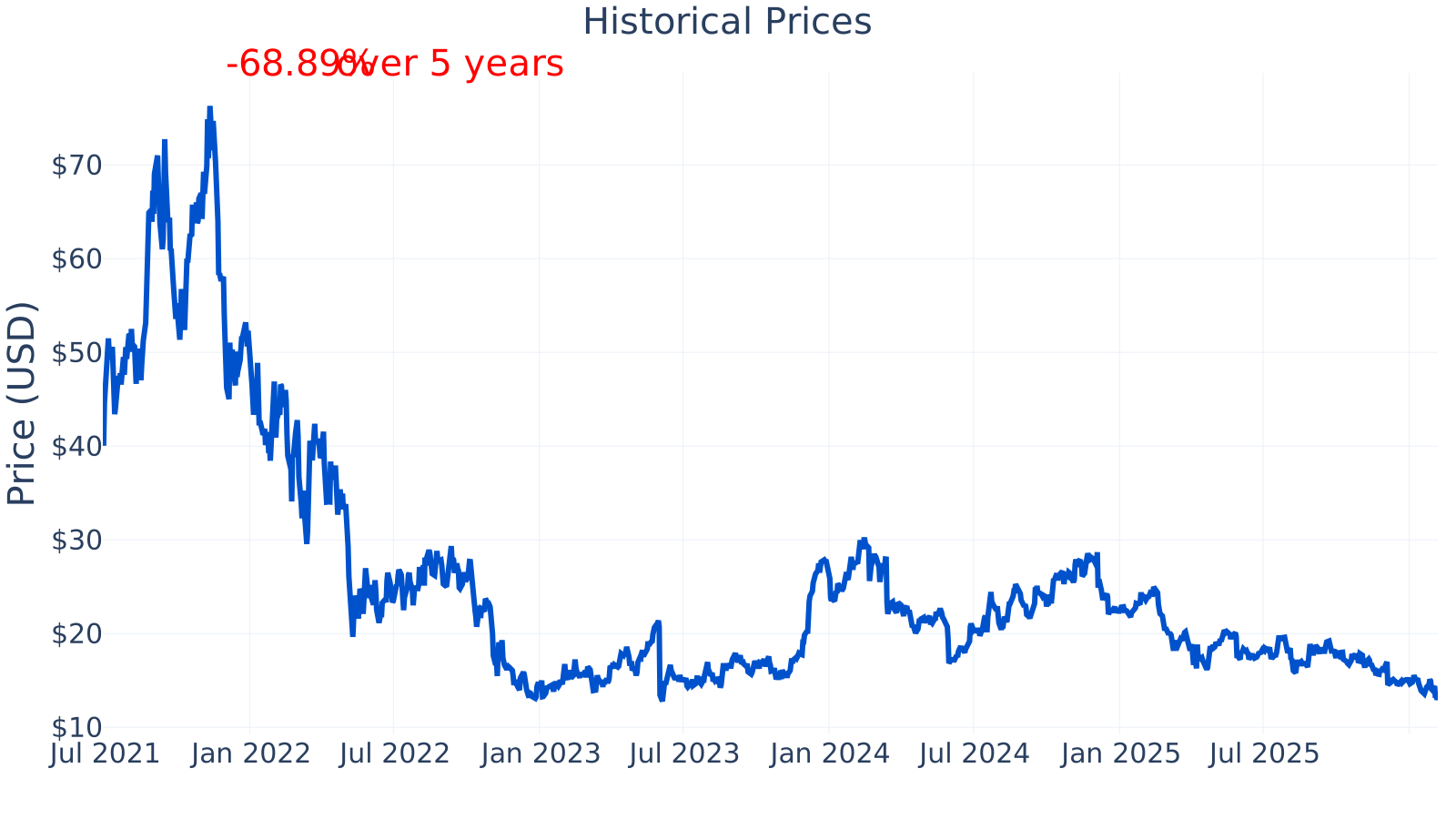
SentinelOne’s market capitalization is about $4.49B, placing it in the mid-cap range. The stock’s beta is about 0.77, which suggests it has historically moved somewhat less than the overall market on average (though single-stock risk can still be substantial). Profitability remains a key gap: the latest profit margin is about -43.0% versus an industry median near +6.7%, meaning the company is still losing money on a net basis.
On growth, the most recent year-over-year revenue growth is about +22.9%, above the industry median near +15.2%. Balance-sheet leverage appears low: debt-to-equity is about 0.7% versus an industry median around 19.8%. Cash generation has improved recently, with trailing twelve-month free cash flow of about $45.1M, indicating the business has moved into positive cash generation over the most recent period shown, even while accounting profits remain negative.
Growth (Medium)
Cybersecurity is widely viewed as a long-term growth area because digital systems continue to expand (cloud computing, remote work, software supply chains, and connected devices), while attacks continue to evolve. In that context, endpoint and workload security—the areas SentinelOne targets—tend to be “must-have” spending categories for many organizations, even when IT budgets tighten.
SentinelOne’s strategy emphasizes a security platform that can prevent, detect, and respond to threats across endpoints and cloud workloads, using automation to reduce the time and effort needed by security teams. If the platform approach increases customer adoption across multiple use cases (often described as “expanding within accounts”), that can support growth even without constantly adding new customers at the same pace.
The company’s year-over-year revenue growth has slowed from very high levels earlier (above 100% in parts of 2022) to the low-to-mid 20% range more recently. This pattern is common as a business scales, but it also means future results depend more on execution, competitive position, and broader IT spending conditions than on early-stage momentum.
One notable development is the improvement in free cash flow: it was negative in earlier periods shown (for example, around -$124M in late 2021 and around -$212M in early 2023) and turned slightly positive by early 2025, with the latest trailing period shown at about +$45M. For long-term observers, sustained positive free cash flow can be an important catalyst because it reduces the need to raise additional capital and can signal improving operating efficiency.
Risks (High)
This article is for informational purposes only and does not constitute financial advice. Some content is AI-generated. See Disclaimer


