Stock Analysis · Semtech Corporation (SMTC)
Overview
Semtech Corporation (SMTC) is a semiconductor and connectivity company. In practical terms, it designs chips and related technology that help devices sense, protect, and transmit information. A notable part of the business is long-range, low-power wireless connectivity used in Internet of Things (IoT) applications (such as industrial sensors and asset tracking). Semtech also sells analog and mixed-signal products used in areas like power management and signal integrity, plus protection products that help shield electronics from voltage spikes and electrostatic discharge.
Semtech reports revenue by product lines in its SEC filings. At a high level, the company’s revenue typically comes from these families (largest-to-smallest can vary by cycle and end-market demand):
- Signal Integrity (high-speed data and video signal products used in communications and data infrastructure)
- Analog Mixed Signal (analog and power-related semiconductors used across many electronics categories)
- Protection (circuit protection components)
Because the exact mix can shift significantly year to year, the most reliable place to confirm the current percentages is the latest annual report (Form 10‑K) segment/product disclosure.
Across the 2022–2025 period shown, revenue increased overall (from about $741M to about $909M), but profitability swung sharply. In fiscal 2024, operating income and net income turned deeply negative, and interest expense rose significantly versus earlier years; fiscal 2025 shows a return to positive operating income, while net income remained negative.
Key Figures
| Metric | Value | Industry ⓘ |
|---|---|---|
| Date | Feb 07, 2026 | |
| Context | ||
| Sector | Technology | |
| Industry | Semiconductors | |
| Market Cap ⓘ | $8.00B | |
| Beta ⓘ | 2.02 | |
| Fundamental | ||
| P/E Ratio ⓘ | 149.14 | 45.89 |
| Profit Margin ⓘ | 2.78% | 9.42% |
| Revenue Growth ⓘ | 12.70% | 13.10% |
| Debt to Equity ⓘ | 74.34% | 25.62% |
| PEG ⓘ | 3.39 | |
| Free Cash Flow ⓘ | $142.80M | |
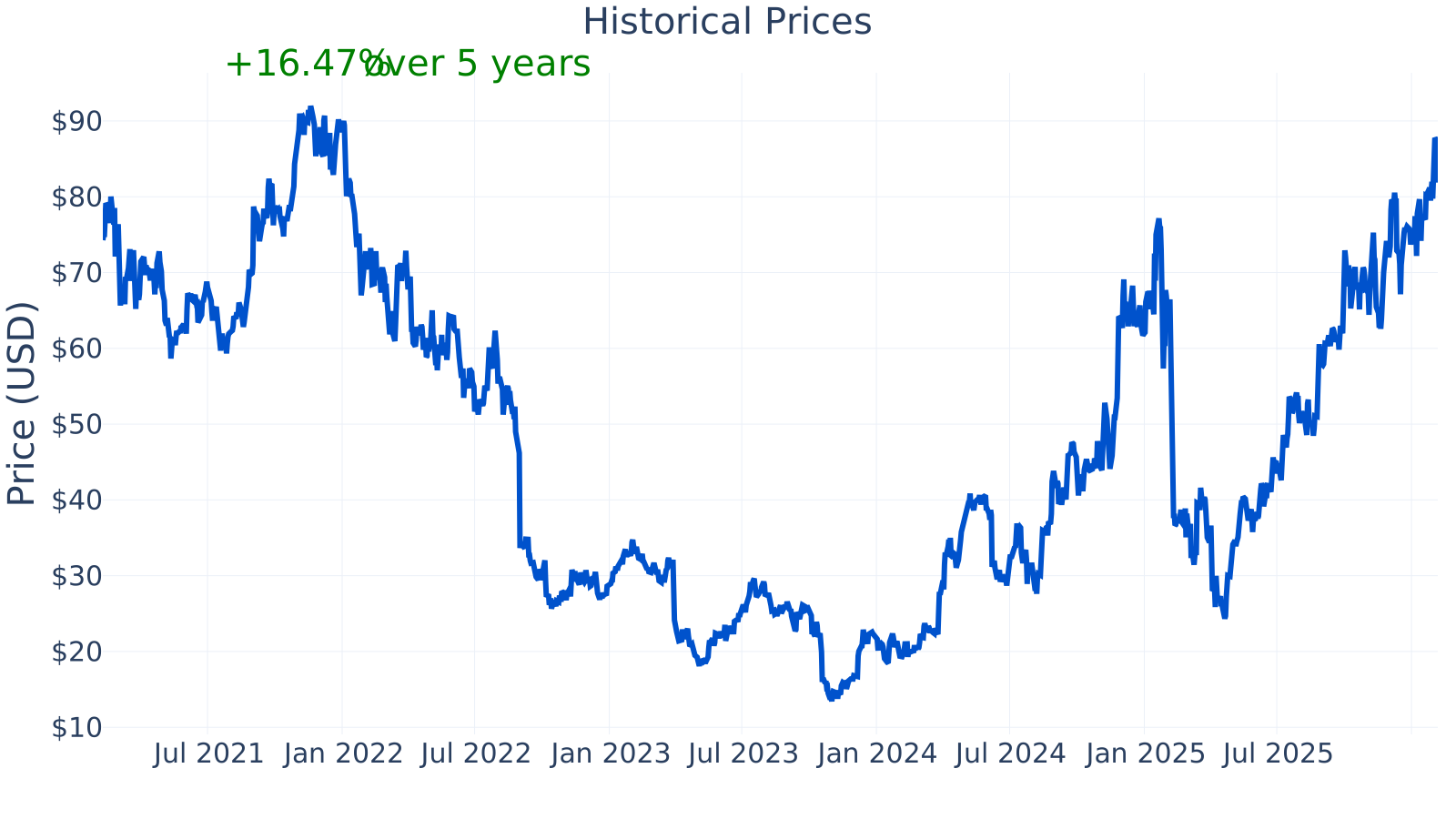
Semtech’s market capitalization is about $8.0B. The stock’s beta (~2.0) indicates it has tended to move about twice as much as the broader market (higher volatility). The company’s trailing P/E (~149x) is well above the semiconductor industry median shown here (~46x), while its profit margin (~2.8%) is below the industry median (~9.4%). Year-over-year revenue growth is about 12.7%, close to the industry median (~13.1%). Leverage is higher than many peers, with debt-to-equity ~74% versus an industry median near 26%. Free cash flow over the last twelve months is ~$143M (positive).
Growth (Medium)
Semtech operates in semiconductors, a sector generally supported by long-term demand for connectivity, data movement, cloud infrastructure, and the electrification and digitization of industrial systems. Within that, the company’s exposure to IoT connectivity can benefit from the continued rollout of connected sensors and devices that need long battery life and wide-area coverage. That said, semiconductor demand is cyclical, and end markets can swing based on inventory cycles and customer spending.
The year-over-year revenue growth pattern has been uneven over time: it was strong in parts of 2021–2022, dipped into negative territory in late 2022 and early 2023, and then returned to positive growth, reaching higher levels again in 2025 before moderating to about 12.7% most recently. This kind of variability is common in semiconductors, but it also means long-term growth depends on execution through cycles.
Free cash flow turned negative around fiscal 2024 (about -$125M at that point) and later recovered to positive territory (about +$143M most recently). For long-term business durability, sustained positive free cash flow matters because it helps fund product development and debt repayment without relying as much on external financing.
Potential catalysts, based on how the business is positioned, typically include: (1) improving profitability as product mix and costs normalize after major business changes, (2) recovery in end-market demand after down cycles, and (3) adoption of IoT connectivity solutions in industrial and infrastructure settings. The strength and timing of these factors are uncertain and usually become clearer through management guidance and filings.
Risks (High)
This article is for informational purposes only and does not constitute financial advice. Some content is AI-generated. See Disclaimer