Stock Analysis · United Parks & Resorts Inc (PRKS)
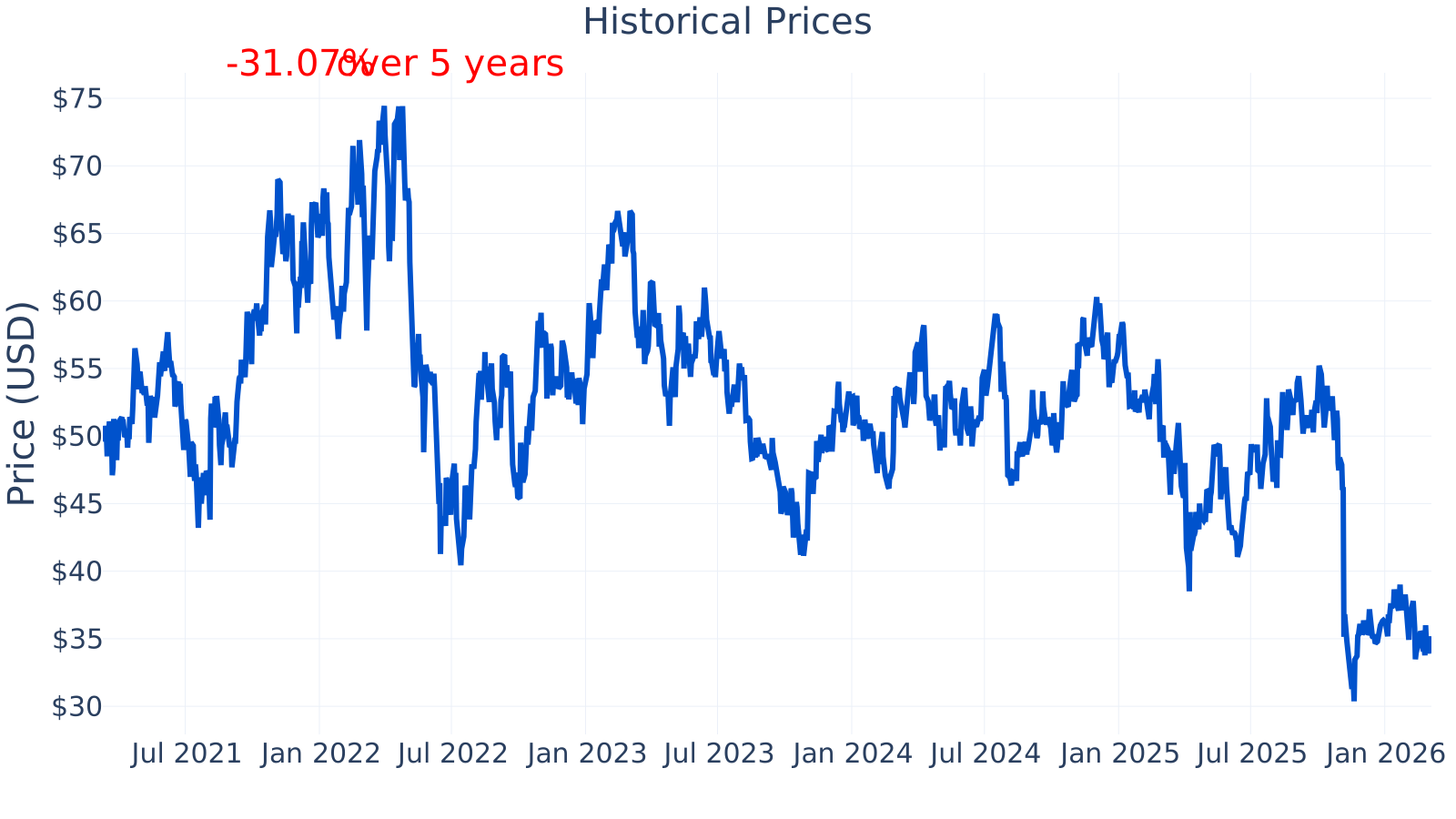
Overview
United Parks & Resorts Inc. (PRKS) operates destination theme parks and entertainment experiences in the United States. The company is best known for its SeaWorld-branded parks and also operates other park brands and experiences that combine rides, shows, and animal care and rescue programs. Its business model is straightforward: it earns money when guests visit the parks, buy admission products, and spend on food, merchandise, and other in-park offerings.
In its SEC filings, the company describes its revenue as primarily coming from park attendance and in-park guest spending, with additional contributions from items such as season passes/memberships and in-park experiences. A simple way to think about the main revenue “buckets” is:
- Park admissions (single-day tickets and multi-visit products such as annual passes)
- In-park spending (food and beverage, merchandise, and other guest purchases)
- Other park-related revenue (for example, certain experiences and ancillary offerings described in filings)
From a long-term perspective, PRKS is a consumer discretionary business: demand tends to be stronger when households feel confident and have more room in their budgets for travel and leisure.
Across the years shown, total revenue was broadly stable around the mid-$1.6–$1.7B range, while profitability moved more noticeably. Operating income was relatively steady through 2024 and then declined in 2025, and interest expense remained a meaningful ongoing cost—important for understanding how much profit is left after financing costs.
Key Figures
| Metric | Value | Industry ⓘ |
|---|---|---|
| Date | Mar 09, 2026 | |
| Context | ||
| Sector | Consumer Cyclical | |
| Industry | Leisure | |
| Market Cap ⓘ | $1.86B | |
| Beta ⓘ | 1.19 | |
| Fundamental | ||
| P/E Ratio ⓘ | 11.17 | 26.39 |
| Profit Margin ⓘ | 10.13% | 7.37% |
| Revenue Growth ⓘ | -2.80% | 7.30% |
| Debt to Equity ⓘ | -540.12% | 41.61% |
| PEG ⓘ | N/A | |
| Free Cash Flow ⓘ | $263.12M | |
PRKS is shown with a market capitalization of about $1.86B and a beta of ~1.19, which indicates the stock has historically been somewhat more volatile than the overall market. The table shows a P/E ratio of ~11.17 versus an industry median of ~26.40, and a profit margin of ~10.13% versus an industry median of ~7.37%. At the same time, the latest year-over-year revenue growth is about -2.8%, below the industry median shown (~7.3%). The debt-to-equity figure is negative, which typically happens when a company has negative shareholders’ equity (often influenced by leverage, buybacks, and accounting effects); in that case, this ratio becomes harder to interpret in the usual “higher/lower debt burden” way and deserves extra attention in the filings. Trailing twelve-month free cash flow is about $263M, which matters because it represents cash available for debt reduction, reinvestment in parks, or other corporate uses (depending on management decisions and constraints).
Growth (Medium)
The theme park industry is tied to long-term leisure and travel demand, but it is not typically a “fast compounding” category in the way that software or certain healthcare segments can be. Growth often comes from a mix of attendance, pricing, new attractions, guest spending inside the park, and operational execution. For PRKS, a key strategic question for future growth is whether the company can keep experiences fresh (new attractions and events), maintain pricing power without hurting attendance, and expand per-capita guest spending while controlling costs.
The year-over-year revenue growth pattern shown is volatile around the post-2021 period and then becomes more subdued, with several recent quarters in slightly negative territory (for example, approximately -2.8% in the latest point shown). That pattern can be consistent with a mature business where pricing, attendance, and in-park spending shifts can move results quarter to quarter.
Free cash flow turned positive after 2021 and remains positive in the more recent periods shown, at about $263M trailing twelve months. Even when revenue is relatively steady, free cash flow can still be a helpful indicator because it reflects how efficiently the business is converting sales into cash after operating needs and capital spending. For theme parks, this matters because attractions and maintenance require ongoing investment, and cash generation helps fund those needs.
Risks (High)
PRKS faces several “real-world” operating risks that are typical for theme parks. Demand can weaken when consumers cut discretionary spending, and results can also be affected by weather, local travel patterns, and broader economic conditions. Parks also have meaningful fixed costs, so profitability can be sensitive to attendance swings. In addition, the business requires consistent spending for safety, maintenance, and new attractions, which can pressure cash flow in years with heavier investment cycles.
Competition is another ongoing factor. PRKS competes for leisure time and travel budgets against other theme park operators and destination entertainment options. Large and well-known competitors in the broader theme park ecosystem include Walt Disney Parks & Resorts, Universal (Comcast), and Six Flags (following the combination with Cedar Fair). Compared with the largest global brands, PRKS is smaller in scale, which can be a disadvantage in marketing reach and in funding very large expansions. On the other hand, PRKS’s brand positioning and park footprints can still support a defensible regional/destination niche, especially if execution on guest experience and operating efficiency remains strong.
The debt-to-equity series is unusually large and often negative, which commonly points to negative equity rather than “low debt.” In practical terms, this can be a flag that the capital structure and balance sheet deserve careful reading in the 10-K/10-Q, because traditional leverage ratios may not behave normally. It also tends to make comparisons to the industry median (shown around ~41.6% at the latest point) less apples-to-apples.
Profitability improved significantly from the deep losses shown in early 2021 and then remained positive for multiple periods. The latest profit margin shown is about 10.13%, above the industry median (~7.37%), but the trend in the most recent points shows a gradual cooling from mid-teens levels toward ~10%. For a business with meaningful fixed costs, a declining margin trend can matter even if revenue is stable, because it can signal cost pressure, softer demand, heavier promotions, or higher interest and other expenses flowing through the income statement.
Valuation
The P/E ratio shown for PRKS is about 11.17 currently, and the historical points on the chart generally show PRKS trading at a lower P/E than the industry median across many periods displayed. In descriptive terms, a lower P/E can reflect the market assigning a more cautious outlook (for example, slower expected growth, higher cyclicality, or balance-sheet concerns), while a higher P/E often reflects higher expected growth or perceived stability.
Whether the current valuation level is “high or low” depends on how a reader weighs several fundamentals discussed earlier: revenue has been relatively steady with recent modest declines, profit margins are positive but have softened versus earlier peaks, free cash flow is positive, and the balance-sheet signals (including the negative debt-to-equity behavior) may add complexity and perceived risk. In other words, the valuation picture looks tied to a trade-off between cash generation and profitability on one hand and cyclical exposure and capital structure considerations on the other.
Conclusion
United Parks & Resorts is a theme-park operator whose results are driven by attendance, pricing, and guest spending, and whose long-term performance depends on maintaining compelling park experiences while managing costs and required capital investment. The financial picture shown combines positive profit margins (currently around 10%) and positive free cash flow (about $263M trailing twelve months) with muted recent revenue growth and balance-sheet metrics that are less straightforward to interpret due to negative equity signals.
For readers evaluating PRKS as a long-term holding, the key factual checkpoints are (1) whether demand and pricing hold up through economic cycles, (2) whether margins stabilize or continue to compress, (3) how capital spending and debt-related costs influence cash generation over time, and (4) how the company’s competitive positioning holds up against much larger entertainment brands and other leisure alternatives.
Sources:
- SEC EDGAR — United Parks & Resorts Inc. Form 10-K (Annual Report)
- SEC EDGAR — United Parks & Resorts Inc. Form 10-Q (Quarterly Reports)
- United Parks & Resorts Investor Relations — Press Releases and SEC Filings archive
- Wikipedia — “United Parks & Resorts” (company overview/background)
This article is for informational purposes only and does not constitute financial advice. Some content is AI-generated. See Disclaimer


