Stock Analysis · Sealed Air Corporation (SEE)
Overview
Sealed Air Corporation is a packaging company best known for protective packaging (such as Bubble Wrap) and food packaging solutions. Its products are designed to protect goods during shipping, reduce damage and waste, and help food producers and retailers preserve freshness and improve safety. The company sells to a wide range of customers, including food processors, grocery and retail businesses, and manufacturers that ship products through industrial and e-commerce channels.
Sealed Air reports its business primarily through two operating segments:
- Food: packaging solutions used in protein, dairy, and other food applications, often focused on shelf life, food safety, and operational efficiency.
- Protective: packaging used to protect products in transit, including materials and automated systems for fulfillment and distribution environments.
In its annual reporting, Sealed Air provides revenue by segment and geography. The exact percentage mix can change by year depending on demand in food markets, shipping volumes, and pricing.
Across recent years, revenue has been relatively stable (around the mid-$5 billion range), while profitability has shifted more noticeably. Net income has trended down from 2021 to 2024, and interest expense increased meaningfully over the same period, which can reduce earnings even when operations are steady.
Key Figures
| Metric | Value | Industry ⓘ |
|---|---|---|
| Date | Feb 23, 2026 | |
| Context | ||
| Sector | Consumer Cyclical | |
| Industry | Packaging & Containers | |
| Market Cap ⓘ | $6.18B | |
| Beta ⓘ | 1.36 | |
| Fundamental | ||
| P/E Ratio ⓘ | 15.59 | 22.43 |
| Profit Margin ⓘ | 8.52% | 5.56% |
| Revenue Growth ⓘ | 0.50% | 5.90% |
| Debt to Equity ⓘ | 358.60% | 131.49% |
| PEG ⓘ | 0.60 | |
| Free Cash Flow ⓘ | $385.90M | |
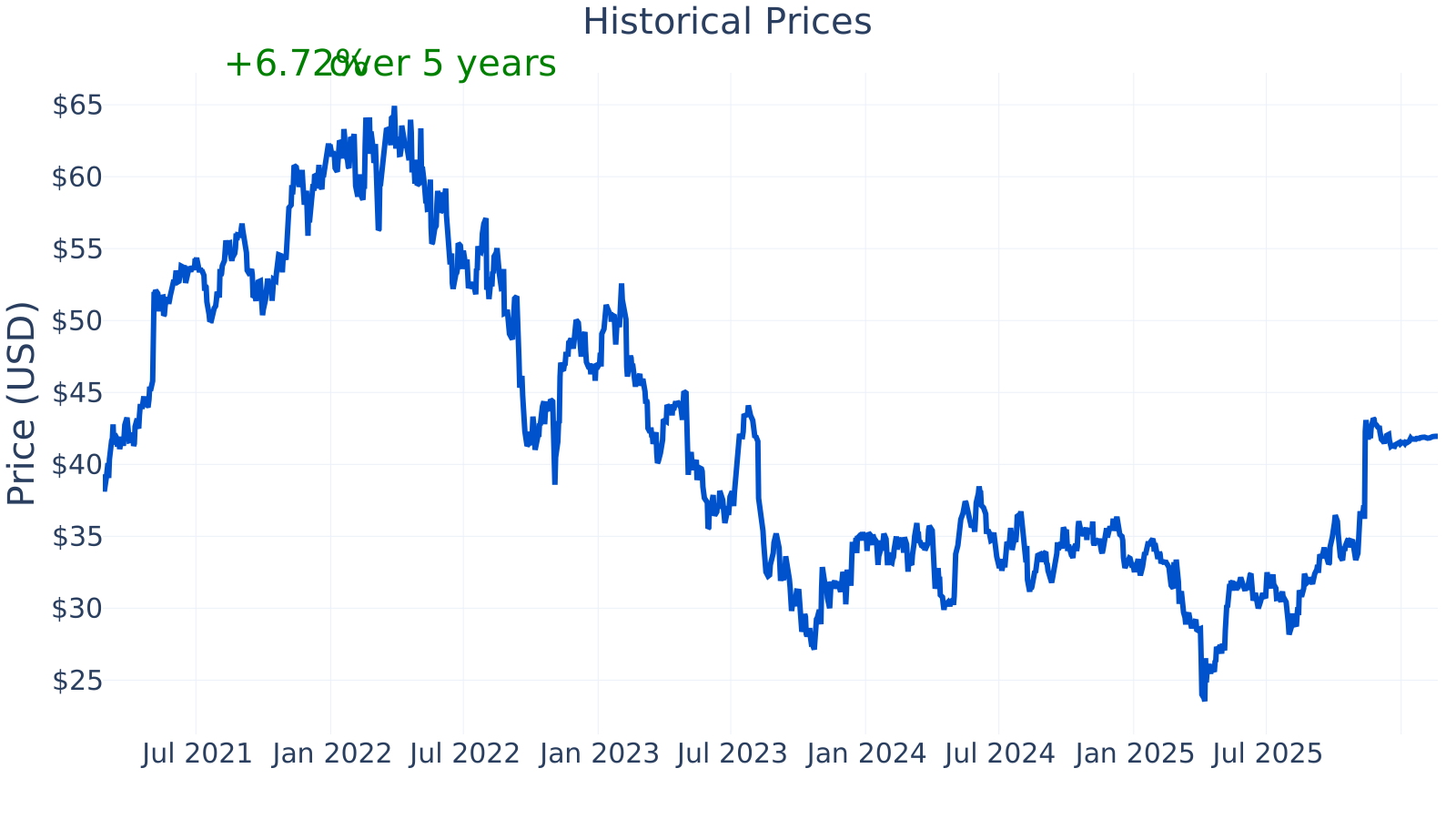
Sealed Air’s market capitalization is about $6.2 billion, placing it in the mid-cap range. The stock’s beta of 1.36 indicates it has historically moved more than the overall market (higher volatility than a beta near 1.0).
Profitability (as measured by net profit margin) is about 8.5%, which is higher than the industry median of 5.6%. Growth is currently modest: year-over-year revenue growth is about 0.5%, below the industry median of 5.9%.
Balance-sheet leverage stands out: debt-to-equity is about 359%, which is well above the industry median of about 131%. Free cash flow over the trailing twelve months is about $386 million, which is an important resource for debt reduction, reinvestment, and shareholder returns.
Growth (Medium)
Packaging is a large, mature industry, but it has ongoing long-term demand drivers. Food packaging demand is tied to population growth, consumer preferences, and food safety needs. Protective packaging demand is influenced by shipment volumes and the continuing complexity of distribution networks. In addition, many packaging customers are focused on reducing material use, improving recyclability, and increasing automation—areas where established suppliers can participate through new product development and equipment solutions.
Sealed Air’s strategy has historically emphasized value-added packaging (performance materials, engineered solutions, and automation) rather than simple commodity products. In principle, that positioning can support durability through customer switching costs (qualification requirements, packaging line integration, and performance specifications), although results still depend on end-market volumes and pricing discipline.
The revenue growth pattern shows a move from strong growth in 2021 to declines through much of 2022–2025, with a recent return to slightly positive territory (about 0.5% year-over-year in the latest period shown). This suggests the company has been operating in a more challenging demand environment, and that a clear, sustained rebound has not yet been established in the numbers shown.
Free cash flow has been consistently positive (roughly $363 million to $600 million across the periods shown), with the latest value around $386 million. Consistent cash generation can act as a stabilizer, especially for a business that needs to manage debt and fund ongoing operational improvements.
Risks (High)
This article is for informational purposes only and does not constitute financial advice. Some content is AI-generated. See Disclaimer