Stock Analysis · Sea Ltd (SE)
Overview
Sea Ltd (NYSE: SE) is a consumer internet company focused on Southeast Asia and other selected markets. It operates three main businesses: e-commerce (Shopee), digital entertainment (Garena, known for publishing and operating online games), and digital financial services (SeaMoney, which includes payments and credit-related products tied to its ecosystem). The company’s model centers on building large user networks in shopping, gaming, and payments, then improving monetization through fees, advertising, and financial services.
In its filings, Sea describes revenue largely by operating segment (rather than publishing a simple consumer-style product price list). At a high level, its revenue mix is typically led by e-commerce-related revenue (such as marketplace fees and advertising), followed by digital entertainment (game-related bookings/revenue), and then digital financial services (payments and credit products). Exact up-to-date percentages can vary meaningfully over time and by reporting period, and they are best read directly from the segment disclosures in the most recent annual report.
From 2021 to 2024, the company expanded total revenue (from about $10.0B in 2021 to about $16.8B in 2024) while moving from sizeable operating losses to positive operating income (about -$1.6B in 2021 to about +$0.66B in 2024). This points to a period where cost controls and monetization improved alongside continued scaling.
Key Figures
| Metric | Value | Industry ⓘ |
|---|---|---|
| Date | Feb 07, 2026 | |
| Context | ||
| Sector | Consumer Cyclical | |
| Industry | Internet Retail | |
| Market Cap ⓘ | $64.26B | |
| Beta ⓘ | 1.59 | |
| Fundamental | ||
| P/E Ratio ⓘ | 47.40 | 34.01 |
| Profit Margin ⓘ | 6.74% | 6.32% |
| Revenue Growth ⓘ | 38.30% | 11.35% |
| Debt to Equity ⓘ | 41.62% | 34.80% |
| PEG ⓘ | 0.36 | |
| Free Cash Flow ⓘ | $4.22B | |
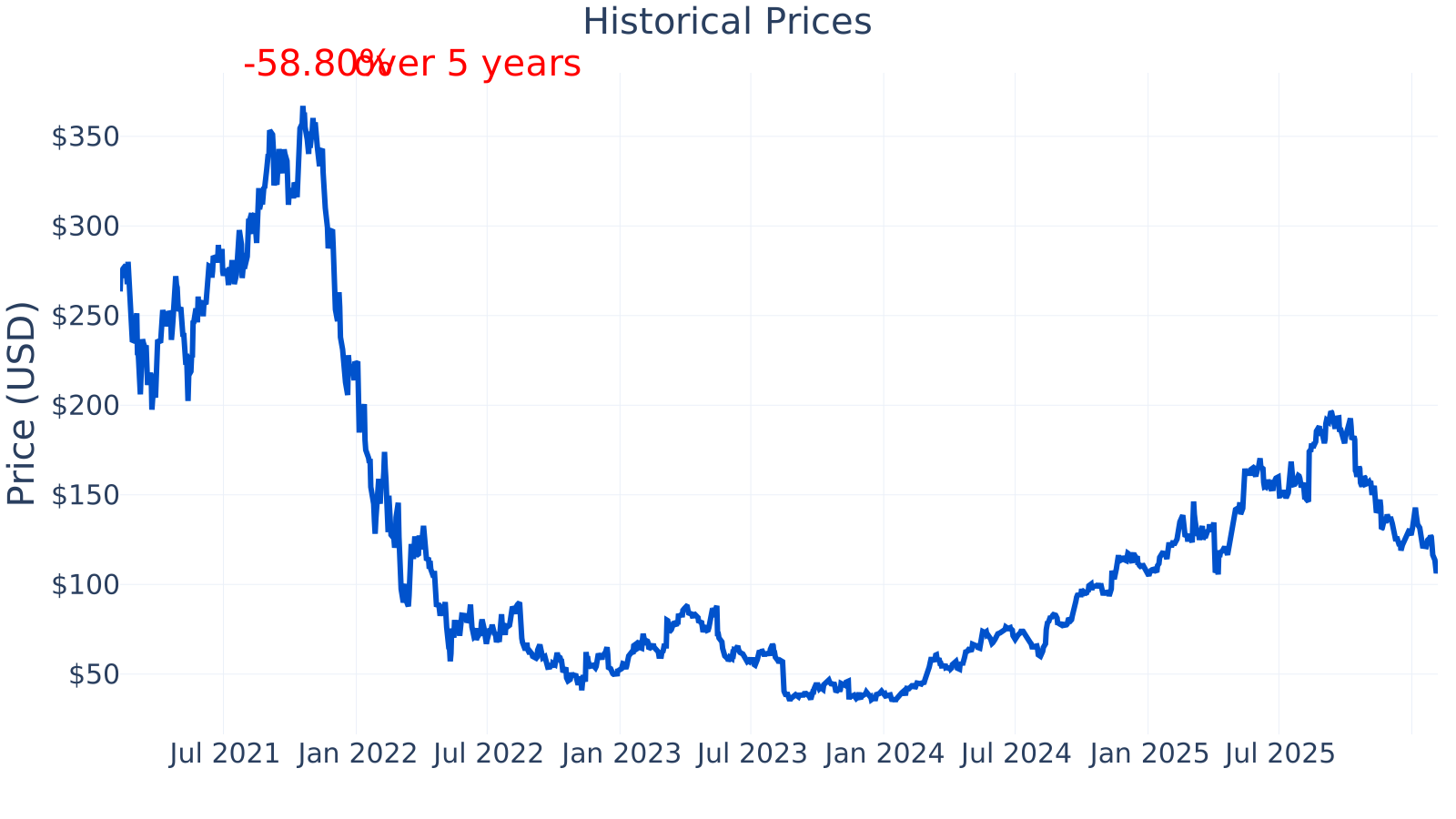
Sea’s equity value is about $64.3B, and the stock has shown high sensitivity to broader market moves (beta ~1.59). The historical price path shown indicates substantial volatility over the last few years, which is consistent with a company that has shifted from heavy investment losses to profitability while operating in competitive consumer internet markets.
On profitability, the latest profit margin is about 6.7%, slightly above the industry median shown (about 6.3%). Growth is currently a standout metric: the latest year-over-year revenue growth is about 38.3%, well above the industry median shown (about 11.3%). Sea also shows meaningful cash generation with free cash flow (TTM) of about $4.2B, which can matter for resilience because it may reduce reliance on external funding for day-to-day operations.
Growth (Medium)
Sea operates in areas that have long-run tailwinds in many emerging markets: e-commerce adoption, digital payments, and online entertainment. These categories can expand with higher smartphone penetration, improving logistics, rising incomes, and greater comfort with online transactions. Within that backdrop, Sea’s strategy is to connect its platforms so that shopping activity supports payment adoption, and a large user base can support advertising and other monetization tools.
The recent revenue growth trend shows a clear re-acceleration versus the slower period in 2022–2023, with year-over-year growth rising to roughly the high-20% to high-30% range in the latest points shown. For long-term context, this matters because sustained growth at scale can help cover fixed costs (technology, logistics coordination, trust & safety) and potentially improve operating leverage over time.
Free cash flow has shifted notably: it was negative around 2022, then turned positive and increased to roughly $3.6B by early 2025 (TTM), after about $2.0B by early 2024. For a company that historically invested heavily, this transition can be an important operational milestone because it suggests the business can fund more of its growth internally (though this can fluctuate with working capital needs, investment cycles, and competitive intensity).
Potential catalysts in Sea’s own operating framework typically include: stronger monetization in e-commerce (especially advertising and take rate improvements), improving unit economics in logistics and fulfillment-related initiatives, and scaling SeaMoney products within the Shopee ecosystem while maintaining credit discipline. Whether these catalysts materialize depends on execution and market conditions.
Risks (High)
This article is for informational purposes only and does not constitute financial advice. Some content is AI-generated. See Disclaimer


