Stock Analysis · Science Applications International Corporation (SAIC)
Overview
Science Applications International Corporation (SAIC) is a U.S.-based government services company. It provides technology, engineering, and operational support primarily to U.S. federal customers, with a strong focus on defense, intelligence, and civilian agencies. In practical terms, SAIC helps run and modernize complex government programs—such as IT modernization, cybersecurity, cloud migration, data analytics, systems engineering, and mission support—under multi-year contracts.
SAIC’s business model is largely project- and contract-driven. Revenue is typically tied to delivering services (often labor-heavy) under contract structures such as cost-reimbursable, time-and-materials, or fixed-price arrangements. Because much of the work supports ongoing government missions, results tend to be influenced by contract awards, contract renewals, and the pace of federal spending rather than consumer demand.
From the company’s annual reporting, revenue is primarily organized around major customer groups (U.S. Department of Defense, civilian agencies, and intelligence/community-related customers). Exact percentages vary by fiscal year and are disclosed in the company’s annual report/10‑K.
Across the periods shown, total revenue stays in a relatively narrow band (roughly $7.4B–$7.7B). Costs to deliver services make up the large majority of revenue, which is typical for services companies where people and subcontractors are central inputs. Net income is positive each year shown, but it fluctuates, highlighting that contract mix, program performance, and one-time items can meaningfully affect bottom-line results even when revenue looks steady.
Key Figures
| Metric | Value | Industry ⓘ |
|---|---|---|
| Date | Feb 08, 2026 | |
| Context | ||
| Sector | Technology | |
| Industry | Information Technology Services | |
| Market Cap ⓘ | $4.53B | |
| Beta ⓘ | 0.29 | |
| Fundamental | ||
| P/E Ratio ⓘ | 12.58 | 21.42 |
| Profit Margin ⓘ | 5.05% | 4.91% |
| Revenue Growth ⓘ | -5.60% | 6.15% |
| Debt to Equity ⓘ | 11.31% | 54.49% |
| PEG ⓘ | 3.67 | |
| Free Cash Flow ⓘ | $459.00M | |
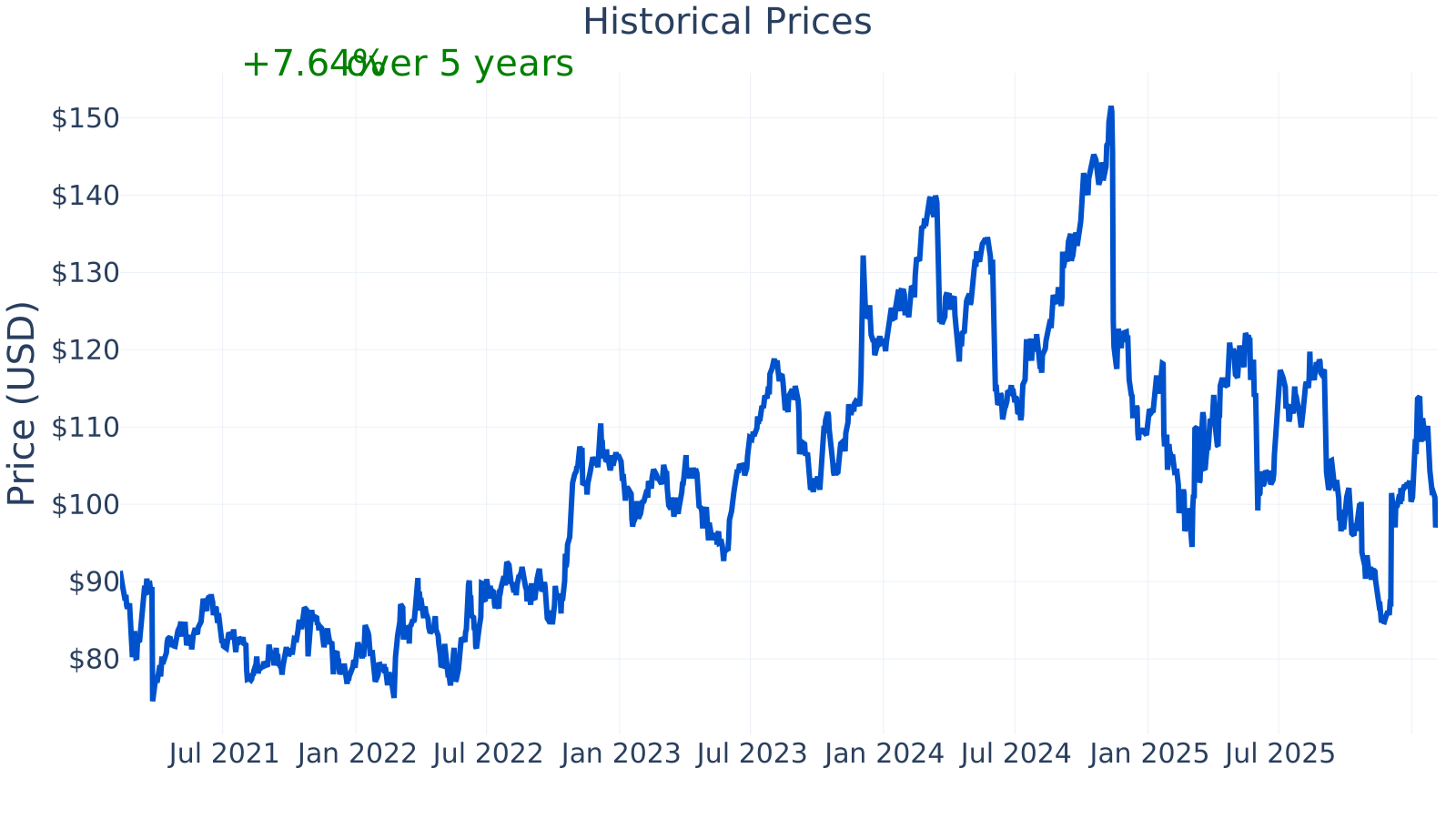
SAIC’s market capitalization is about $4.53B. The stock’s beta of 0.29 suggests it has historically moved less than the broader market, which can happen with companies whose revenue is dominated by government contracts. The current P/E ratio is ~12.6, below the industry median (~21.4), while the profit margin is ~5.05%, roughly in line with the industry median (~4.91%). Recent year-over-year revenue growth is -5.6%, below the industry median shown. The latest debt-to-equity is ~11%, lower than the industry median (~54%), and free cash flow (TTM) is ~$459M, indicating meaningful cash generation relative to its size.
Growth (medium)
SAIC operates in markets tied to government priorities: defense modernization, cybersecurity, secure networks, cloud adoption, data-driven operations, and resilient infrastructure. These areas tend to remain relevant over long cycles, and they are often supported by multi-year planning and budget processes. However, growth is not purely “industry-driven”—it also depends on winning recompetes, capturing new awards, and managing contract execution.
The recent pattern shows that SAIC’s growth has not been consistently upward. After periods of positive growth earlier in the timeline, the company experienced notable declines around early 2024 and more recent quarters show mixed results, ending at about -5.6% year over year. For a long-term view, this puts more emphasis on whether SAIC can improve its win rate, expand on existing customers, and maintain strong program performance.
Cash generation appears resilient. Free cash flow is shown in a band around the high hundreds of millions of dollars over the displayed periods (about $369M–$507M), with the most recent value around $459M. For government services firms, steady free cash flow can be an important indicator because it supports debt reduction, reinvestment in capabilities, and shareholder returns (subject to board decisions and contract needs).
Potential catalysts in this business model typically include: large contract awards, improved recompete performance, expansion in higher-value offerings (for example, cybersecurity and cloud services), and operational improvements that lift margins on fixed-price or performance-based work. These are usually communicated through filings and investor materials as backlog, pipeline, and award announcements.
Risks (medium)
This article is for informational purposes only and does not constitute financial advice. Some content is AI-generated. See Disclaimer


