Stock Analysis · Savers Value Village Inc (SVV)
Overview
Savers Value Village Inc. (SVV) operates thrift retail stores that sell secondhand clothing, accessories, and household goods. Its stores are commonly known under brands such as Value Village and Savers. The company’s model is built around sourcing used items (primarily through purchases from nonprofit partners and other suppliers), sorting and pricing those items, and selling them through its physical store network. This makes SVV different from traditional apparel retailers because it typically does not manufacture products or manage seasonal fashion inventory; instead, it processes a constantly changing flow of donated/secondhand goods.
From a revenue standpoint, SVV is largely a retail sales business. Based on how the company describes its operations in filings, the main cash-generating activities are centered on store sales, with other smaller revenue streams that are not the core driver.
Main sources of revenue (largest to smallest):
- Retail sales in thrift stores (sale of secondhand goods to shoppers)
- Other revenue (ancillary items; typically much smaller than store sales)
Over time, the income statement mix shows that costs to run stores (especially selling, general, and administrative expenses such as labor, occupancy, and processing) represent a substantial share of the company’s economics, while interest expense also matters due to the company’s debt levels.
Across the years shown, revenue increased from about $1.20B (2021) to about $1.68B (2025). However, operating income and net income did not rise in the same smooth way, highlighting that profitability can swing with operating costs and financing costs (interest).
Key Figures
| Metric | Value | Industry ⓘ |
|---|---|---|
| Date | Feb 23, 2026 | |
| Context | ||
| Sector | Consumer Cyclical | |
| Industry | Specialty Retail | |
| Market Cap ⓘ | $1.63B | |
| Beta ⓘ | 0.98 | |
| Fundamental | ||
| P/E Ratio ⓘ | N/A | 22.48 |
| Profit Margin ⓘ | 1.35% | 6.27% |
| Revenue Growth ⓘ | 15.60% | 7.90% |
| Debt to Equity ⓘ | 154.52% | 103.28% |
| PEG ⓘ | N/A | |
| Free Cash Flow ⓘ | $48.64M | |
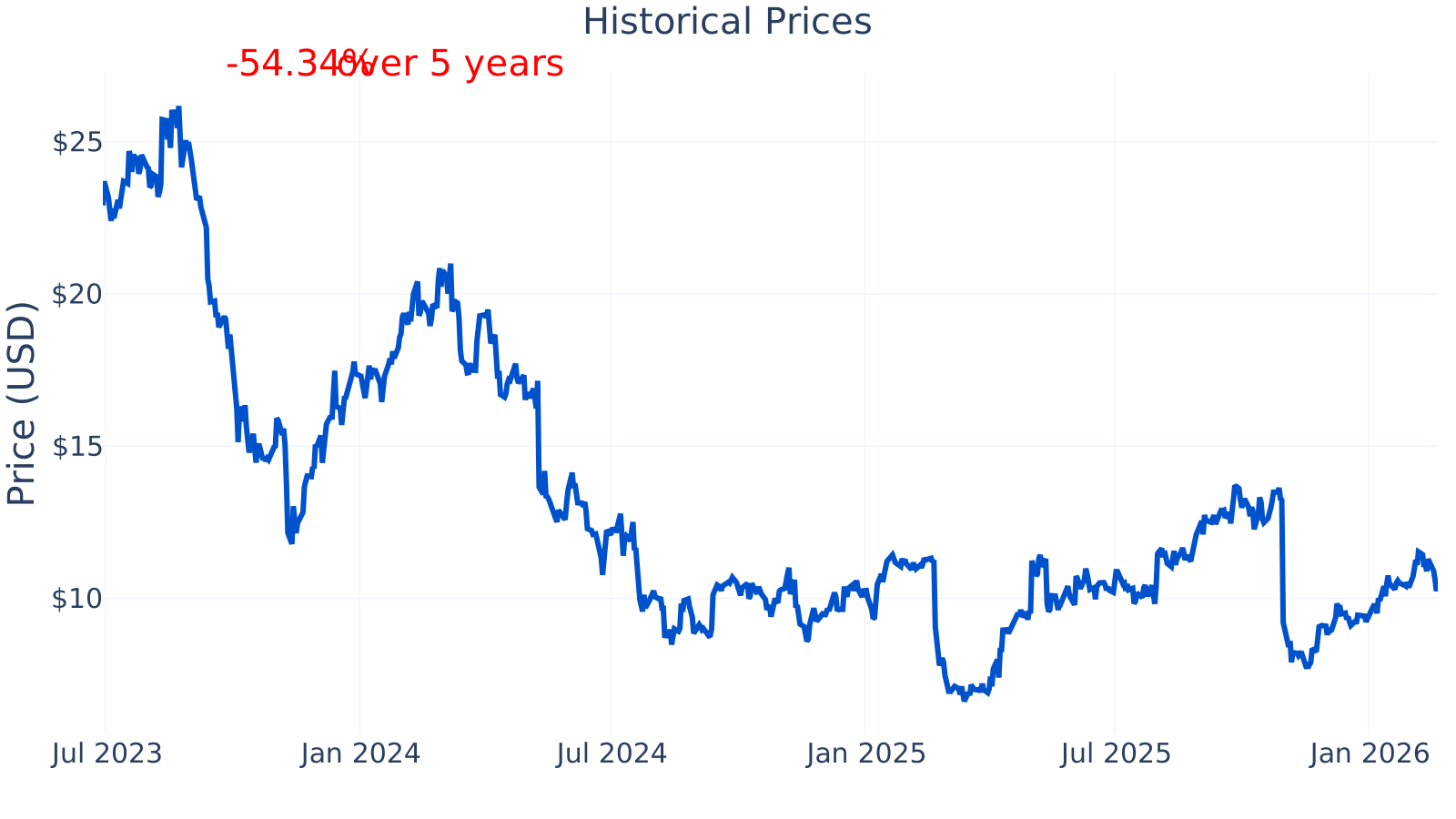
SVV’s market capitalization is about $1.63B, and its beta is close to 1.0, which broadly suggests price moves have often been in the general range of the overall market. The company’s latest profit margin is about 1.35%, below the specialty retail industry median shown (about 6.27%). At the same time, the latest year-over-year revenue growth is about 15.6%, above the industry median displayed (about 7.9%). Debt-to-equity is about 155%, higher than the industry median shown (about 103%). Trailing twelve-month free cash flow is about $48.6M, which indicates the business has recently generated cash after operating needs and capital spending, though this figure has fluctuated over time.
Growth (Medium)
Thrift retail is often discussed as part of a broader, long-running shift toward resale and reuse. That backdrop can support demand over time because shoppers may look for value, and many consumers also increasingly care about reuse and waste reduction. SVV’s business is positioned within this “value retail” and “reuse” dynamic, which can remain relevant across different economic environments.
SVV’s strategy is mainly tied to expanding and improving a repeatable store model: securing supply of secondhand goods (including through nonprofit relationships), processing efficiently, attracting steady customer traffic, and adding or optimizing store locations. Future growth tends to depend on how well the company can (1) maintain supply volume and quality, (2) control store-level costs like labor and rent, and (3) keep customer traffic strong in its markets.
The year-over-year revenue growth trend shown is positive overall, rising to about 15.6% by the most recent point displayed. That pattern can indicate improving sales momentum, but it is also important to connect growth with profit and cash generation, because store labor and occupancy costs can change the “quality” of growth.
Free cash flow has been positive in the periods shown, but it declined from about $85.6M (as of 2024-03-31) to about $36.5M (as of 2025-03-31), before standing at about $48.6M on the latest trailing basis. For a retailer, consistent free cash flow matters because it helps fund store investments and manage debt without relying as much on external financing.
Risks (High)
This article is for informational purposes only and does not constitute financial advice. Some content is AI-generated. See Disclaimer