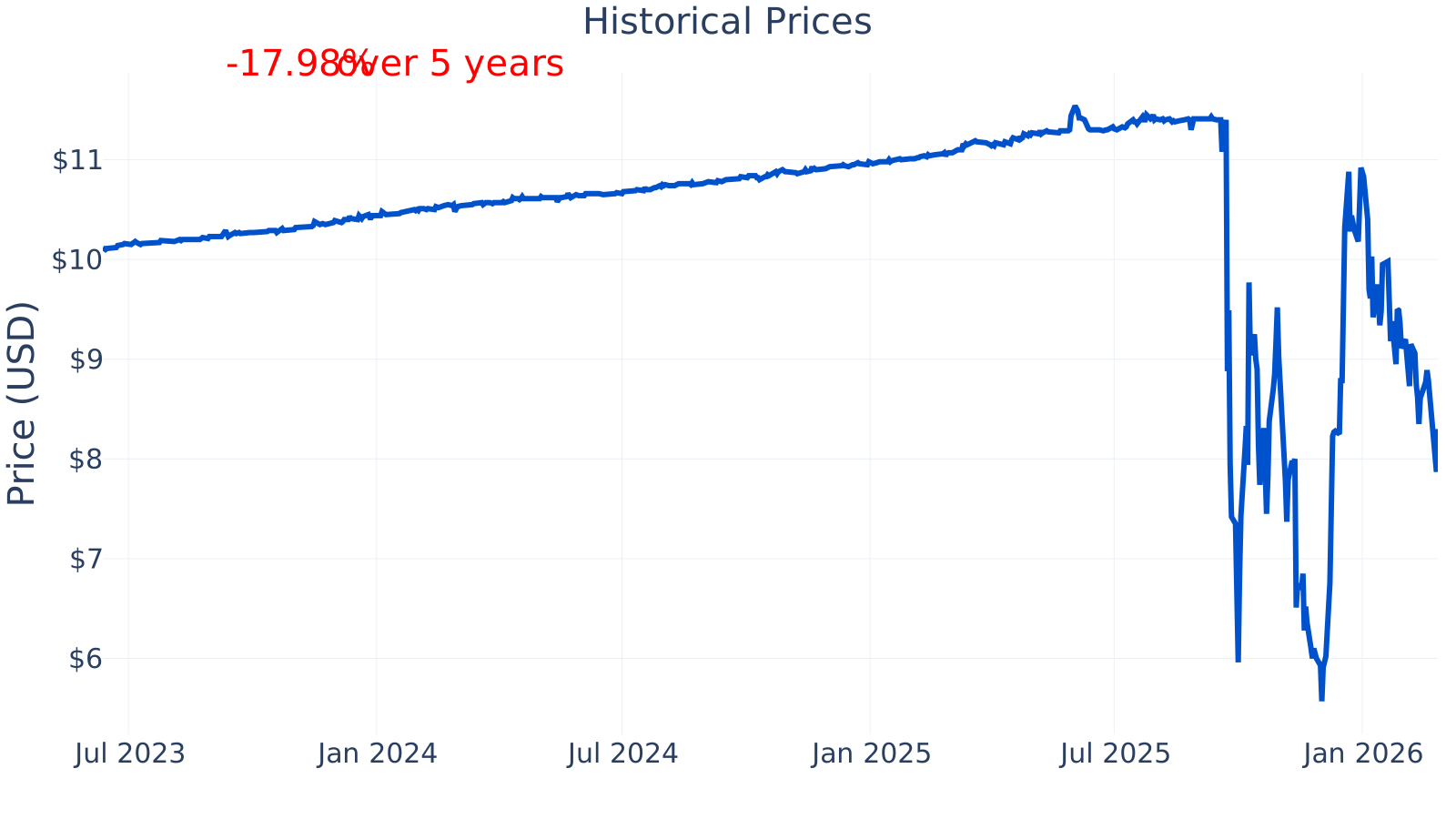
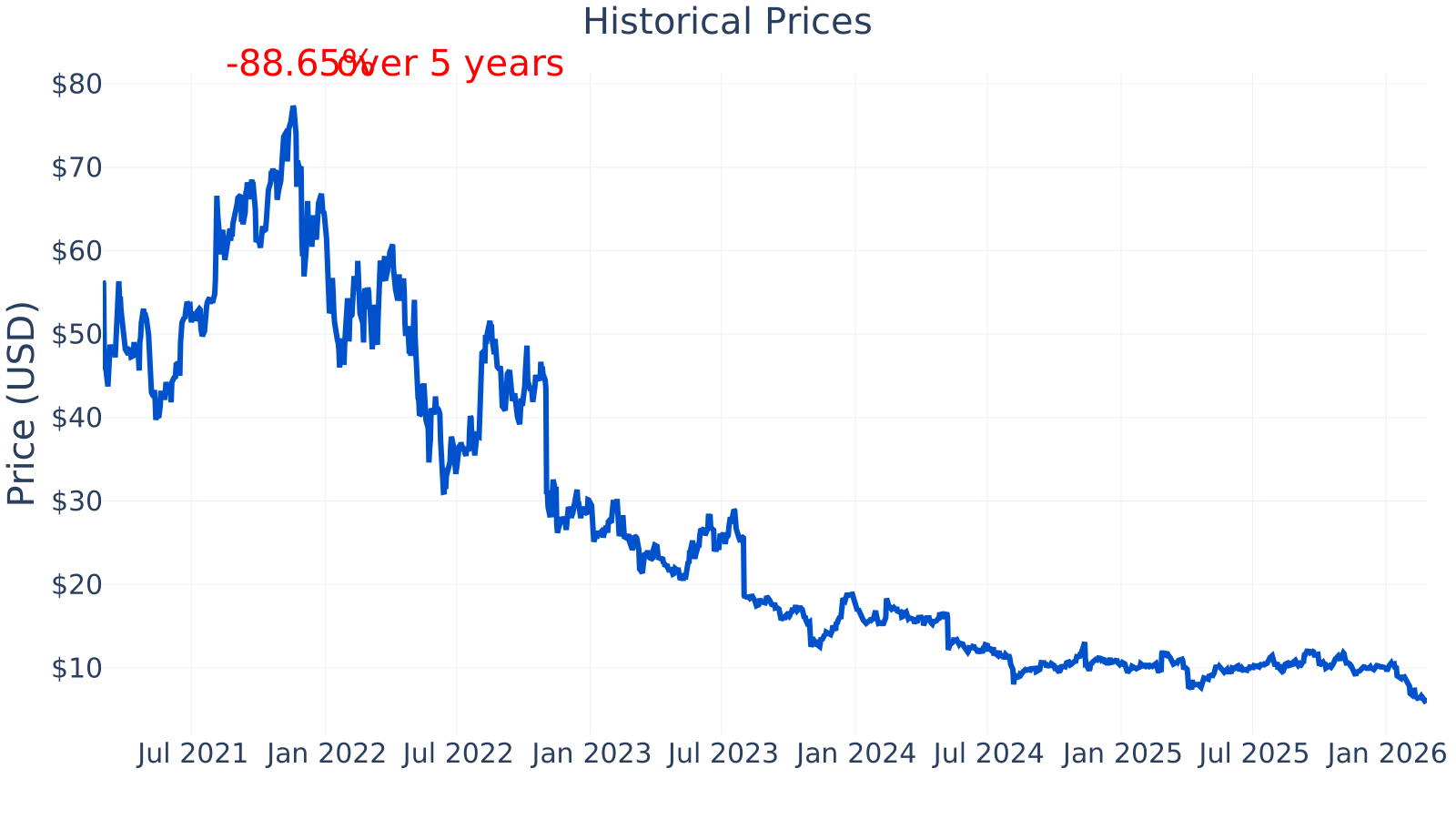
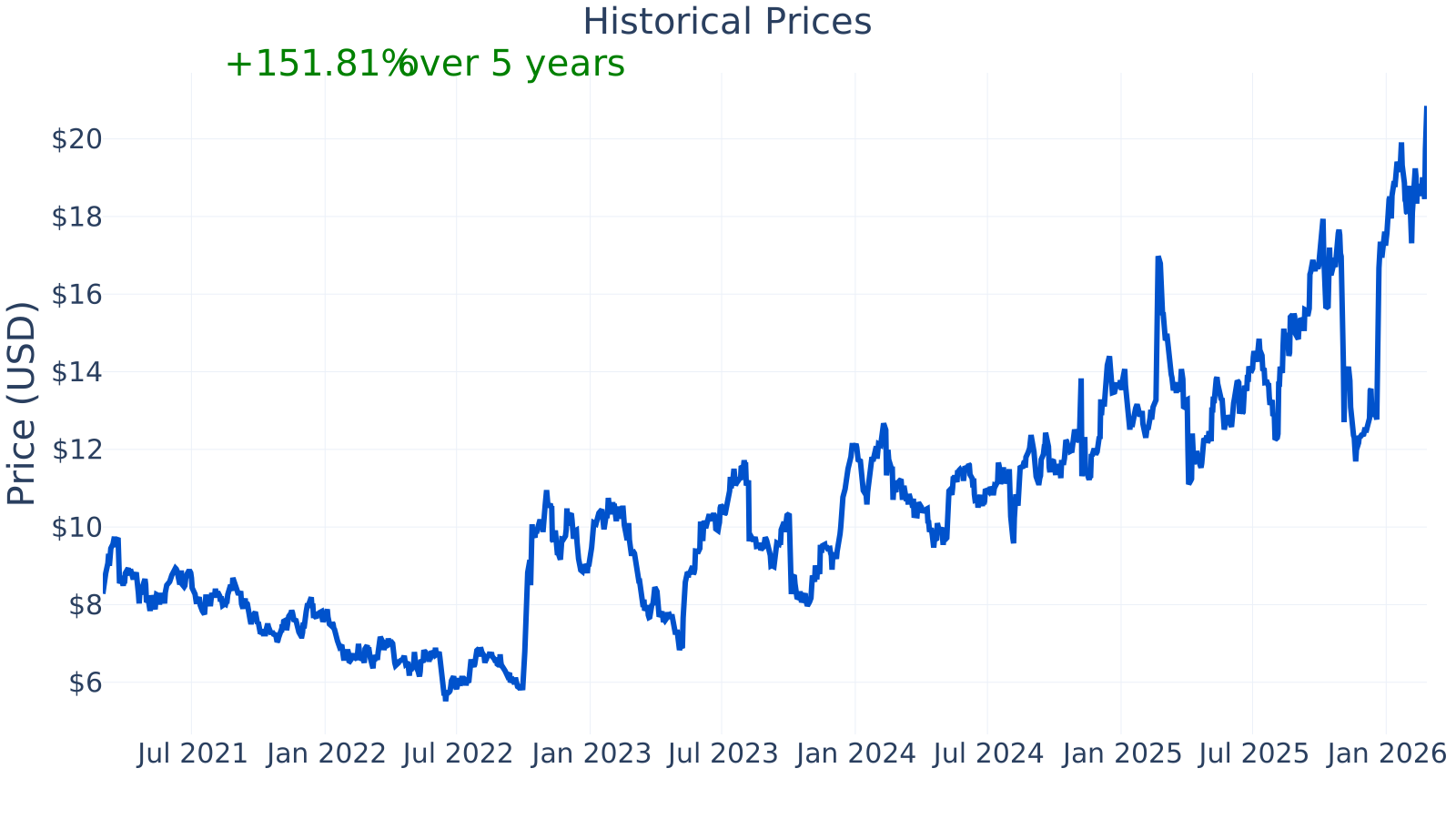
Stock Analysis · Sanmina Corporation (SANM)
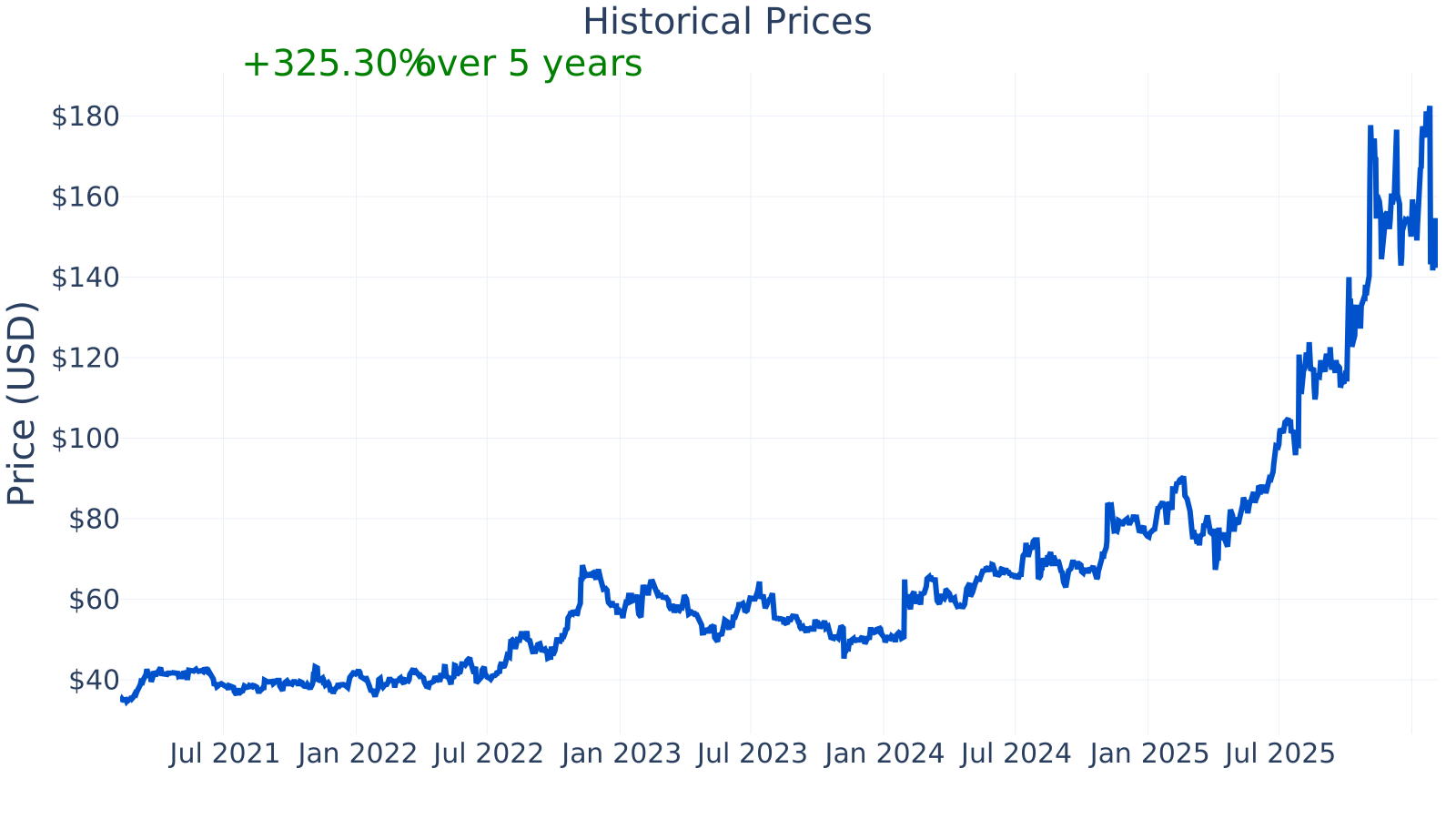
Overview
Sanmina Corporation is a global electronics manufacturing services (EMS) company. In simple terms, it helps other companies design, build, and maintain complex electronic products at scale. Its work often includes printed circuit board assemblies, full system builds, testing, supply-chain management, and after-market services such as repair and logistics. This type of business is commonly used by original equipment manufacturers (OEMs) that want flexible manufacturing capacity, specialized know-how, and global sourcing without building everything in-house.
Sanmina’s revenue is mainly driven by building products for customers across multiple end markets (for example, industrial, communications networks, cloud/enterprise hardware, medical, defense/aerospace, and automotive-related electronics). Revenue concentration can vary over time because the company’s sales depend on customer program ramps, product cycles, and industry demand. Public filings typically describe revenue by customer and by end market, but precise percentage splits are not always consistent across periods and may change materially year to year.
Across the periods shown, most of each sales dollar goes to materials and manufacturing costs, which is typical for an EMS provider. Operating costs (such as administrative expenses and R&D) are much smaller than cost of revenue, which helps explain why profitability is usually modest even when revenue is high.
Key Figures
| Metric | Value | Industry ⓘ |
|---|---|---|
| Date | Feb 07, 2026 | |
| Context | ||
| Sector | Technology | |
| Industry | Electronic Components | |
| Market Cap ⓘ | $8.18B | |
| Beta ⓘ | 1.03 | |
| Fundamental | ||
| P/E Ratio ⓘ | 35.75 | 41.23 |
| Profit Margin ⓘ | 2.47% | 6.11% |
| Revenue Growth ⓘ | 59.00% | 12.20% |
| Debt to Equity ⓘ | 101.26% | 39.00% |
| PEG ⓘ | 1.03 | |
| Free Cash Flow ⓘ | $518.34M | |
Sanmina’s market capitalization is about $8.18B, and the stock’s beta of ~1.03 suggests price movements have been broadly similar to the overall market in recent history. The current P/E ratio is ~35.7, below the industry median shown (~41.2) but meaningfully higher than Sanmina’s own range in parts of 2021–2023. Profitability is relatively thin: the latest profit margin is ~2.47% versus an industry median of ~6.11%. On the other hand, the latest year-over-year revenue growth is ~59.0% (industry median ~12.2%), which points to a sharp recent rebound or program ramp. Leverage stands out: debt-to-equity is ~101% versus an industry median near ~39%. Trailing twelve-month free cash flow is ~$518M, and the PEG ratio is ~1.03, a metric often used to relate valuation to expected earnings growth.
Growth (Medium)
Electronics manufacturing is supported by long-running trends such as increasing electronic content in industrial equipment, vehicles, and medical devices, continued buildout of data infrastructure, and demand for reliable supply chains. At the same time, the industry is cyclical: customers can reduce orders quickly when they face inventory corrections or weaker end demand. For a company like Sanmina, growth often comes from winning new programs, expanding with existing customers, and focusing on more complex products where quality and reliability matter.
The chart shows that growth has not been steady: there were periods of negative year-over-year revenue growth (notably around 2023–2024), followed by a strong acceleration in the latest period (around 59%). For long-term business evaluation, the key question is whether this recent surge reflects durable program wins and sustained end-market demand, or a more temporary catch-up after a downturn.
Free cash flow has also fluctuated over time, with a low point around 2023 (about $100M shown) and a higher recent level (latest ~$518M in the table). In manufacturing-heavy businesses, cash generation can swing with working capital needs (inventory and receivables) and capital spending, so consistency across cycles tends to matter as much as any single year.
Risks (High)
This article is for informational purposes only and does not constitute financial advice. Some content is AI-generated. See Disclaimer