Stock Analysis · Samsara Inc (IOT)
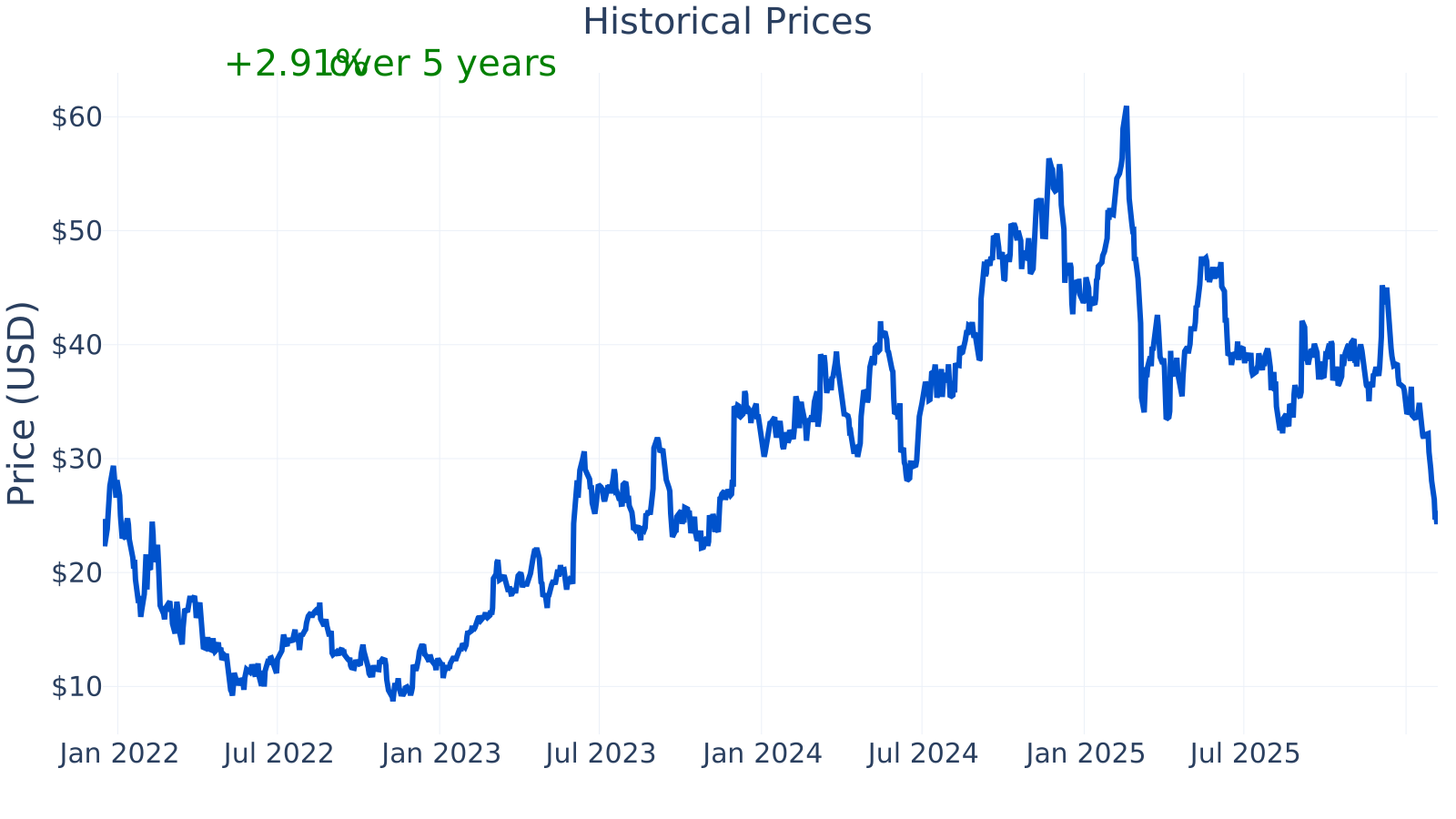
Overview
Samsara Inc. is a software company focused on helping organizations that operate physical assets (such as vehicles, equipment, and job sites) run those operations more safely and efficiently. In simple terms, it connects “what is happening in the real world” (a fleet vehicle, a trailer, a piece of equipment, a worksite) to cloud software that can monitor location, usage, maintenance needs, driver safety, and compliance.
The company’s platform combines:
- Subscription software (the main part), where customers pay recurring fees to use Samsara’s applications and analytics
- Connected devices (hardware like vehicle gateways and cameras), typically tied to the software subscriptions
In its financial reporting, Samsara generally groups revenue into two buckets:
- Subscription revenue (recurring software)
- Device (hardware) revenue
Over time, the business is usually described as primarily subscription-driven, with hardware supporting adoption of the platform. Exact percentages can shift by period and should be confirmed in the latest annual report and quarterly filings.
From FY2022 to FY2025 (fiscal years ending late January), total revenue increased from about $428M to about $1.249B. Gross profit also expanded (about $304M to $951M), while operating losses narrowed versus revenue growth, reflecting a business that has been scaling up while still spending heavily on product development and go-to-market.
Key Figures
| Metric | Value | Industry ⓘ |
|---|---|---|
| Date | Feb 07, 2026 | |
| Context | ||
| Sector | Technology | |
| Industry | Software - Infrastructure | |
| Market Cap ⓘ | $14.67B | |
| Beta ⓘ | 1.61 | |
| Fundamental | ||
| P/E Ratio ⓘ | N/A | 25.66 |
| Profit Margin ⓘ | -2.79% | 6.68% |
| Revenue Growth ⓘ | 29.20% | 15.20% |
| Debt to Equity ⓘ | 5.80% | 19.82% |
| PEG ⓘ | N/A | |
| Free Cash Flow ⓘ | $194.24M | |
Samsara’s market capitalization is about $14.7B, and the stock has shown higher-than-market volatility (beta around 1.61). Profit margin is currently about -2.8%, below the industry median (about 6.7%), but it has improved substantially over time. Year-over-year revenue growth is about 29.2%, higher than the industry median (about 15.2%). The balance sheet leverage is relatively low with debt-to-equity around 5.8% (industry median roughly 19.8%). Trailing twelve-month free cash flow is about $194M, indicating the business is generating cash even though accounting profitability is still slightly negative.
Growth (High)
Samsara operates in a part of the software market often described as the digitization of physical operations: using connected devices and cloud applications to manage fleets, equipment, and field operations. This type of software can benefit from long adoption runways because many industries (transportation, construction, utilities, field services, and public sector operations) still have workflows that are partly manual or spread across disconnected tools.
A central element of the growth strategy is expanding within existing customers by adding more vehicles, sites, or use cases (for example, combining telematics with safety video, maintenance workflows, and compliance). This “land-and-expand” style approach can matter in subscription businesses because the long-term outcome depends not only on signing new customers, but also on keeping them and increasing adoption over time.
The year-over-year revenue growth trend shows a slowdown from very high growth rates earlier in the period (roughly the 40–50% range) toward the high-20% to low-30% range more recently (about 29% latest). Even with this deceleration, growth remains above the industry median shown in the table, which suggests Samsara is still expanding faster than many peers in its broader software category.
Free cash flow has improved notably over time, moving from negative levels (about -$205M in mid-2022) to positive (about $111M by early 2025) and more recently about $194M on a trailing basis. For long-duration business models, this transition can be an important milestone because it shows the company can fund operations and growth with less reliance on external capital, even while it continues investing.
Risks (Medium-High)
This article is for informational purposes only and does not constitute financial advice. Some content is AI-generated. See Disclaimer


